The Net-Zero Challenge in Construction
Under the pressure of global climate change, the construction industry, as one of the primary sources of carbon emissions, is undergoing an unprecedented technological revolution. As highlighted by discussions at recent international conferences, the 'Net-Zero Built Environment' is no longer just a slogan but a concrete path being realized through materials science and process innovation. Specifically for the concrete and cement industries, how to reduce carbon footprints through mineral carbonation and additive manufacturing has become a core focus for both academia and the industry worldwide.
Key Breakthroughs in Mineral Carbonation
According to the latest materials science research, mineral carbonation technology permanently sequesters carbon dioxide within concrete structures, which not only improves the durability of building materials but also achieves negative carbon emissions. This technology transforms industrial waste into high-value building resources, significantly reducing reliance on traditional raw materials. Recently published studies indicate that concrete treated in this manner shows excellent environmental performance in Life Cycle Assessments (LCA).
Additive Manufacturing: The Digital Transformation of Construction
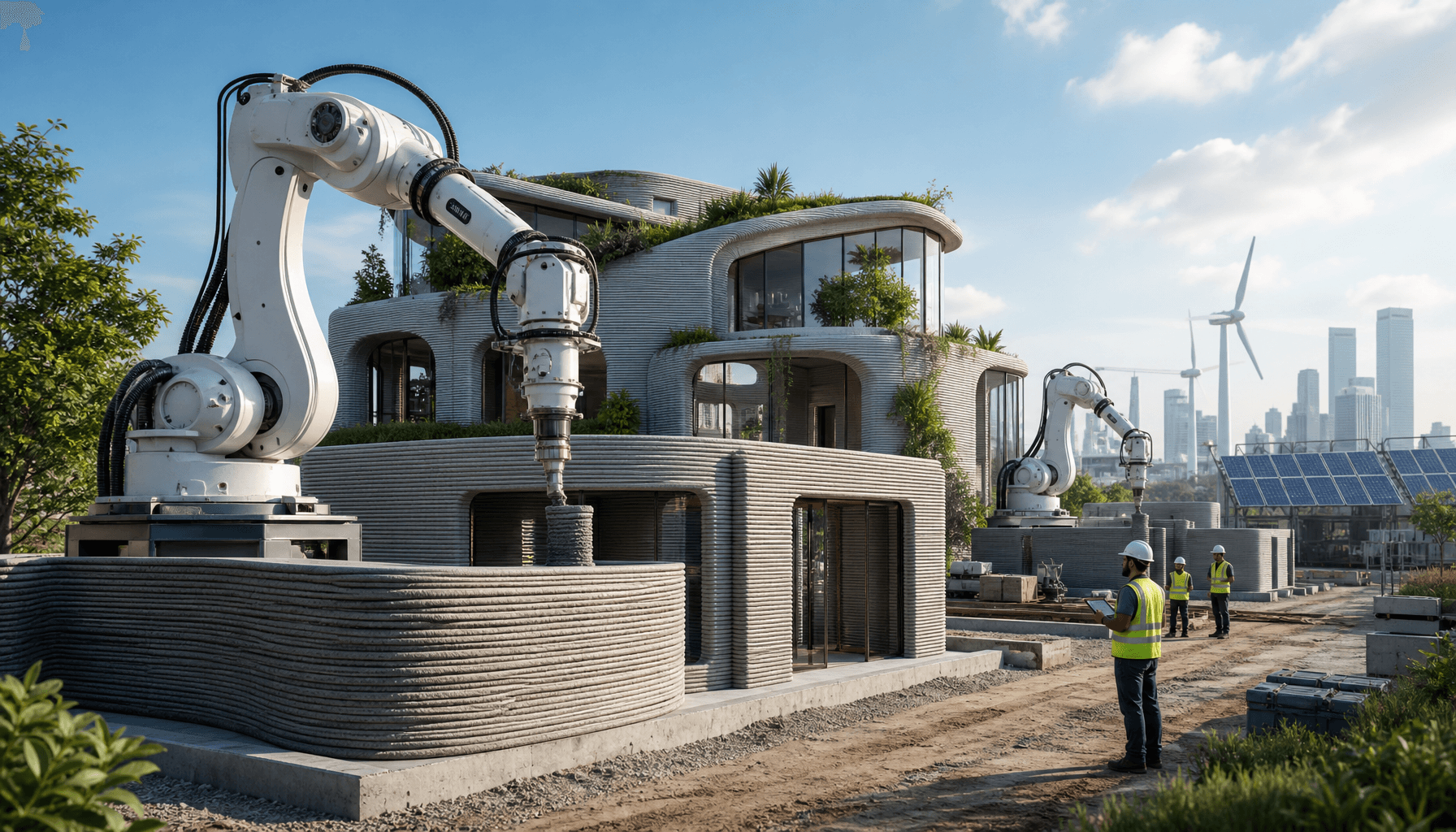
Additive manufacturing (i.e., 3D printing of concrete structures) is revolutionizing the operation of construction sites. This technology not only reduces material waste during construction but also enables more complex and lightweight structural designs, thereby lowering the overall usage of building materials. Leading international research institutions point out that combining additive manufacturing with circular materials is the 'golden path' to achieving carbon neutrality in the construction industry.
Market Trends and Global Impact
Google Trends data shows that search interest for 'Sustainable Construction Materials' and 'Net-Zero Construction' continues to climb in Europe and North America, reaching highs of 82 and 75, respectively. This indicates that market awareness of green building materials is rising significantly, and capital is increasingly flowing into innovative technology companies in this sector.
Future Outlook: Toward Carbon-Neutral Buildings
Looking forward, the net-zero transformation of the construction industry is entering an implementation phase. As standardization norms promoted in international conferences take shape, companies will face stricter environmental compliance requirements, but they will also encounter massive green economic opportunities. Continued investment in materials science R&D and the promotion of digitized construction processes will be key for construction firms to maintain market competitiveness.