The Physical Awakening of Intelligence: A Paradigm Shift from Generation to Simulation
Over the past year, the trajectory of artificial intelligence has diverged from simple statistical prediction toward deep, causal, and physical simulation. The latest research indicates we are entering an era of 'physics-aware' and 'state-persistent' intelligence. This shift is not merely redefining AI architectures; it is fundamentally altering our approach to biology, materials science, and critical infrastructure management.
World Models: The Revolution of 'Reactivity'
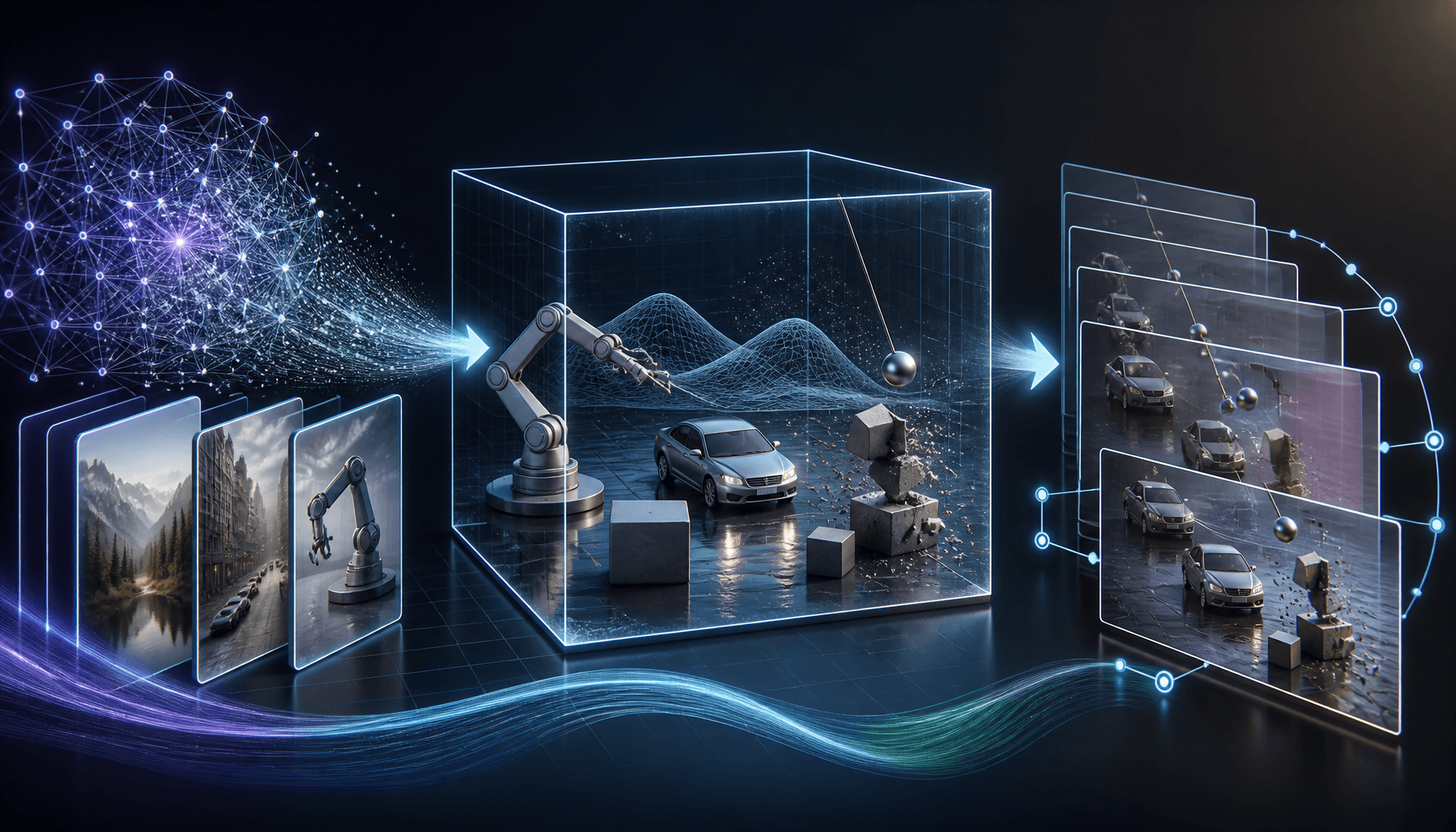
The WorldExam benchmark, introduced by Yuxue Yang and colleagues, marks a critical pivot in AI evaluation. While previous video generation models prioritized visual fidelity, WorldExam emphasizes 'inherent reactivity'—the ability of a model to infer how a world should react to internal state changes. This mirrors a broader trend in robotics: whether through large-scale egocentric data synthesis like Ego2Robot or the implementation of coordination contracts in bimanual tasks (CoWAM), modern intelligent agents must go beyond generating actions to understanding physical causality.
Digital Twins in Biology: From Mechanisms to Predictions
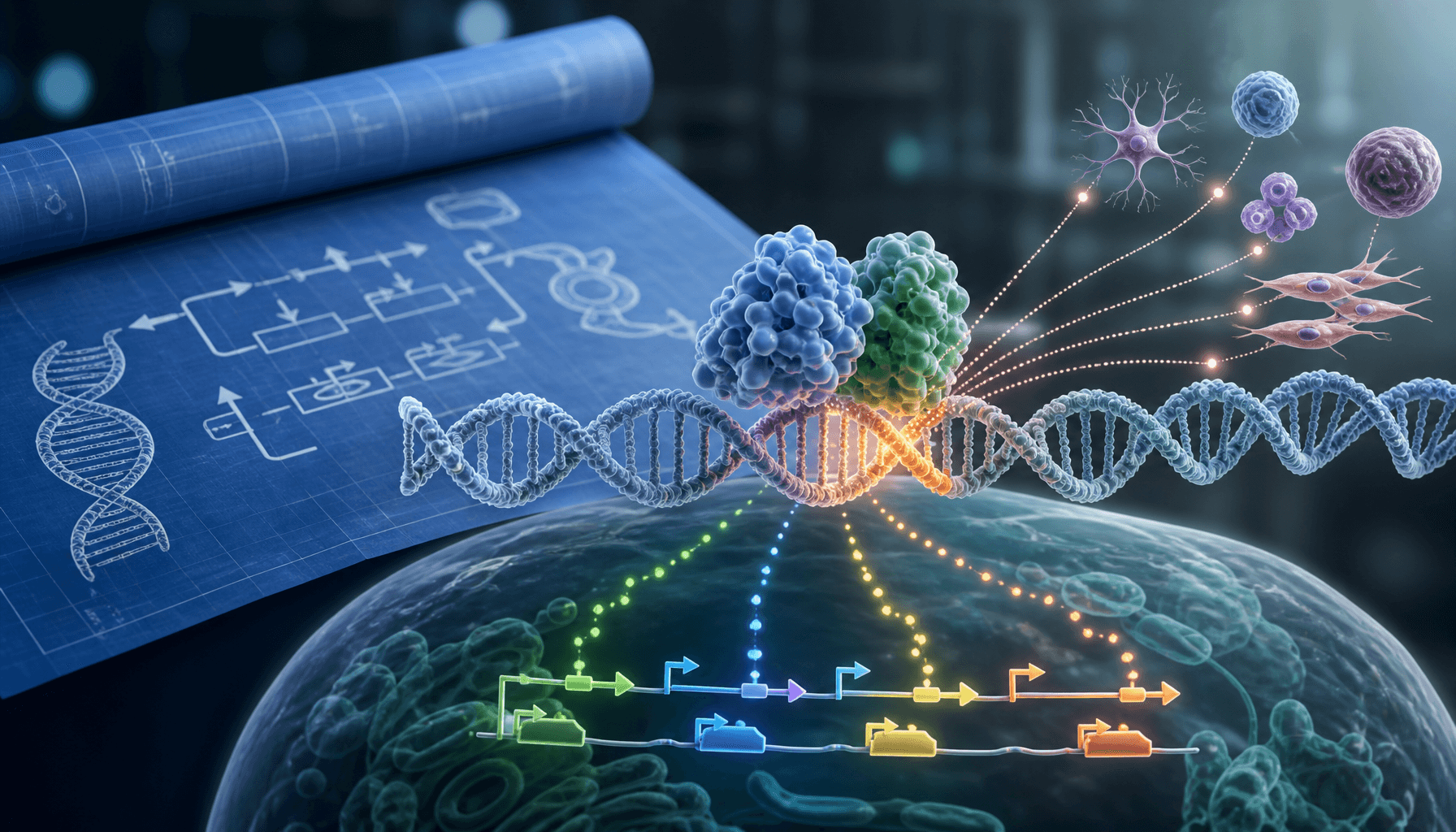
In the life sciences, researchers are leveraging this digital sensing capability to redefine disease. Matsui et al. have deployed a 'dynamical digital twin' framework to uncover hidden neuromotor control policies in patients with Parkinson's disease. They demonstrate that postural breakdown is not a slow decay of control, but a catastrophic dynamical phase transition. This method of treating biological systems as dynamical systems—rather than static snapshots—parallels the work of Larios et al., who successfully mapped the modular logic of cytoskeletal dynamics by reconstituting kinesin variants in synthetic droplets.
State Continuity: The Memory Upgrade
As autonomous agents take on long-horizon tasks, AI memory architecture is undergoing a transformation. The LiveMem system, proposed by Zhichen Liu et al., decouples memory state from active context, enabling persistence across the entire lifecycle of an agent. This ensures that AI models do not lose mission-critical goals as context windows rotate, a capability vital for agentic software engineering (as modeled in ACEM) and the generation of datacenter control-plane policies (AtumAI).
Conclusion and Outlook
The convergence of physics-guided constraints and dynamical systems is breaking down the barriers between computer science and the natural sciences. From the rigorous mathematical bounds in quantum state estimation (Qisheng Wang) to the probabilistic modeling of prime editing variants (crispAIPE), we are translating scientific inquiry into executable, verifiable algorithms. Future intelligent systems will not merely be predictors; they will be simulators and active participants in the physical world.