Introduction: Deciphering the Biological Computation
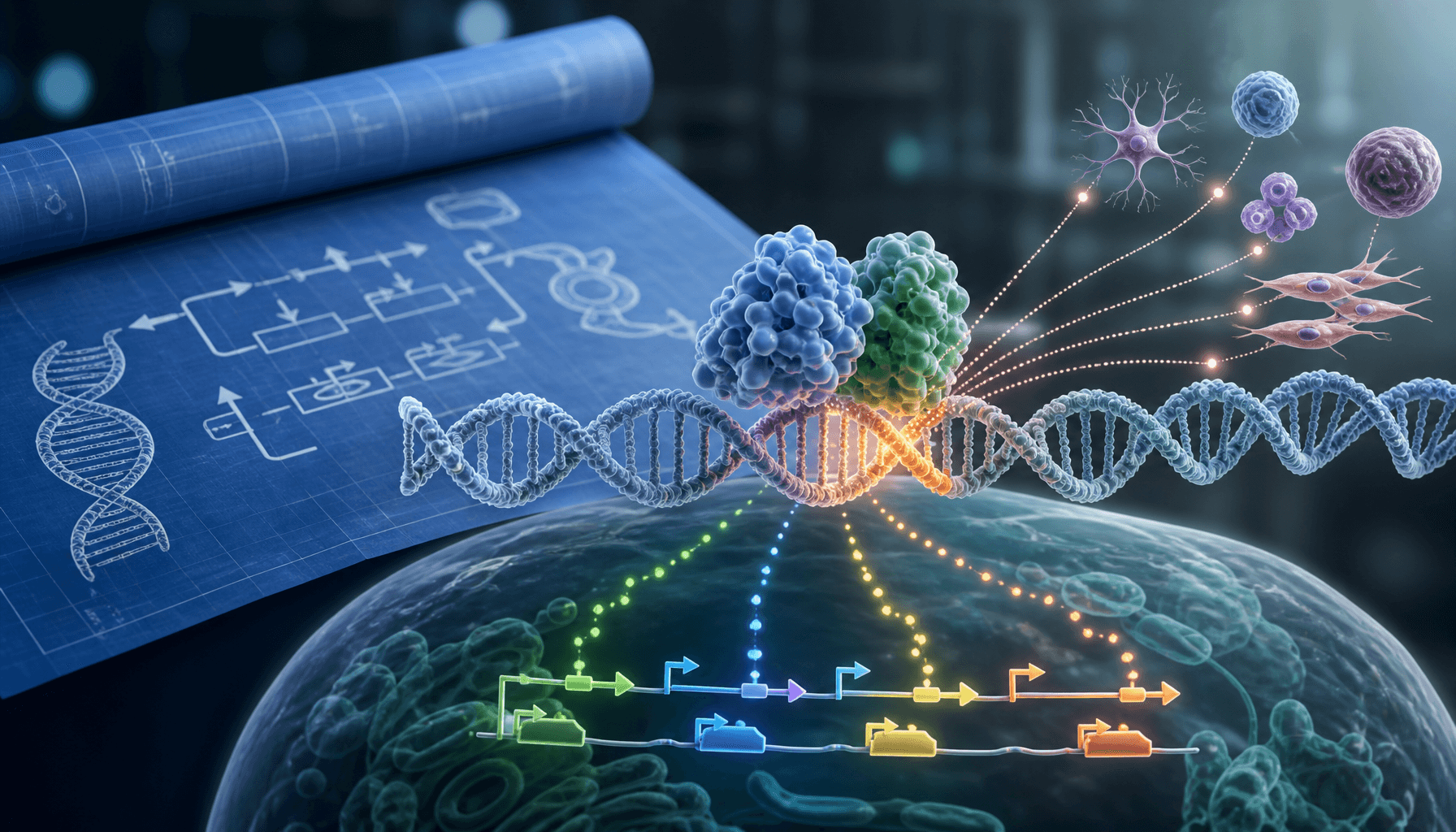
Modern life sciences are undergoing a profound transformation from 'descriptive discovery' to 'computational understanding.' Recent findings in August 2026 reveal that we are moving beyond static genetic sequencing toward an era where we decode how organisms make complex decisions in space and time. From millisecond-scale credit assignment in songbird brains to metabolic reprogramming in synthetic biology, scientists are unlocking the underlying logic that drives biological complexity.
The Precision Revolution in Neuroscience
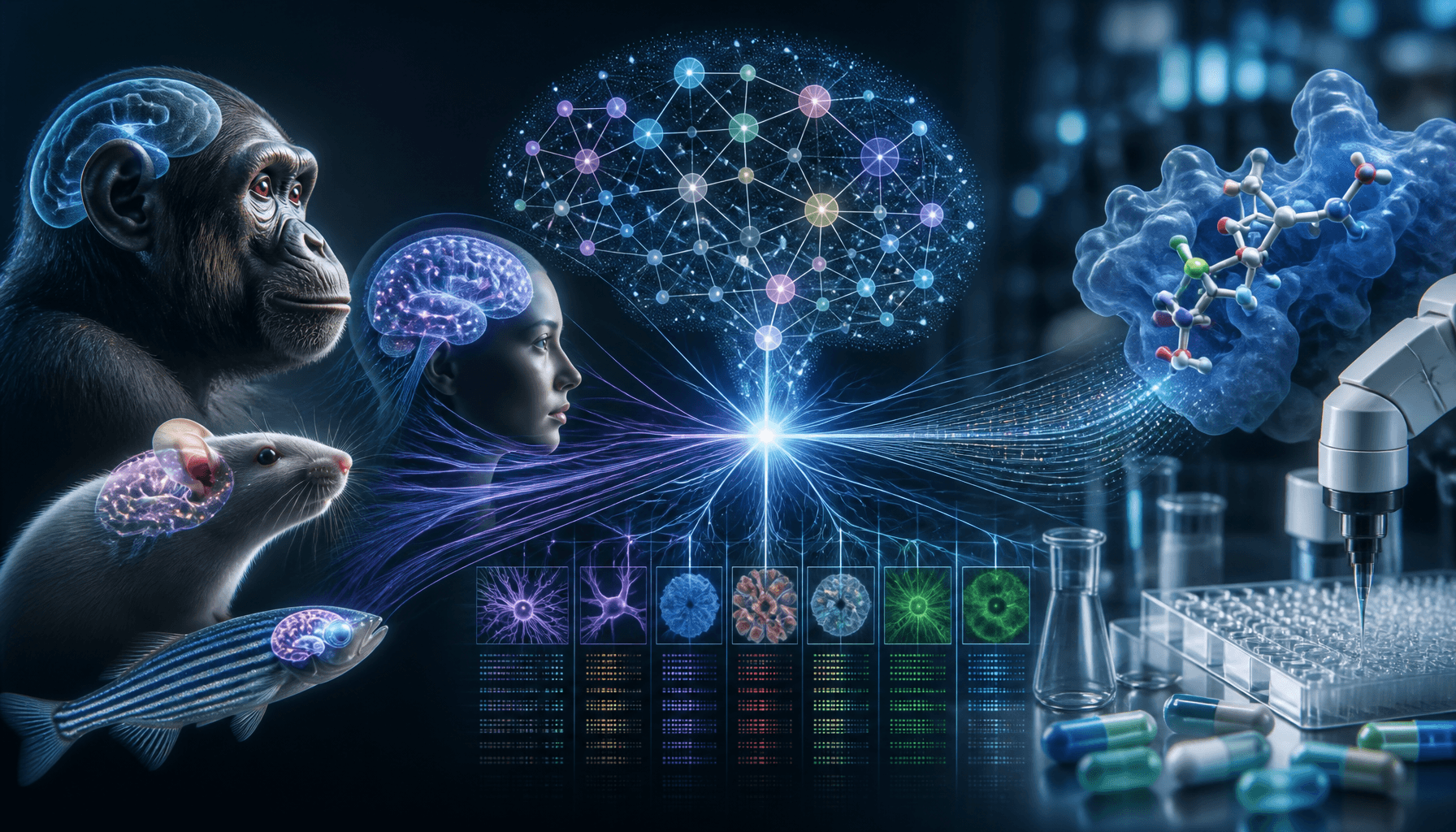
For years, the scientific community operated under misconceptions regarding how the brain links actions to outcomes—the credit assignment problem. Research by Scherrer et al. provides a breakthrough analysis of songbird neural circuits, revealing that the cortico-basal ganglia pathway can execute learning with 3.2 ms temporal precision at a single-neuron level. This finding challenges the prevailing view of dopamine-mediated reinforcement and offers a new perspective on human cognitive functions. Simultaneously, work by Vairam et al. on Autism Spectrum Disorder (ASD) integrates brain imaging with gene-expression maps to demonstrate that hyperconnectivity and hypoconnectivity are distinct neurobiological phenomena rather than two poles of a single axis. This conceptual decoupling is essential for the future of clinical stratification in precision psychiatry.
Phenotype-Driven Drug Discovery
Traditional drug discovery relies heavily on target validation, which can be limiting for diseases without well-defined targets. The newly introduced 'Morphology-Guided Molecule Generation' (MGMG) approach integrates cellular morphological profiles with molecular textual descriptions, successfully bypassing the need for target information. This marks the rise of a 'phenotype-driven' discovery mode that performs well even in data-scarce settings. Furthermore, the validation of DRB18—a Pan-Class I glucose transporter inhibitor—demonstrates the potential of interfering with metabolic nodes to enhance immunotherapy efficacy in non-small cell lung cancer.
Evolution and Environment: From Ancient Mechanisms to Modern Survival
Biological resilience is often rooted in deeply conserved mechanisms. Loconsole et al. demonstrated the 'Bouba-Kiki effect' in macaques, suggesting that sound-shape correspondence is a conserved feature of vertebrate perception rather than a uniquely human cultural trait. In microbiology, studies on the cold-shock response of Streptomyces coelicolor and the co-evolution of immune co-chaperone complexes in ferns illustrate how life employs modular evolution to navigate environmental fluctuations. These insights not only advance basic science but provide the logical framework for innovations in agricultural biotechnology.
Industry and Regulation: The Road to High-Fidelity Validation
As the FDA pushes for 'Real-Time Clinical Trials' (RTCT) to accelerate drug development, academic breakthroughs like GraNPA—a method enabling GWAS-like results from pangenome graphs with minimal cohorts—are becoming increasingly critical. These tools not only lower the barrier to entry but also bridge the 'accountability gap' between basic science and clinical application through high-fidelity verification. The integration of AI-driven clinical adjudication and miniaturized diagnostic platforms underscores that the future of biotechnology lies in our ability to adapt to regulatory environments while maintaining precise control over complex biological systems.