From the Hippocampus to the Ecosystem: How Computational Biology is Rewiring Our Understanding of Life
In the latest wave of breakthroughs in computational biology, we are witnessing a profound paradigm shift that transcends species and scales. This week's research reveals that whether it is the way the human brain processes language or how a cell decides its fate during embryogenesis, the underlying logic is increasingly converging toward the 'contextual computation' and 'sequence encoding' we recognize in artificial intelligence.
The Brain’s 'Attention' Mechanism and Biological Computation
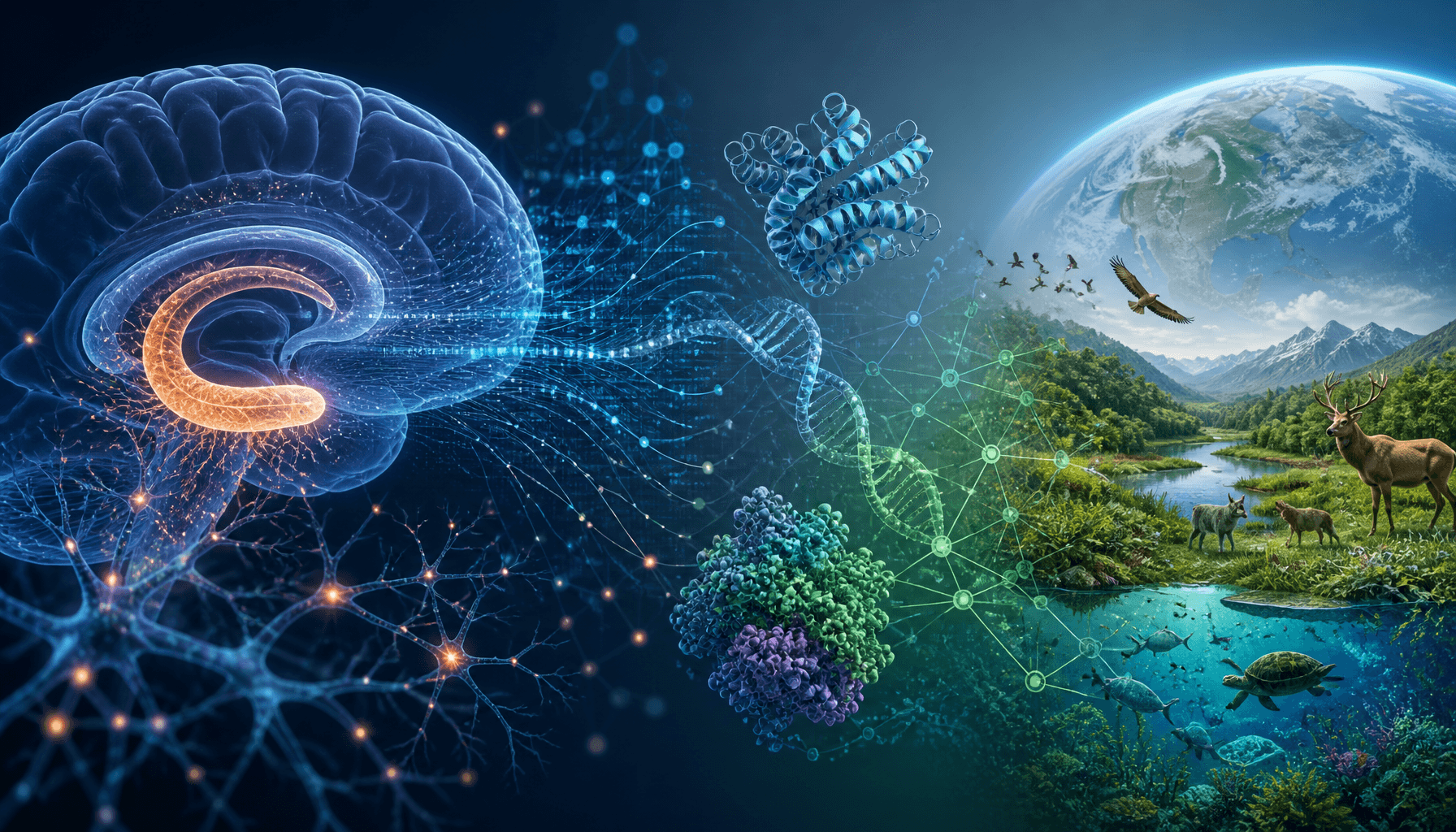
Katlowitz et al.’s exploration of linguistic contextualization in the human hippocampus provides a breakthrough perspective for cognitive science. The study suggests that hippocampal neurons process semantic meaning through a mechanism strikingly similar to the self-attention mechanisms in transformer-based Large Language Models (LLMs). This mode of 'vectorial shifting' demonstrates that biological systems and artificial architectures may share a common mathematical logic for processing complex information. This discovery not only clarifies the hippocampus's role in the language network but also provides strong neurobiological support for the broader 'contextual biology' paradigm.
The Automation of Biological Discovery: An AI-Driven Lab Revolution
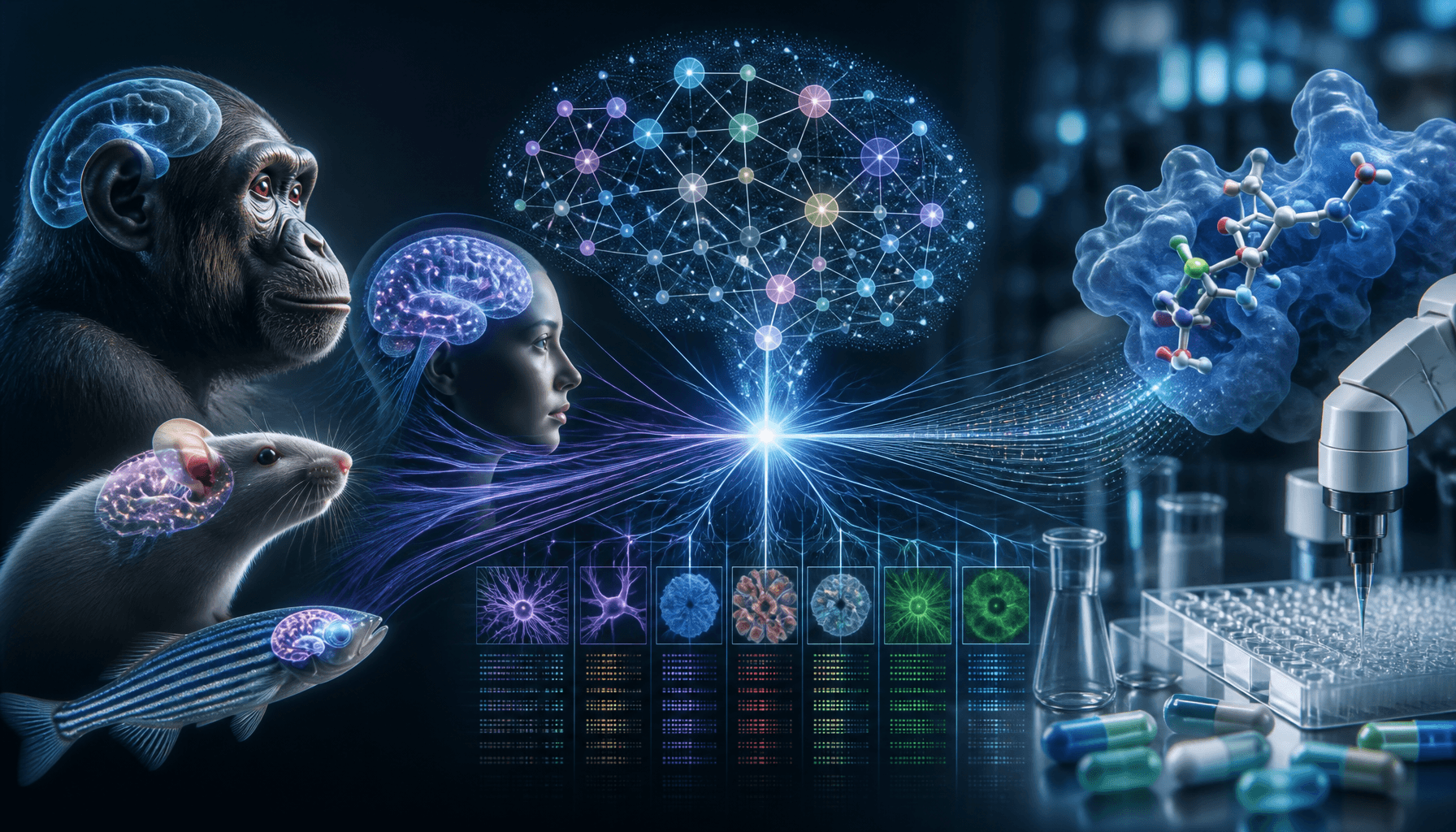
Within the molecular biology toolbox, the release of STAR Suite marks a significant milestone. This AI-assisted bioinformatics tool demonstrates how AI agents can accelerate the development of complex software, integrating multiple transcriptomic pipelines into a single, high-performance executable. Its adoption by the NIH MorPhiC consortium highlights the scientific community’s urgent need for standardized, efficient, and open-source data processing. As research breaks free from the constraints of proprietary software, the efficiency and reproducibility of biological experiments are poised for exponential growth.
Tracing the Trajectory of Life: From Cell Lineages to Evolutionary Patterns
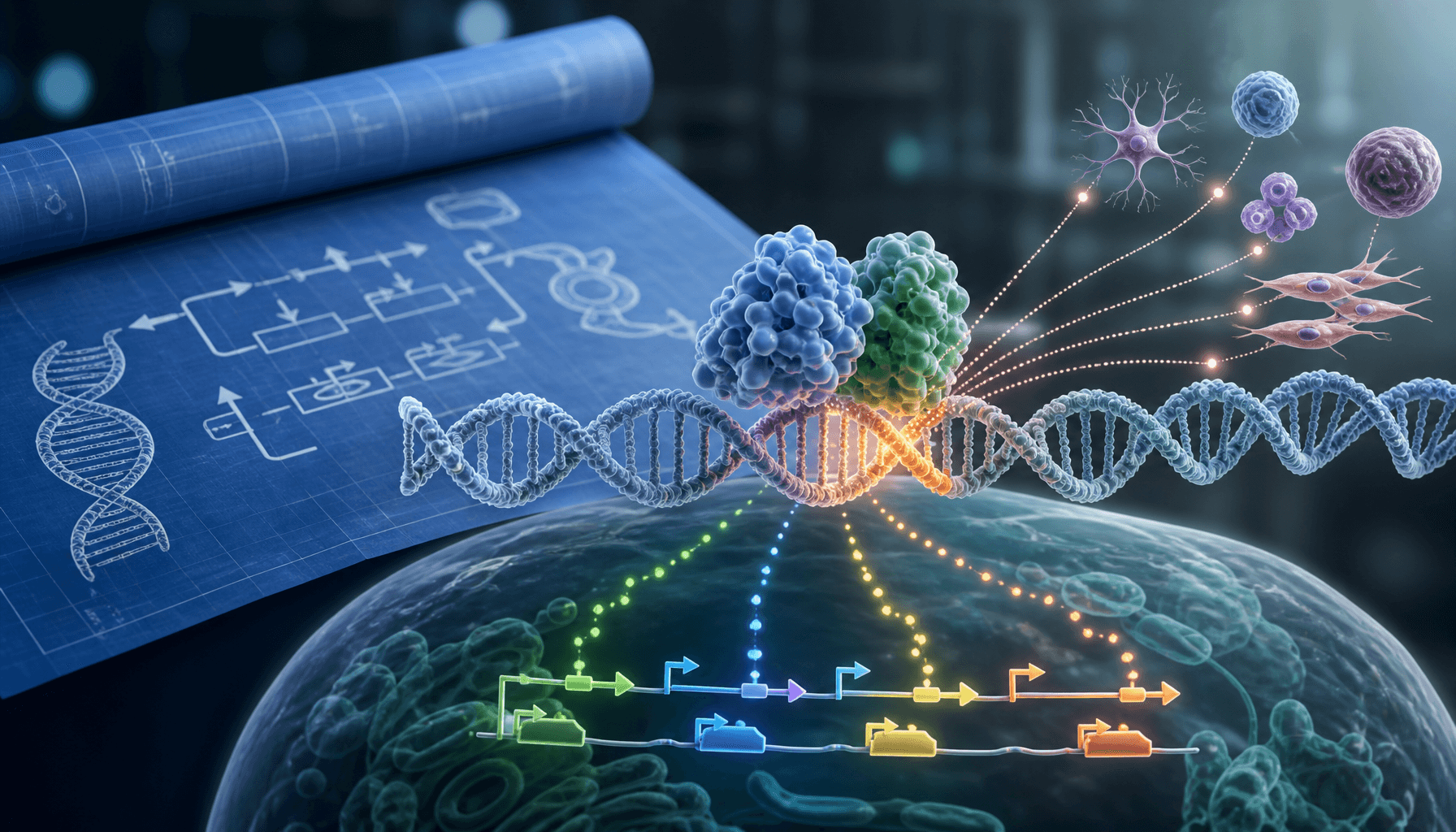
In developmental biology, the introduction of the LEAP framework allows scientists to reconstruct the ancestral transcriptional states of cells during zebrafish development. This 'lineage-resolved' technology enables us to observe the 'hidden states' of cells before they differentiate, revealing developmental milestones that have long gone unnoticed. This approach mirrors the evolutionary research by Taberer et al. on Limacodidae moths, where long-distance dispersal and adaptive differentiation are shown to be the primary mechanisms shaping global biodiversity—whether in the development of an individual or the evolution of a species over millions of years.
Reconstructing Clinical and Epidemiological Data
In clinical practice, the emergence of the Acutelines biobank and advancements in wastewater-based epidemiology represent the 'living' evolution of public health monitoring. By integrating emergency department data, biological samples, and environmental markers, we are constructing a predictive network capable of real-time response to public health threats. These data-driven techniques are shifting public health from reactive governance to proactive, real-time monitoring.
Future Outlook
From neural circuits to global biological distributions, these studies point toward a future where biology is increasingly programmable, predictable, and governed by structured computational logic. We are moving beyond the era of mere data collection into an age of understanding the essence of life through computational frameworks. For Seges readers, this means we must pay closer attention to interdisciplinary technologies that translate biological mechanisms into algorithmic models, as these will be the core engines of medical diagnostics and biotechnology innovation in the coming decade.