Introduction: The Pivot Toward Embodied Intelligence
As we progress through the summer of 2026, the artificial intelligence landscape is undergoing a profound structural evolution. While the past two years were defined by the scaling laws of Large Language Models (LLMs), the research frontier has shifted toward a more challenging objective: endowing AI with the capacity to navigate physical noise, perform real-time decision-making, and maintain long-term reliability within resource-constrained environments.
TurboVLA: The Efficiency Milestone in Robotics
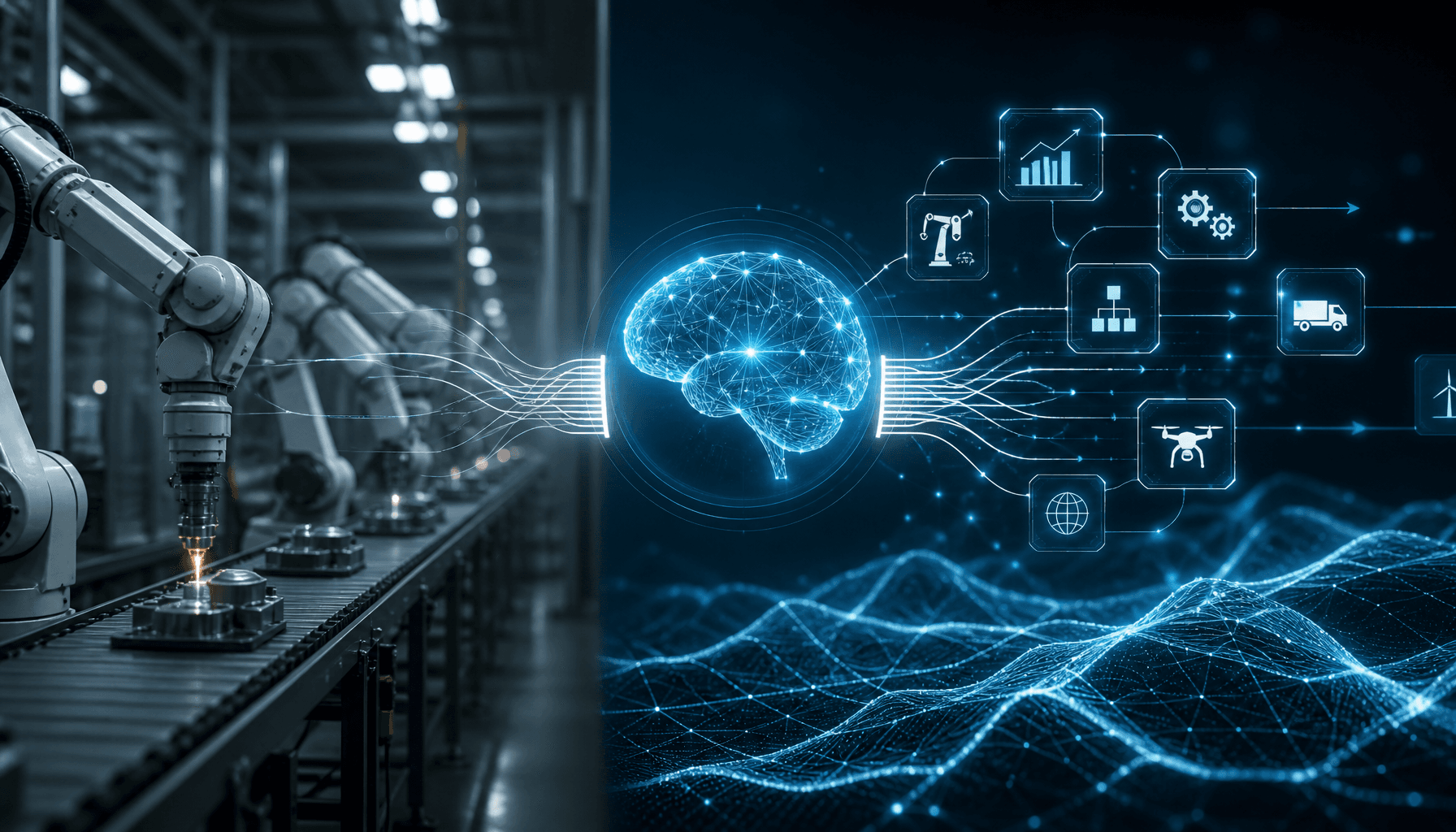
Robotics has long been bottlenecked by the computational overhead of conventional Vision-Language-Action (VLA) pathways. The recent work by Hengyi Xie and colleagues introduces TurboVLA, a paradigm-shifting framework that bypasses the latency-heavy LLM-centric middle layer. By reformulating the pathway into a direct vision-language-to-action mapping, the model achieves 32 Hz inference on consumer-grade RTX 4090 hardware while consuming less than 1 GB of VRAM. This efficiency is revolutionary for industrial deployment, effectively reducing robot retasking times from weeks to hours and enabling real-time operation in dynamic warehouse and manufacturing settings.
From 'Pretraining' to 'Behavioral Specification'
In the realm of AI-driven software engineering, the SpecFirst framework—introduced by Yihao Chen et al.—highlights a critical failure mode in existing coding agents: the tendency to rush into code synthesis without established behavioral context. By treating specification elicitation as a first-class phase, similar to traditional requirements engineering, SpecFirst drastically improves success rates on complex benchmarks like ProgramBench. This shift toward rigorous, audit-capable workflows mirrors findings in Online Reinforcement Learning, where Perry Dong et al. demonstrate that naive Q-function pretraining often yields diminishing returns. The industry is moving away from the "blind pretraining" obsession, favoring initialization methods that bootstrap learning through policy ensembles and structured diagnostics.
Quantum Computing: Bridging the Gap to Industry
Quantum research is simultaneously transitioning from theoretical curiosity to practical application. Jason Iaconis et al. have successfully framed Quantum Topological Data Analysis (QTDA) as a viable feature-extraction tool for neurodegenerative disease and financial market stability analysis. Complementing this, Siddardha Chelluri et al. provided a roadmap for fault-tolerant logical operations in modular quantum architectures. By developing efficient protocols for distributed error correction, these researchers are establishing the groundwork for utility-scale quantum computation that operates effectively even across noisy inter-module interfaces.
Simulating Intent: The Rise of Mental World Modeling
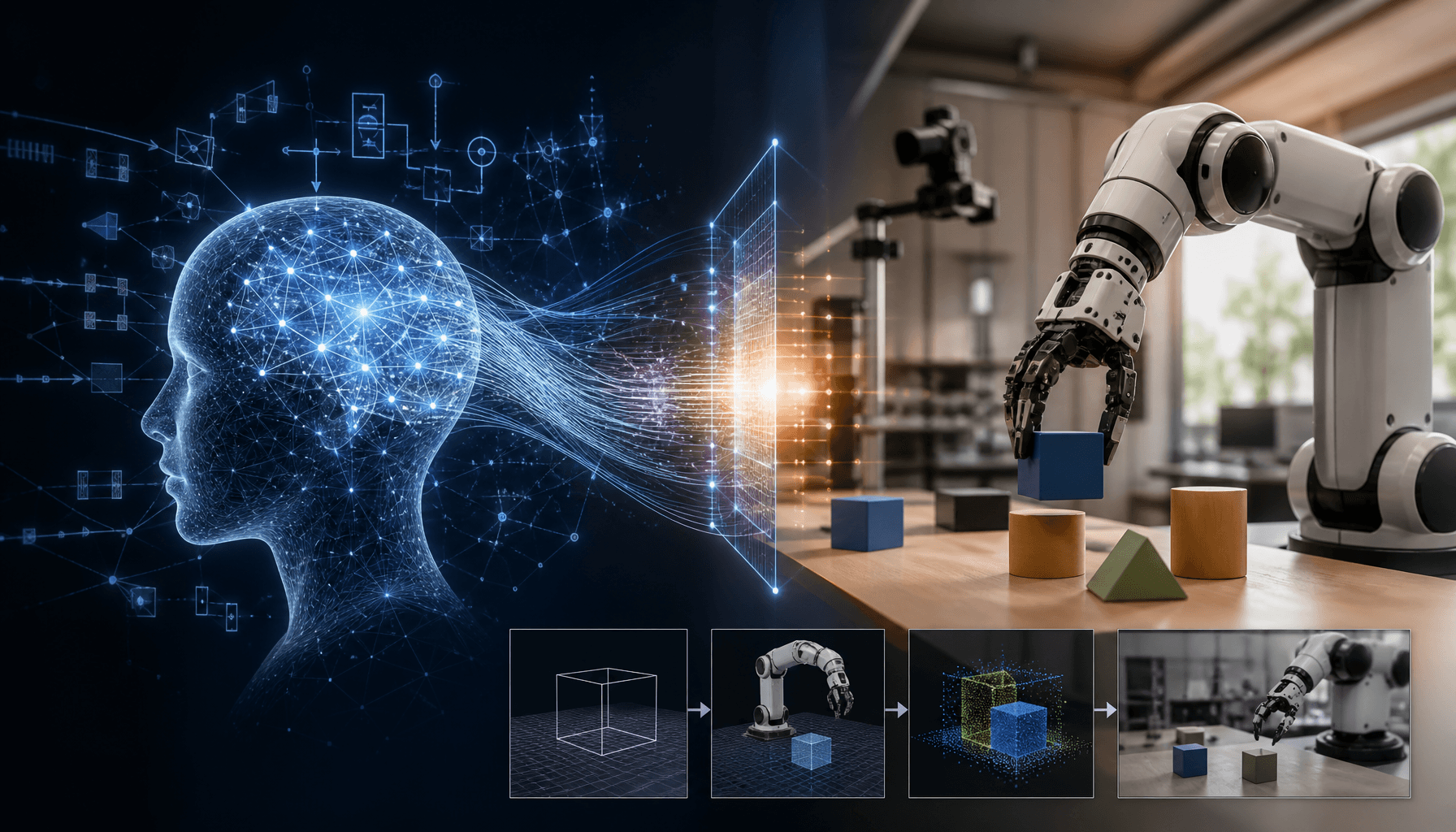
Perhaps the most ambitious frontier is the attempt to model human cognition. Hao Fei et al. have formalized "Mental World Modeling" (MWM), a framework that tracks not just physical scene dynamics, but the hidden mental states—beliefs, intents, and social perceptions—of agents. This is an essential step toward safer human-AI interaction. Yet, we must remain grounded: as Peter Kirgis and colleagues demonstrated through their rigorous "shadow evaluations" of AI agents conducting research, while current frontier models are proficient at engineering tasks, they still lack the judgment and creative backtracking required for open-ended research. This serves as a vital reminder that autonomous capability must be coupled with human-in-the-loop oversight.
Conclusion: The Era of Pragmatic AI
From high-efficiency robotics on commodity hardware to quantum algorithms tackling high-dimensional data, the summer of 2026 marks the dawn of "Pragmatic AI." We are no longer chasing parameter counts; we are focused on stability, physical grounding, and auditability. For industry leaders, this is the moment to pivot from chasing universal general-purpose models to deploying specialized, hardware-aware agents capable of operating reliably within the complexity of the physical world.