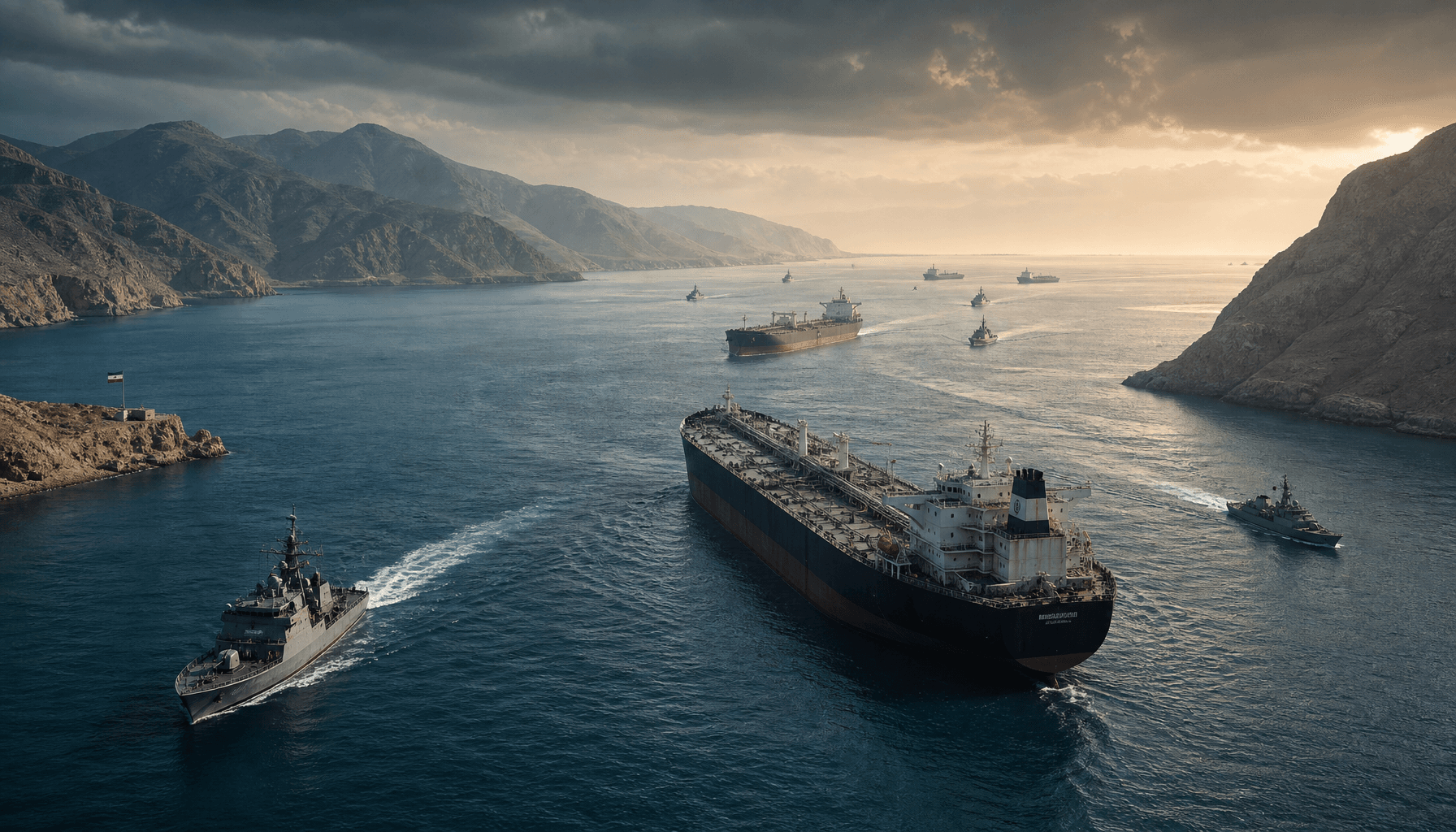
The Strategic Criticality of the Strait of Hormuz
The Strait of Hormuz serves as a vital artery for global energy supplies, facilitating the transit of approximately 20% of the world's oil consumption daily. Recently, former U.S. President Donald Trump issued a stern ultimatum, threatening to impose U.S.-led tolls on vessels transiting the strait if a final deal with Iran is not reached within 60 days. This rhetoric challenges established international maritime law and exacerbates geopolitical tensions against an already fragile Middle Eastern backdrop.
The current regional instability, particularly the military friction between Israel and Hezbollah in Lebanon, has pushed regional security to a breaking point. Iran has claimed to have closed the strait in retaliation for Israeli actions, a narrative currently disputed by U.S. military assessments. Despite the lack of an immediate, total blockade, the mere suggestion of supply chain disruption has triggered volatility in global commodity markets.
Challenging the Principle of 'Transit Passage'
Under the United Nations Convention on the Law of the Sea (UNCLOS), the Strait of Hormuz is designated as an international waterway subject to the principle of 'transit passage.' This legal framework guarantees that all vessels, both commercial and military, retain the right to navigate the strait freely provided they do not threaten the security of coastal states. Trump's proposal to levy tolls would lack any credible basis in international law. Such a move, if attempted unilaterally, would likely face immediate challenges in international courts and fierce opposition from major global shipping powers as a violation of freedom of navigation.
Legal scholars argue that no single nation has the jurisdiction to impose tolls on an international strait. Implementing such a policy would be viewed as a direct provocation against the rules-based international order, potentially leading to skyrocketing maritime insurance premiums and profound disruptions to global trade flows.
Market Impact and Search Trends
Against a backdrop of heightened market risk aversion, this development has captured significant public interest. According to Google Trends data, the search interest for this topic in the United States currently stands at 88, while regional interest in the Middle East has reached 95. Investors are showing heightened sensitivity to energy price fluctuations; even without concrete supply disruptions, market participants are heavily weighing geopolitical risk premiums.
Data suggests that volatility in energy futures has ticked upward since the announcement. Analysts caution that while such threats are often interpreted as political bargaining tactics, the psychological impact on shipping costs and insurance premiums is tangible. Global shipping giants are currently monitoring the situation closely to mitigate operational risks and ensure the safety of their crews and cargo.
Future Outlook and Key Considerations
Looking ahead, the primary focus remains on whether diplomatic channels can de-escalate the situation within the 60-day window. The standoff between the U.S. and Iran extends beyond maritime transit, touching upon broader Middle Eastern security architecture. Observers recommend monitoring assessments from the International Energy Agency (IEA) regarding maritime security, as well as joint statements from regional powers regarding the maintenance of open sea lanes.
Furthermore, the posture of the U.S. Fifth Fleet in the region remains a critical variable. Any indications of military reinforcement or diplomatic breakthroughs will serve as primary drivers for risk adjustment in the markets. We will continue to track the legal disputes and regional political developments to provide timely updates for our readers.