A Sharp Escalation in Geopolitical Tensions
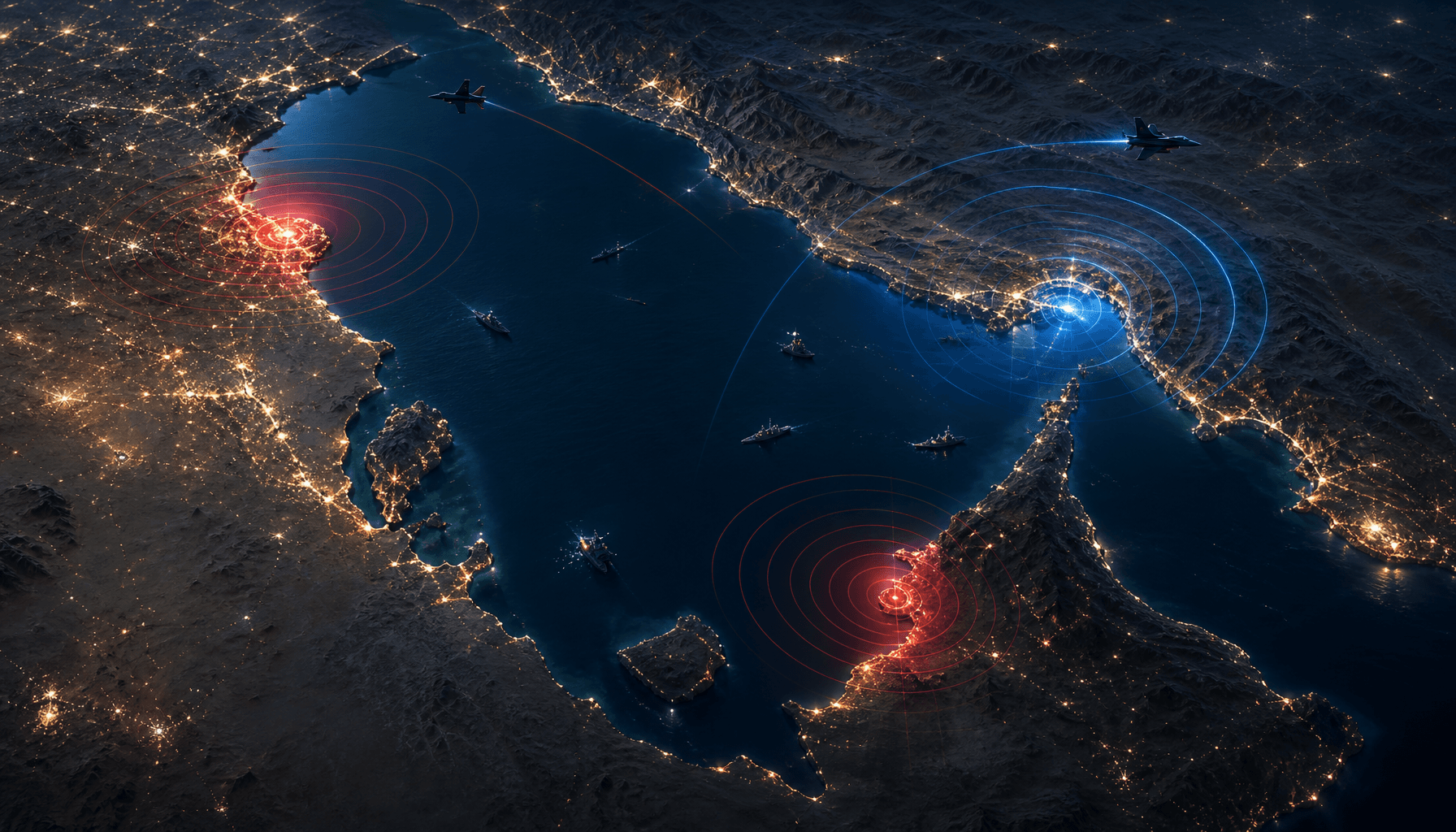
Geopolitical risk in the Middle East has spiked significantly following a series of aggressive actions reported by the Islamic Revolutionary Guard Corps (IRGC). The IRGC claims to have destroyed eight American military installations in Kuwait and Bahrain, framing the operation as a retaliatory strike against recent U.S. military actions targeting Iranian coastal positions. This development has sent shockwaves through regional security frameworks and raised urgent concerns regarding the stability of the Strait of Hormuz.
Background and Tactical Developments
The roots of this current escalation lie in the intensifying maritime friction between U.S. naval forces and Iranian assets in the Persian Gulf. According to reports, the U.S. launched two separate waves of strikes targeting Iranian coastal defense infrastructure, aimed at mitigating anti-ship missile threats. In a swift response, the IRGC claims to have deployed a combination of unmanned aerial vehicles and short-range ballistic missiles against U.S. logistics and communication nodes in Kuwait and Bahrain. While the U.S. military has yet to confirm the full extent of the damage, the IRGC’s assertion that eight infrastructures were successfully neutralized represents a significant shift in the operational theater.
Expert Analysis and Risk Assessment
Military analysts are approaching these claims with high caution. Current intelligence suggests that even if these strikes occurred as described, they represent a shift from proxy-based engagement to direct challenges against U.S. strategic depth in the Gulf. However, historical data modeling on regional military conflicts suggests that such Iranian rhetoric often serves domestic political objectives as much as strategic military ones. Despite this, the threat to the Strait of Hormuz—the global artery for oil transit—has triggered immediate alarm across international policy circles.
Market Impact and Search Trends
The incident has had immediate repercussions for global energy markets. According to Google Trends data, the search interest for 'Middle East Conflict' in the United States has surged to a peak of 92, while in Taiwan, the search interest for the same topic sits at 78. Investors are closely monitoring fluctuations in energy prices and potential spikes in shipping insurance premiums. While the broader markets have remained resilient, institutional players have begun to adjust their exposure to Middle Eastern geopolitical risks.
Legal and Diplomatic Implications
From an international law perspective, the involvement of third-party sovereign nations such as Kuwait and Bahrain in these strikes creates a complex legal and diplomatic dilemma. Iranian Foreign Minister Araghchi has issued a stern warning, stating that any challenge to Iranian maritime sovereignty, particularly within the Strait of Hormuz, would be met with a 'devastating response.' This rhetoric has severely constricted the space for diplomatic mediation, leaving regional powers like Saudi Arabia and the UAE in a state of high alert as they attempt to navigate the deteriorating environment.
Future Outlook and Key Indicators
Looking ahead, the primary focus remains on the U.S. Department of Defense's official response and whether there will be a visible escalation in regional defensive deployments, such as the reinforcement of Patriot missile batteries. Furthermore, the role of the UN Security Council and the potential for back-channel diplomacy will be critical indicators in determining whether this crisis can be contained. Market participants and regional observers should remain vigilant for official military communiqués to distinguish battlefield reality from information warfare.