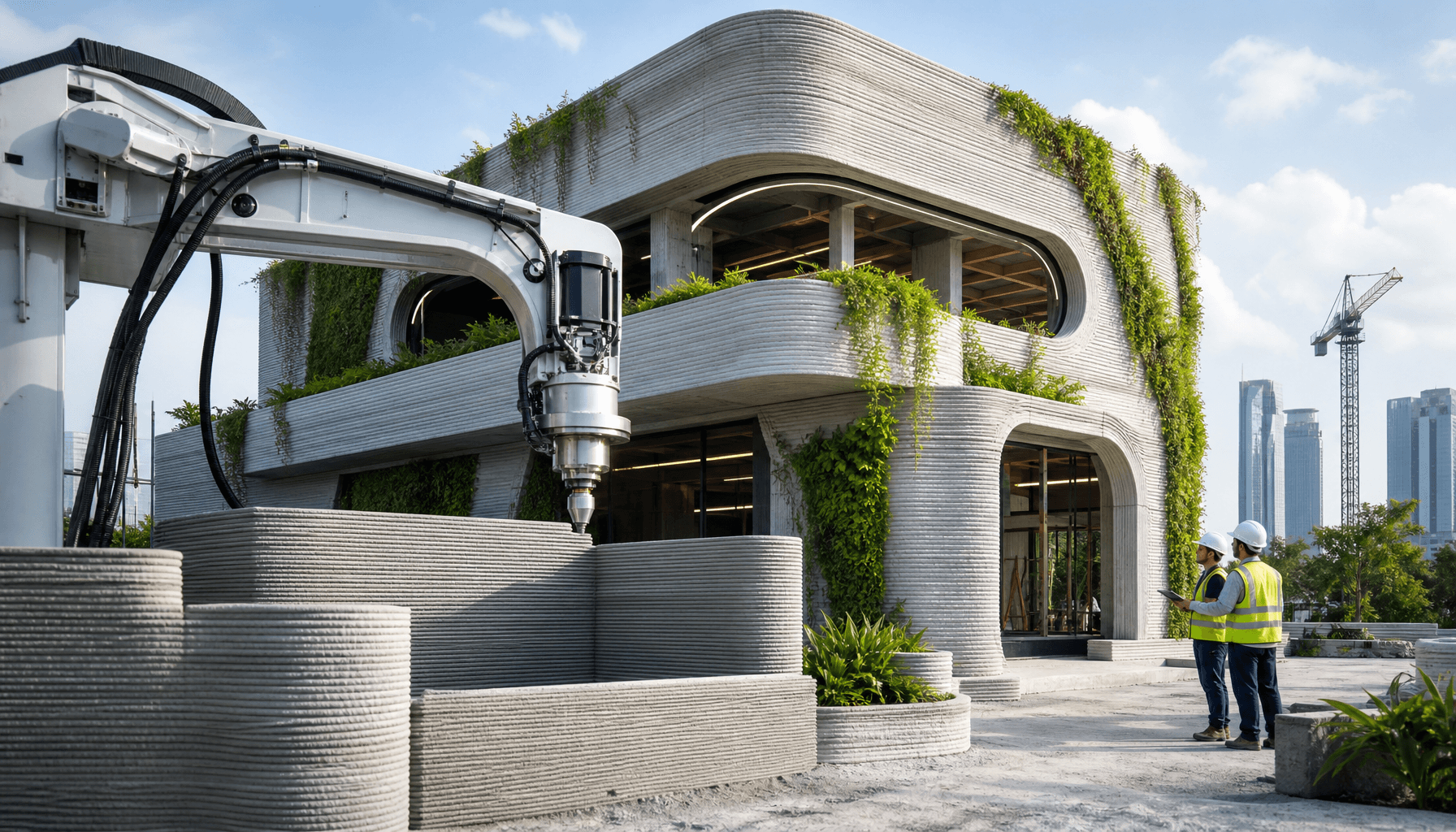
The Green Transformation of the Construction Industry
As one of the largest contributors to global carbon emissions, the construction sector is undergoing a necessary and rapid transformation to meet net-zero objectives. Recent international gatherings, such as the International Conference on Cementitious Materials and Alternative Binders (ICCM) and the International Conference on Concrete and Digital Fabrication (DC 2026), have showcased groundbreaking innovations in material science and production methodologies that are poised to reshape the industry.
Digital Fabrication and Efficiency
Digital fabrication and 3D concrete printing technologies are revolutionizing traditional construction workflows. By utilizing precise digital modeling and automated fabrication, architects and engineers are significantly reducing material waste and optimizing structural efficiency. These technologies not only streamline construction timelines but also unlock new possibilities for sustainable design, enabling the creation of complex, high-performance structures with minimal environmental impact.
Circularity: Reusing Traditional Materials
In tandem with high-tech solutions, the industry is also revisiting and refining the use of circular materials. Discussions at the 'New and Reused Bricks in Masonry 2026' conference highlight a shift toward integrating reclaimed materials into modern construction. By re-incorporating traditional fired clay bricks and other masonry elements, the industry is building a circular economy model that reduces dependence on virgin material extraction and lowers the overall environmental footprint of new buildings.
Market Sentiment and Trends
Market analysis shows that interest in 'sustainable materials' has reached an interest score of 76 in Europe and North America, reflecting a robust and growing demand for low-carbon building solutions. Developers and architects are increasingly prioritizing materials backed by Environmental Product Declarations (EPDs) to meet increasingly stringent building energy efficiency codes and sustainability certifications.
Outlook and Standards
The future of construction is firmly pointed toward low-carbon and circular production models. As the technical innovations showcased at global conferences move toward commercialization, the industry is expected to see a surge in building projects utilizing alternative binders and recycled content. Furthermore, government-backed green building rating systems will continue to incentivize market investment, pushing the sector toward a comprehensive net-zero future.