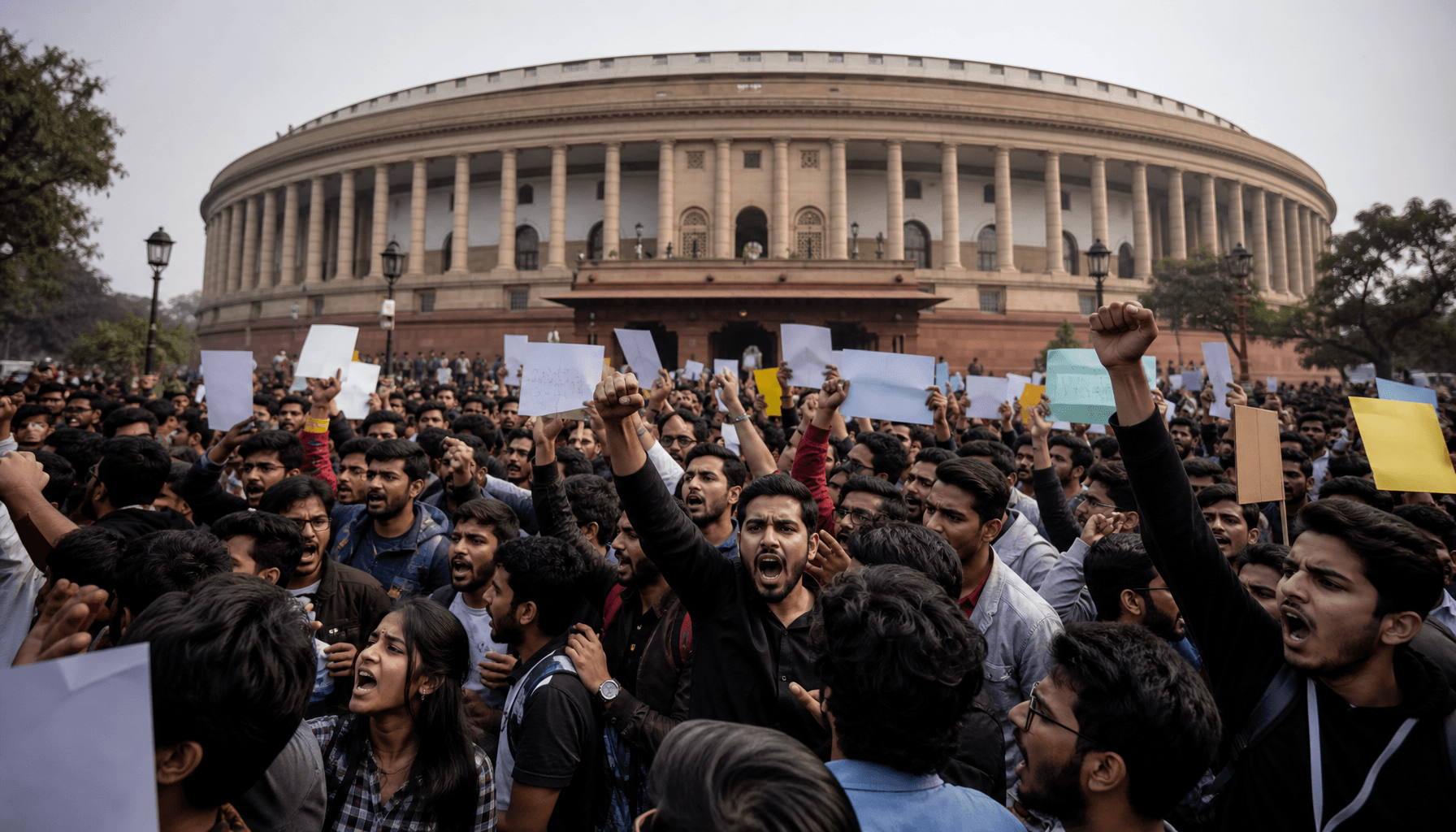
The Nationwide Uprising Over Exam Integrity
India is currently gripped by a profound educational crisis following a massive paper-leak scandal surrounding the National Eligibility cum Entrance Test (NEET). What began as reports of localized irregularities has ballooned into a nationwide student-led movement demanding accountability from the highest levels of government. Thousands of protesters have converged at Jantar Mantar, the historic site of agitation in New Delhi, demanding the immediate resignation of Union Education Minister Dharmendra Pradhan, citing a complete breakdown of trust in the examination system.
Context and Student Demands
According to reports from The Hindu Business Line, the current wave of protests is characterized by a deep-seated frustration among India's youth regarding their future prospects. The protesters argue that the government's response has been insufficient and dismissive of the gravity of the systemic failure. The movement, now entering its fourth consecutive day of disrupting parliamentary proceedings, has become a rallying point for students across the country. The demand for Minister Pradhan’s resignation is framed as a necessary step to restore integrity to the testing process, which determines the admission of millions of students into medical schools annually.
Government Response and Legal Framework
Prime Minister Narendra Modi, acknowledging the severity of the situation, recently declared that "nothing is more important than the youth's future," promising the establishment of fast-track courts specifically to handle cases of paper leaks and corruption in public examinations. This legislative pivot relies heavily on the recently enacted 'Public Examinations (Prevention of Unfair Means) Act, 2024'. Legal experts are currently debating the efficacy of this move, specifically whether these fast-track courts can constitutionally manage ongoing criminal investigations while adhering to due process standards. The balance between public order and the democratic right to peaceful assembly remains a contentious issue in the current legal landscape.
Impact and Data Trends
Interest in the NEET scandal has surged across digital platforms. Google Trends data indicates that search interest for terms related to "NEET protest" and "exam fraud" has reached peak levels, with interest scores in New Delhi and Karnataka recording 92 and 88, respectively. The ongoing disruption to parliamentary proceedings has hindered the government's legislative agenda, forcing a focus on education reform. The movement has attracted attention from global commentators, highlighting the challenges India faces as it scales its educational infrastructure to meet the demands of its massive youth population.
Future Outlook and What to Watch
As the situation unfolds, several key indicators will determine the outcome of this crisis. The primary focus is whether the government will concede to the protesters' demand for a cabinet-level resignation, which would be a significant political concession. Furthermore, the effectiveness of the proposed fast-track courts in delivering swift, transparent justice will be a litmus test for the 2024 Act. Observers should watch for any further amendments to the examination security protocols, as the Indian government seeks to recover its reputation in the international academic community.