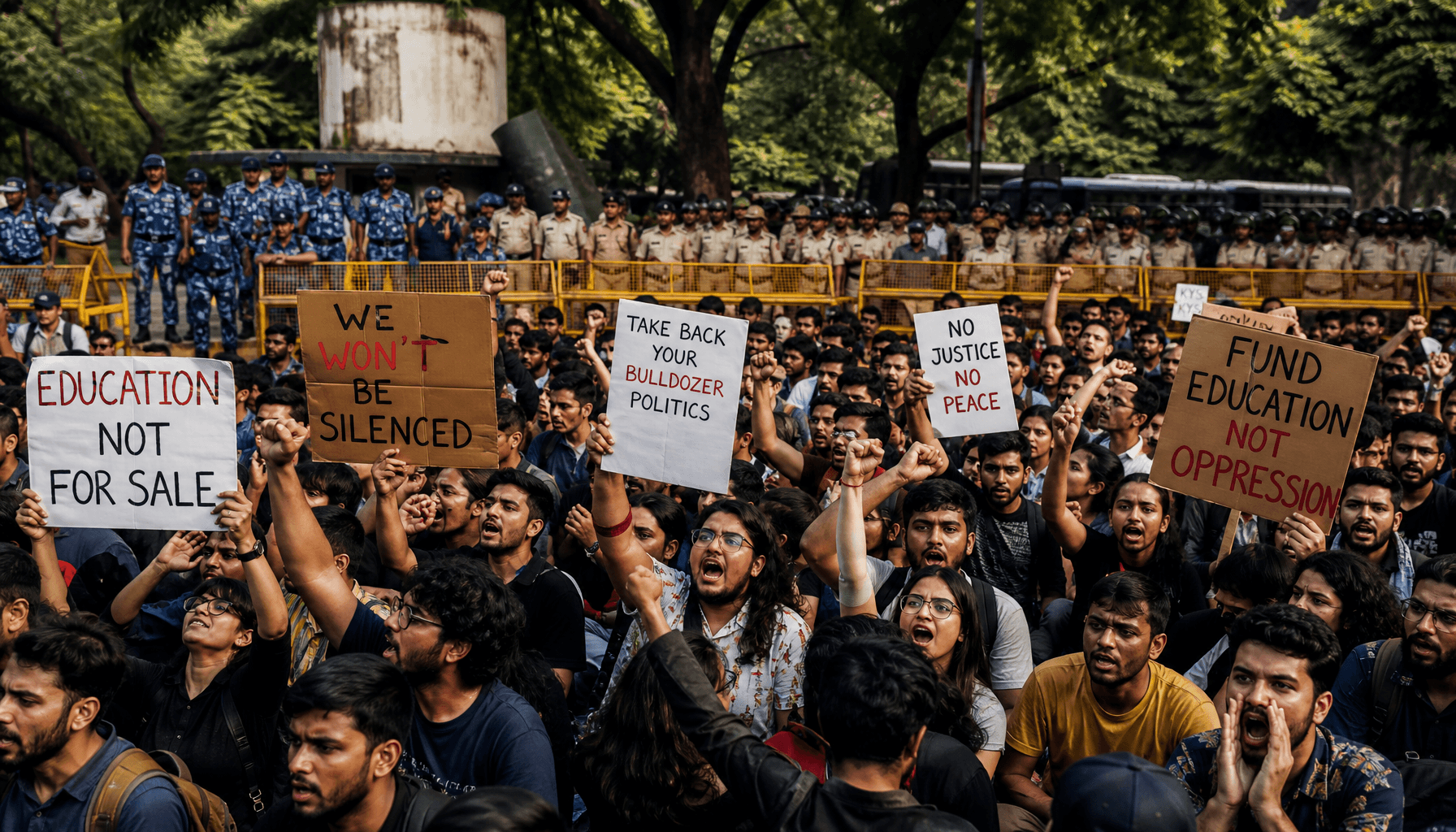
Crisis Background: NEET Exam and Student Outrage
The recent allegations of irregularities in India's NEET medical entrance exam have escalated from student demonstrations into a full-blown national political crisis. The protests, sparked by claims of leaked question papers, have seen continuous sit-ins at Jantar Mantar in Delhi, with solidarity movements emerging in international hubs like New York, London, and various European cities. The slogan "Main bhi cockroach" (I am also a cockroach) has become the rallying cry for students, symbolizing their defiance against systemic corruption.
Escalation and Security Deployment
As protests continue, the scale of participation has grown, prompting the government to rush 20 additional companies of the Central Reserve Police Force (CRPF) from West Bengal to Delhi. This heavy-handed security response underscores the severity of the situation. Opposition leaders, including Sharad Pawar, have joined the movement, demanding the resignation of Education Minister Dharmendra Pradhan, effectively channeling student grievances into a broader political challenge against the ruling government.
Legal and Regulatory Conflicts
The crisis involves complex legal challenges, including potential violations of the Bharatiya Nyaya Sanhita regarding criminal intimidation and the restrictive public assembly laws under the Bharatiya Nagarik Suraksha Sanhita. The matter is currently before the Supreme Court of India, which is hearing petitions regarding exam integrity. While the government has promised a fully computer-based NEET 2027, the skepticism among students remains profound, and the legal battle is far from over.
Search Trends and Data Analysis
According to Google Trends, search interest for "NEET Protest" has spiked exponentially over the past week. In India, the interest score reached 95, while international hubs like London and New York recorded scores of 68 and 72, respectively. The data underscores that this movement has transcended regional grievances to become a significant global social issue.
Future Outlook
The NEET crisis represents a major test for the Indian government. The movement's sustainability and international reach force the administration to navigate a delicate balance: upholding the credibility of the examination system while avoiding excessive force that could further inflame public sentiment. The coming weeks, marked by expected Supreme Court rulings and potential shifts in educational policy, will be crucial. Observers are watching for any signs of cabinet reshuffling or deeper systemic reforms aimed at addressing the root causes of the widespread student unrest.