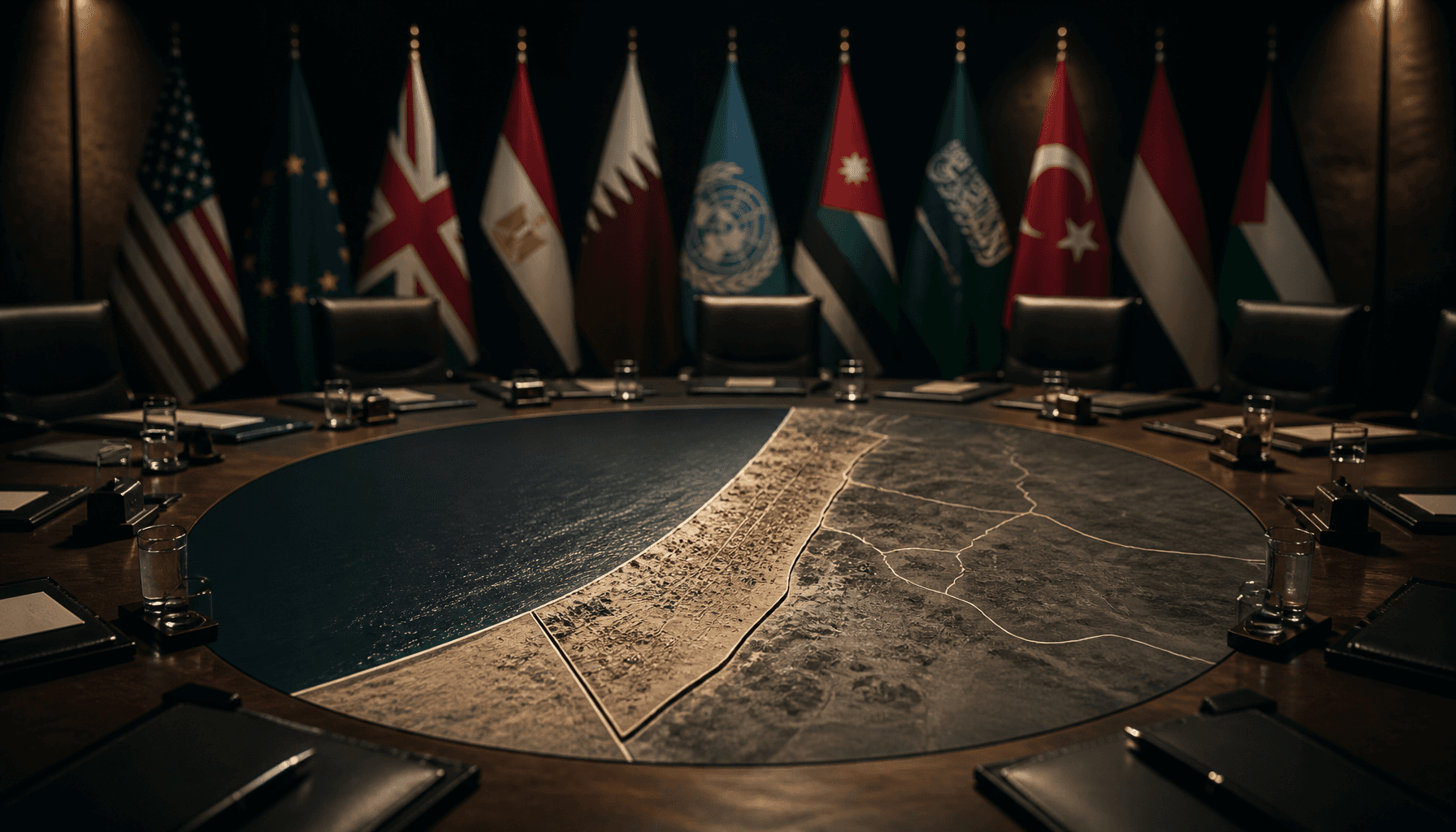
Recent Developments in the Gaza Conflict
Recent shifts in the Middle East conflict have been both sudden and significant. According to reports from The Economic Times, former U.S. President Donald Trump has announced that, through the mediation of a "Board of Peace," Hamas leadership has reached a historic agreement for the "complete disarmament" of Hamas in the Gaza Strip. If verified, this would represent a major diplomatic breakthrough in a conflict that has persisted for months.
Terms and Execution Details
The core of the reported agreement involves Hamas consenting to complete disarmament, a move framed as a critical step toward establishing a new Palestinian government and ensuring security for Israel. However, details regarding the execution of this agreement remain critically scarce. From an international law perspective, the disarmament of non-state actors typically requires robust international monitoring mechanisms—such as UN peacekeeping forces or neutral security forces—to be enforceable. Current reporting only confirms the existence of the deal but lacks information on how the standard of "complete disarmament" will be verified, leading to skepticism from the international community.
Israel's Position and Skepticism
Despite this publicized breakthrough, the Israeli government’s response has been swift and firm. Israel has explicitly rejected the proposed terms, with the primary point of contention being the sequencing of disarmament. Israel insists on "complete disarmament" as a precondition for any ceasefire, rather than as an outcome of one. This dispute over whether disarmament is a "precondition" or an "outcome" reflects a deep-seated lack of trust between the two parties. Israel remains highly skeptical of the legal legitimacy and verification protocols of the proposed deal.
Geopolitical Implications
This event has seen a sharp rise in search interest on Google Trends, reaching 78 in the U.S. and 91 in regions closely monitoring Middle Eastern affairs. This reflects global urgency for peace in the region. However, due to the lack of independent fact-checking by academic institutions or major news wires, the authenticity of the agreement remains "unverified." Experts note that without a clear international legal framework, such agreements are often viewed more as political statements than as the end of actual military conflict.
Future Outlook and International Monitoring
The coming weeks will be critical in determining whether this agreement can be implemented. Key indicators to watch include the potential deployment of formal international monitoring teams to Gaza and any shifts in Israel’s stance on its "preconditions." If this agreement is merely political posturing rather than a substantive military withdrawal, the situation on the ground is likely to remain at a stalemate. We will continue to track statements from international organizations and diplomatic mediators to clarify this complex geopolitical signal.