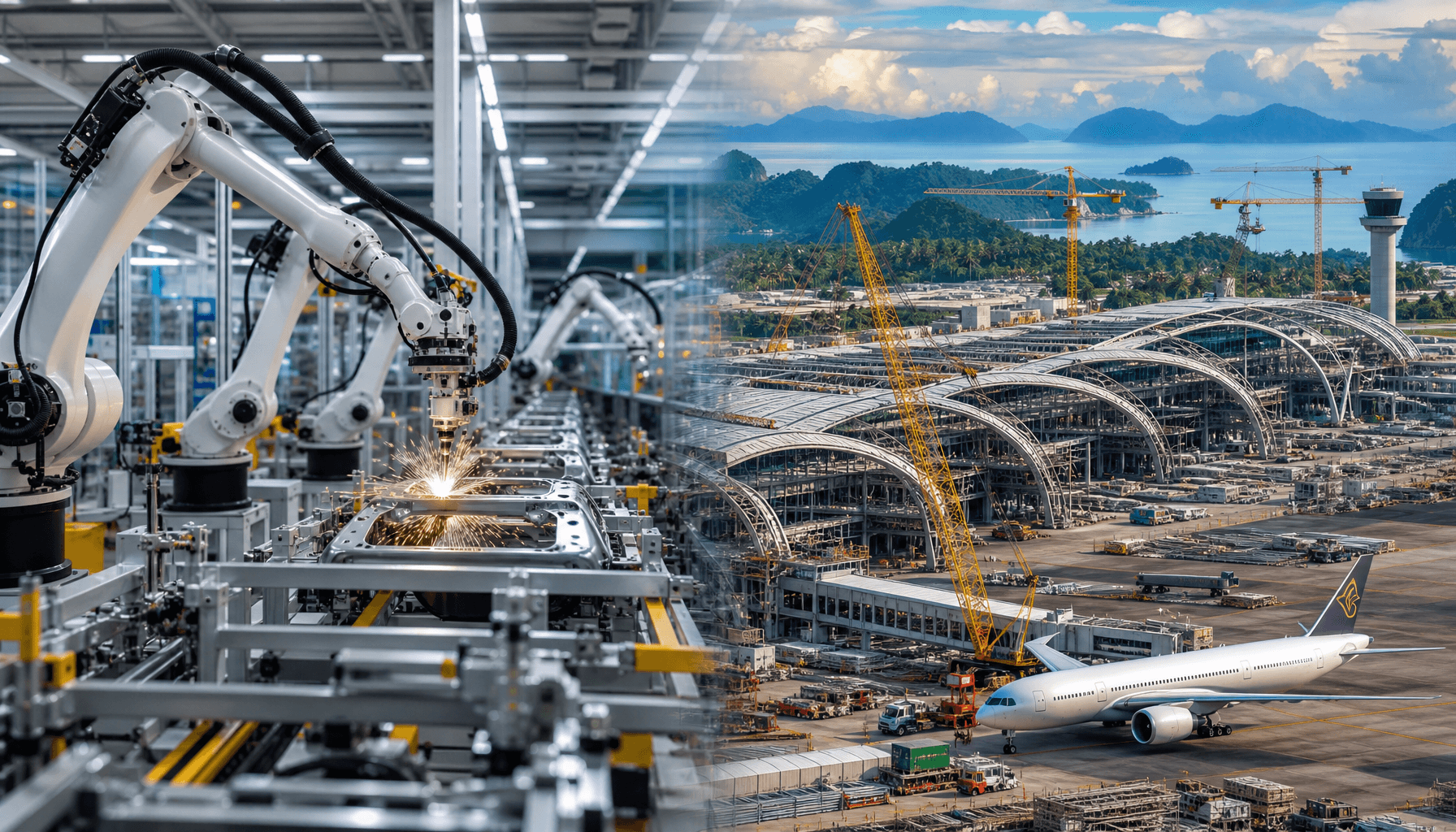
The New Frontier of Supply Chain Relocation in Southeast Asia
With the restructuring of global supply chains, Southeast Asian nations are accelerating their entry into the tech manufacturing race. Thailand and Vietnam, leveraging their unique industrial strengths, are attempting to establish themselves as regional hubs in robotics and aviation logistics, respectively. This phenomenon is not only a display of regional economic strength but also a key signal of the global manufacturing shift toward the Association of Southeast Asian Nations (ASEAN).
Thailand: The Rise of the Robot Army
Long serving as a global automotive manufacturing base, Thailand is now leveraging its deep hardware manufacturing foundation to actively transition into a regional humanoid robotics hub. Reports from the Bangkok Post indicate that the Thai government is attracting international robotics R&D teams through tax incentives and technical training. This move is intended not only to address domestic labor shortages but also to establish a complete robotics industrial chain, from sensor technology to assembly and testing, showcasing Thailand's potential to become the headquarters for a 'robot army.'
Vietnam: Long Thanh Airport and Aviation Hub Ambitions
Meanwhile, Vietnam's industrial development strategy focuses on the leapfrog development of infrastructure. The Politburo has explicitly included the area surrounding Long Thanh Airport in its 20-year economic blueprint, with the goal of developing it into an Asian aviation hub. The plan expects to create an industrial cluster worth $150 billion by 2045. For multinational tech corporations, this means Vietnam will become more than just an assembly base; it will become a logistics and business hub connecting the Asia-Pacific market.
Advancements in Consumer Hardware and Technical Innovation
Beyond industrial manufacturing, Southeast Asia maintains a high pace of innovation in consumer hardware. According to recent information from The Verge, foldable phone technology is maturing rapidly within the region's manufacturing ecosystem. As yields for foldable and flip phones improve, electronic contract manufacturers in Thailand and Vietnam are becoming the primary production bases for these high-end devices. This transition from low-end assembly to high-value product manufacturing is the core driver of industrial upgrading in Southeast Asia.
Search Trends and Market Data
Search interest for this topic in Southeast Asia continues to rise. Data shows that search interest for 'regional industrial chain relocation' has reached 75 in the region. For the global tech supply chain, focusing on infrastructure investment and talent pools in these regions has become a necessary step in evaluating future production layouts.
Future Outlook: Synergies in Regional Competition
Although Thailand and Vietnam differ in their development strategies, the two countries show complementary trends in regional manufacturing competition. Thailand focuses on automation and robotics, while Vietnam continues to increase investment in logistics and infrastructure. In the future, Southeast Asia is expected to form a highly collaborative manufacturing network. Investors and corporations should continue to monitor the details of policy formulation in these countries, as these changes will directly impact the global supply chain landscape for the next decade.