The Rise of India's Technological Prowess
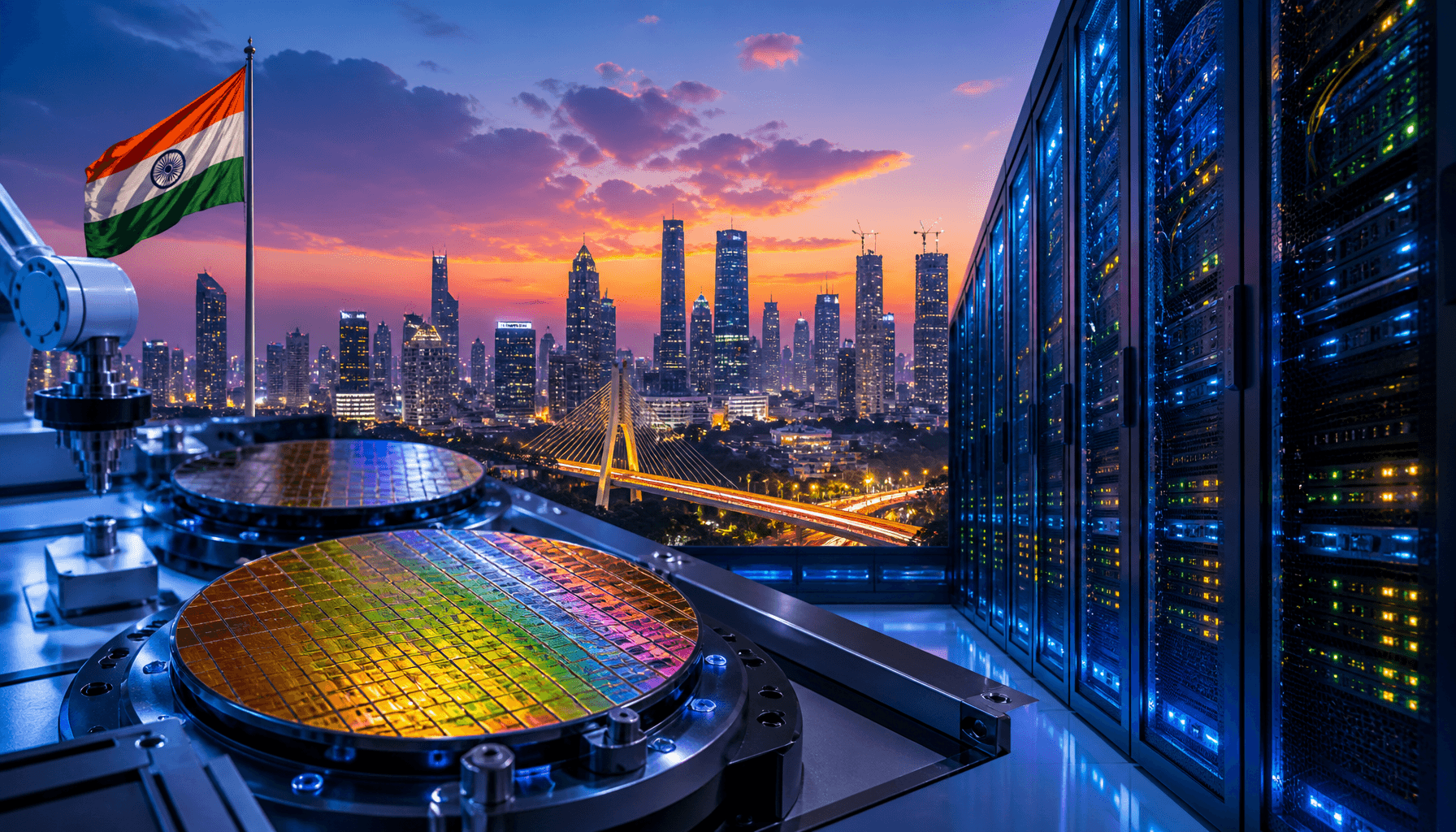
India is currently undergoing an unprecedented leap in technological infrastructure. Driven by the 'Semicon 2.0' initiative, the Indian government has clearly signaled its intent to accelerate the localization of its semiconductor industry, with 12 units already established representing a total investment of $20 billion. This move is not only intended to reduce reliance on imported chips but also to position India as a key node in the global semiconductor value chain.
Strategic Layout of the Semiconductor Industry
According to statements by India's Electronics and IT Minister Vaishnaw, the establishment of these 12 units represents the first phase of India's semiconductor development, with further attractive incentive policies planned to lure global chip manufacturers. Furthermore, multinational corporations like Intel are expanding their operations, as evidenced by applications for subzone expansions in foreign-trade zones, demonstrating the significance global giants place on the Indian market's potential. Such strategic positioning is crucial for India’s long-standing 'Make in India' vision.
Exponential Growth in Data Center Capacity
Beyond semiconductors, data centers are another pillar of India's tech expansion. According to recent forecasts by Axis Capital, with the explosive demand for artificial intelligence and cloud computing, India's data center capacity is expected to reach 3 to 3.6 GW by 2030. The primary drivers of this growth are the heavy investments by global hyperscalers. The rapid construction of data centers provides the necessary infrastructure for India to process the massive volume of data generated by its digital economy.
Market Heat and Global Perspective
According to search data, the topic of India's tech expansion is highly popular in Asian markets, with search interest in Taiwan and Singapore reaching 72 and 68, respectively. This reflects regional investor interest in India as a critical manufacturing base under the 'China+1' strategy. However, market analysts also point out that despite high investment sentiment, India must still overcome structural challenges such as talent shortages and the stability of basic power supplies.
Future Outlook and Challenges
The future development of India's tech infrastructure will depend on whether the government can provide a stable policy environment and consistent infrastructure support. Key indicators to watch include the execution progress of Semicon 2.0, solutions for the massive energy consumption of data centers, and the capacity ramp-up of multinational plants in India. In the volatile global tech supply chain, India's rise is undoubtedly one of the most significant structural trends to watch over the next five years.