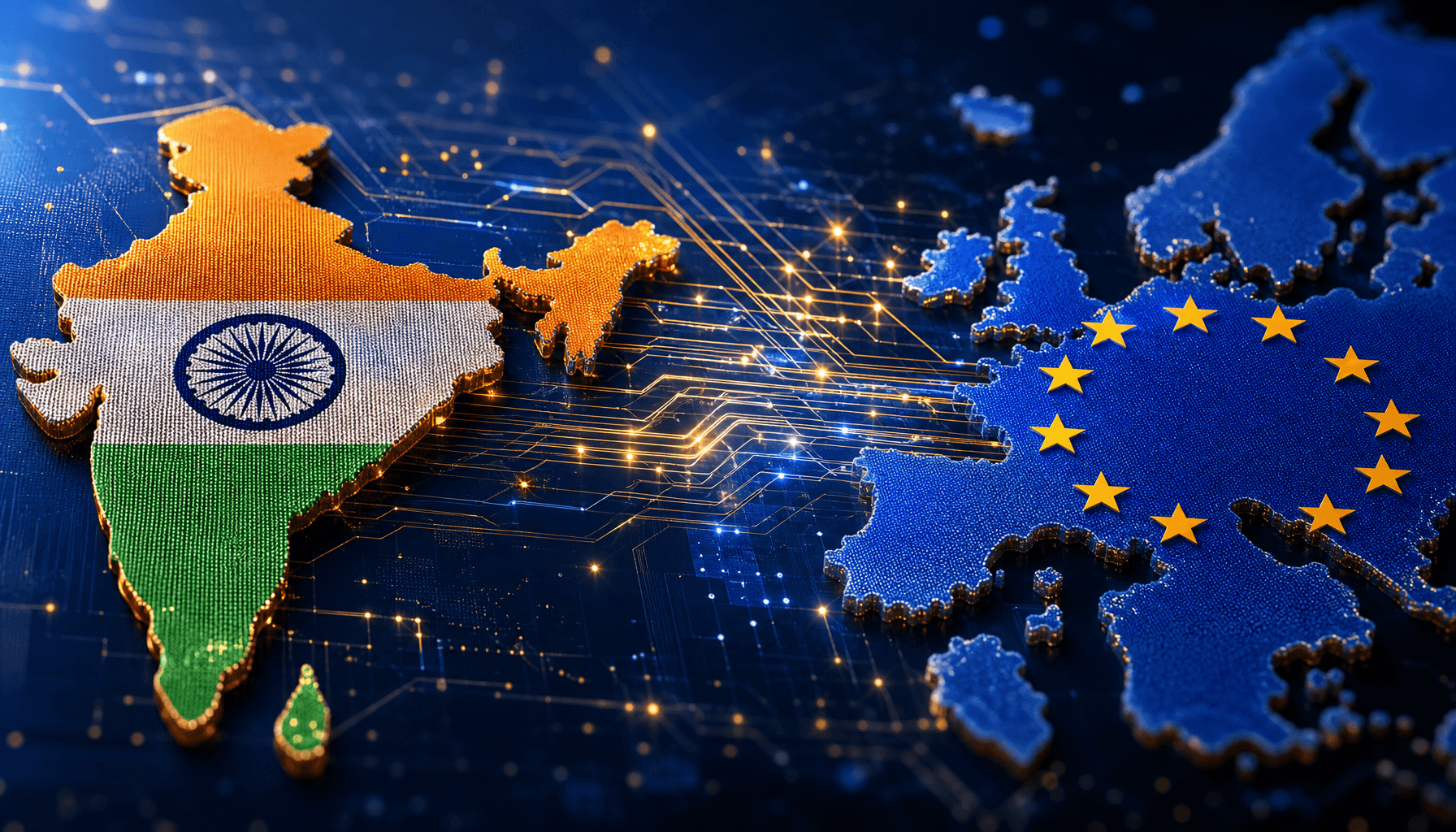
India-EU Strategic Technology Partnership: A New Era for Semiconductors and AI
As global supply chains shift and technological competition intensifies, India and the European Union have reaffirmed their commitment to a deeper strategic partnership at the third meeting of the Trade and Technology Council (TTC). The agreement focuses on critical sectors including Artificial Intelligence (AI), semiconductors, and clean technologies, marking a pivotal moment in the alignment of India’s "Make in India" policy with global technological standards.
Policy Catalyst: The ₹1.9 Lakh Crore Manufacturing Push
According to reporting by The Economic Times, the Indian Cabinet has approved a massive ₹1.9 lakh crore stimulus package aimed at bolstering domestic chip and mobile phone manufacturing. Central to this is the second phase of the India Semiconductor Mission (ISM), which has secured ₹1.27 lakh crore in funding for development, alongside an additional ₹62,500 crore scheme dedicated to incentivizing mobile phone production and domestic sourcing. This initiative is designed to reduce reliance on imported semiconductors and position India as a global electronics manufacturing hub.
Aligning with EU Technology Standards and AI Governance
Collaboration on AI governance and technical standardization serves as a cornerstone of this partnership. The EU’s leadership in the EU AI Act provides a blueprint for India as it develops its own regulatory frameworks. Both sides are working toward mutual recognition in areas of AI ethics, data sovereignty, and transparency. Technical reports from the European Commission suggest that such cross-continental cooperation will help mitigate legal risks in technology deployment and accelerate the integration of the two digital economies.
Evolution of Investment Protection and Legal Frameworks
Beyond technology, India and the EU are actively negotiating an investment protection agreement, with the goal of finalizing it before the year-end. This pact is intended to replace legacy Bilateral Investment Treaties (BITs) and resolve long-standing concerns regarding investor-state dispute settlement (ISDS) mechanisms. Legal experts note that this will provide greater legal certainty for European firms, likely attracting significant capital into India’s high-tech sector.
Search Trends and Market Sentiment
Google Trends data indicates that searches for "India EU Technology Partnership" reached an interest score of 78 in India and 45 in the EU. Market analysts suggest that as this collaborative framework is implemented, Indian semiconductor and AI startups are poised to benefit from increased funding and technology transfers.
Future Outlook: Digital Sovereignty and Industrial Upgrading
Looking forward, the India-EU partnership is set to extend beyond trade into digital infrastructure and talent exchange. Key areas to watch include the successful signing of the investment protection pact, the expansion of local semiconductor manufacturing capacity, and the localization of EU regulatory standards within the Indian market. This strategic partnership is set to become a fundamental force in shaping global technology supply chains over the next decade.