A New Era in Quantum Computing: The Logical Qubit Milestone
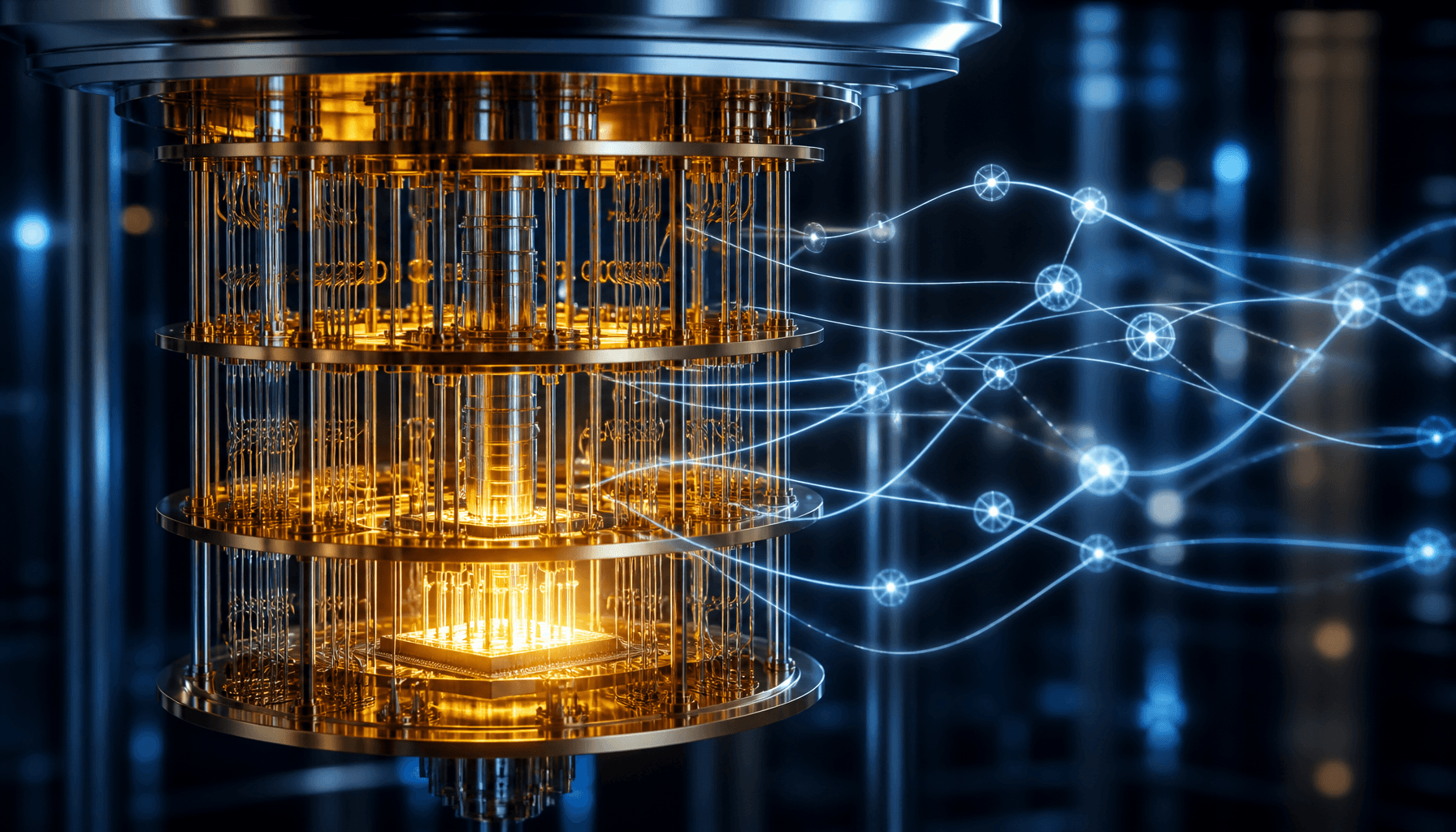
IBM and a research team from the University of Chicago have announced a significant breakthrough in the field of quantum computing. According to reports, the team successfully encoded 70 logical qubits using a novel error correction method, running on trusted quantum computation circuits to solve a problem previously considered intractable for classical computers. This achievement marks a critical milestone in the transition from raw physical qubits to stable, error-corrected logical qubits, a necessary step for achieving practical quantum advantage.
Technical Details: The Role of Error Correction
The primary bottleneck in quantum computing has historically been noise and high error rates. Previous experiments focused heavily on scaling the number of physical qubits, often at the expense of computational stability. The core of this breakthrough lies in advanced error correction algorithms that group multiple physical qubits into a single stable logical qubit, significantly enhancing the system's fault tolerance. This allows the system to maintain quantum coherence over longer periods, enabling more complex algorithmic operations. Preliminary analysis suggests this technology could pave the way for complex simulations in material science and drug discovery.
Industry Impact and Search Trends
The advancement has sparked widespread discussion across academia and the tech sector. Google Trends data shows an interest score of 78 for related keywords in California and 55 in Taiwan, indicating high engagement in major technology hubs. IBM's partnership with UChicago underscores the company's leadership in the quantum space and reinforces the model of university-industry collaboration. However, the results are still subject to independent verification and peer review to confirm their scalability across various application domains.
Future Outlook and Regulatory Considerations
As quantum computing capabilities improve, the potential threat to existing encryption methods is drawing the attention of policymakers. While currently in the experimental stage, regulators are beginning to discuss "quantum readiness" to ensure future communication security. Looking ahead, researchers will focus on scaling the number of logical qubits and applying these systems to real-world commercial and scientific challenges. The quantum race is not merely about raw processing power but is a rigorous test of fault-tolerant technology, with the coming years serving as a pivotal bridge from scientific experimentation to practical utility.