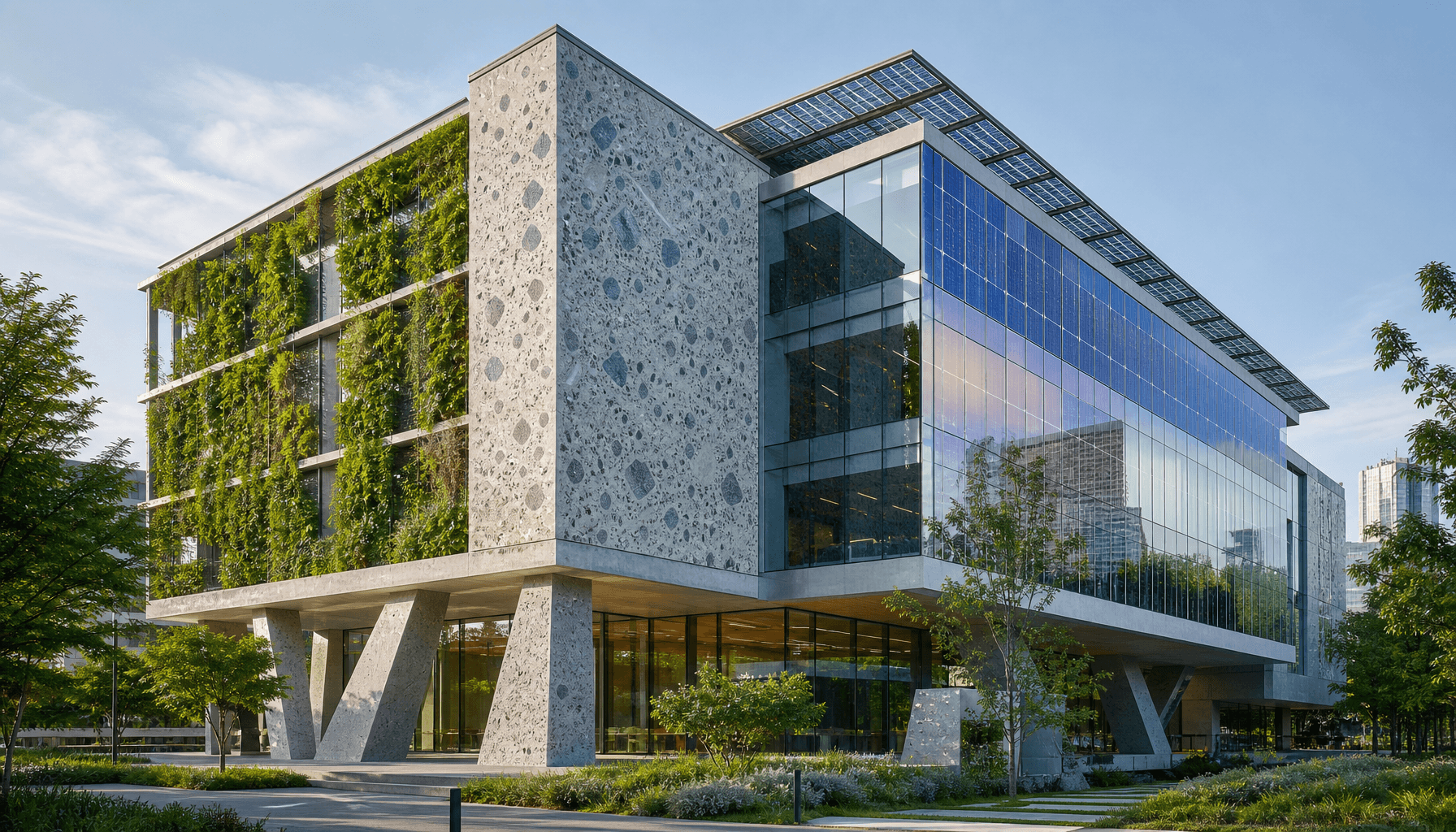
The Decarbonization Transformation of the Global Construction Industry
As one of the primary sources of global carbon emissions, the construction industry is undergoing an unprecedented "green revolution." According to the consensus from international conferences in 2026, such as the 3rd International Conference on Net-Zero Built Environment, the industry’s focus has shifted from simple energy efficiency to the comprehensive decarbonization of materials and structures. Through the application of mineral carbonation and nanomaterial-enhanced composites, the construction sector is attempting to transform buildings themselves into carbon sinks rather than carbon sources. These technological advancements mark a new era for the industry, centered on "regenerative design."
Innovation in Materials and Scientific Evidence
According to peer-reviewed research published in "Environmental Science & Technology" and "Materials" in 2026, the use of low-carbon cement and mineral carbonation concrete has demonstrated significant carbon reduction effects in labs and pilot projects. These studies confirm the feasibility of converting industrial waste into building materials, effectively lowering the carbon footprint of concrete production. This scientific breakthrough provides substantial technical support for the industry to achieve net-zero targets and drives the shift from traditional construction methods to circular material applications.
Building to Heal: The Impact of Regenerative Design
The rise of the "Building to Heal" concept emphasizes the dual impact of buildings on the environment and human well-being. Regenerative design goes beyond minimizing harm, emphasizing the restoration of ecosystems through architectural structures. For example, introducing special coatings that absorb pollutants in urban buildings or using bio-based materials that regulate microclimates are changing how buildings interact with the urban environment. For developers, incorporating ESG metrics into architectural design is no longer just about brand image; it is a prerequisite for future market access.
Search Trends and Market Heat
According to Google Trends data, search interest in "sustainable construction" and "net-zero materials" leads in European and North American markets, reaching a score of 85. In Asia, particularly in Taiwan’s construction and technology sectors, search interest for these keywords is 62, reflecting that local awareness of green building technology is rising significantly due to global supply chain requirements. Market analysis suggests that demand for green building materials will grow exponentially over the next five years, driving a comprehensive restructuring of the building material supply chain.
Regulatory Drivers
With clear global climate goals, governments are gradually incorporating net-zero building standards into legal frameworks. This includes carbon taxes on cement production and subsidy policies for green building materials. These regulatory measures force builders to consider the life-cycle carbon footprint of materials during the design phase. Legal experts warn that future compliance reviews for construction projects will go beyond structural safety to include environmental sustainability indicators, bringing profound legal and financial impacts to the industry.
Future Outlook: A Carbon-Neutral Building Ecosystem
Looking ahead, the construction industry will become a hub for the circular economy. From material production to the recycling of construction waste, the entire supply chain will form a closed loop. Key watchpoints include the commercial scale of mineral carbonation technology and the cost competitiveness of green building materials. For investors and professionals, participating in this transformation not only addresses climate risk but also captures strategic dividends in this multi-trillion-dollar green transition.