The Dual-Use Implications of Infrastructure Development
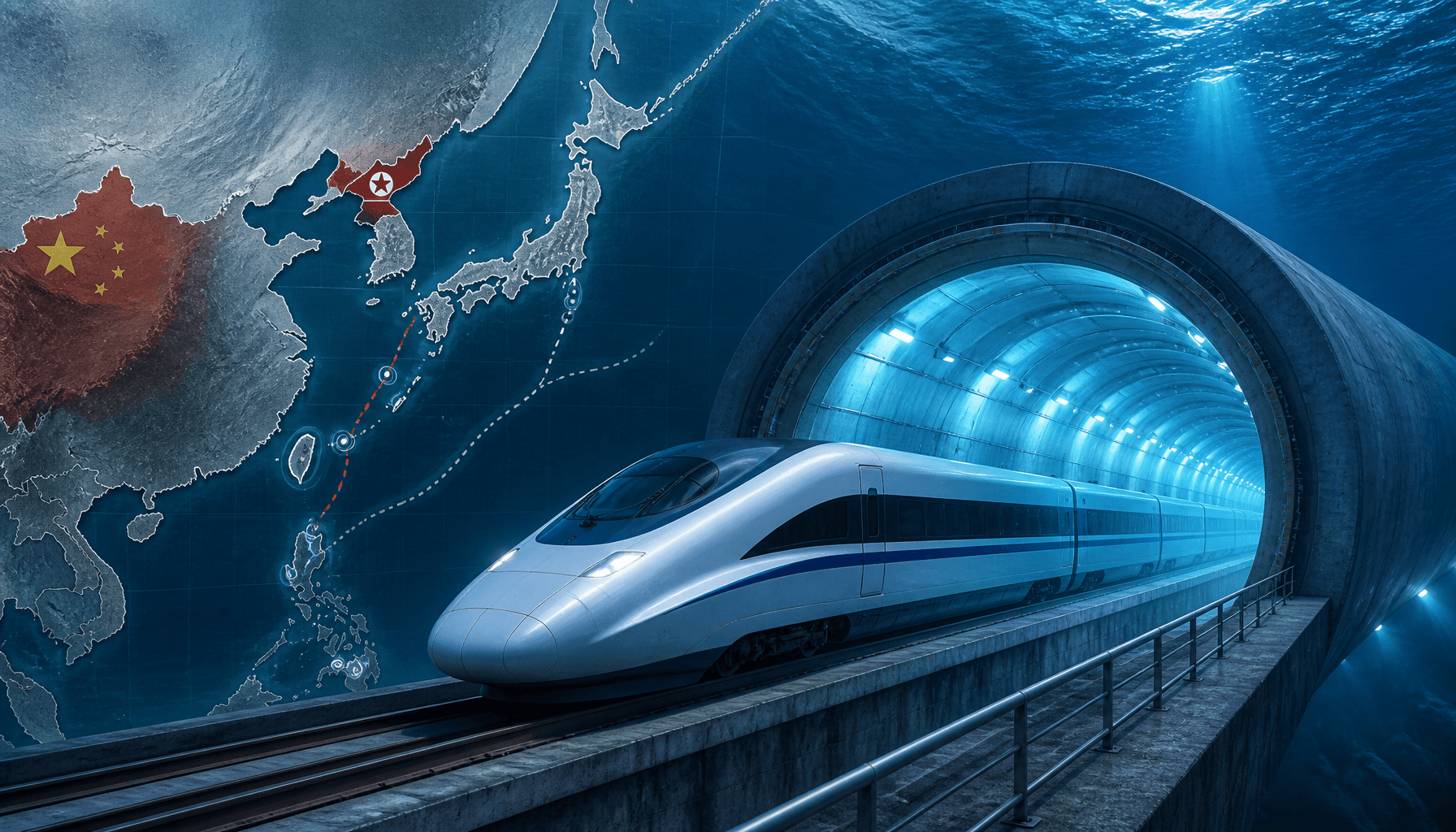
China has achieved a major engineering milestone with the completion of excavation for the world's fastest underwater high-speed rail tunnel beneath the Yangtze River. Connecting Shanghai’s Chongming Island with neighboring Jiangsu Province, this project is a hallmark of China’s advanced civil engineering and automated transport infrastructure. However, in the context of regional security, such large-scale infrastructure is increasingly viewed as 'dual-use,' offering significant capabilities for the rapid mobilization of strategic resources and personnel during potential contingencies.
Shifting Military Balance in the First Island Chain
Concurrent with these infrastructure advancements, geopolitical analysis suggests that the military balance between the US and China within the 'First Island Chain' is undergoing a profound shift. The People’s Liberation Army (PLA) continues to modernize its force, increasingly challenging the traditional US military dominance in the region. Through rapid naval expansion and the development of advanced Anti-Access/Area Denial (A2/AD) capabilities, China is narrowing the tactical gap with US forces, with the stated goal of achieving regional sea control by 2027.
Infrastructure and Strategic Power Projection
Strategic scholars emphasize that China’s high-speed rail network is not merely a civilian transport utility. Its high load-bearing capacity and operational efficiency allow for the rapid cross-regional movement of troops and equipment. The breakthrough in underwater tunneling further enhances China’s logistical resilience within the Yangtze River basin. Research indicates that the strategic value of such infrastructure lies in its flexibility for power projection during conflict, a capability that significantly complicates the defensive calculus for regional powers.
Ripple Effects on Regional Security
As China’s power projection capabilities in the First Island Chain increase, regional allies, including Taiwan, Japan, and the Philippines, are accelerating adjustments to their defense strategies. The US military has also intensified its regional exercise schedule to demonstrate its commitment to regional defense. However, military analysts warn that displays of force alone are insufficient to counter the strategic advantages gained through combined technological and infrastructure progress; a more comprehensive economic and diplomatic response is required.
Future Outlook and Key Indicators
Looking forward, the completion of the Yangtze underwater rail tunnel will stand as a symbol of China’s infrastructure prowess, while the military balance in the First Island Chain will remain the most critical variable affecting global geopolitics over the next five years. Key indicators to watch include whether China seeks to apply this tunnel technology to more strategically sensitive maritime zones, and how the US will adapt to this intertwined challenge of infrastructure-backed military strategy. This ongoing competition will fundamentally shape the stability of the Western Pacific.