Apple Briefly Surpasses $5 Trillion Market Cap, Unveils New iPhone Leasing Scheme
Apple briefly surpassed $5 trillion in market value, joining Nvidia at this historic milestone, and introduced a new iPhone leasing scheme to drive recurring revenue.
Taiwanese authorities detained an Nvidia employee in connection with the illegal export of AI servers to China, highlighting the challenges of maintaining supply chain compliance with U.S. export restrictions.
Apple has reclaimed its position as the world's most valuable company with a market cap of $4.95 trillion, surpassing Nvidia's $4.77 trillion as investor focus shifts from AI infrastructure spending to stable tech ecosystems.
NVIDIA announced a suite of AI engineering tools on July 27, 2026, including an expanded Agent Toolkit, the Vera CPU for EDA acceleration, and the Nemotron 3 Ultra model for agentic RTL coding, aiming to revolutionize semiconductor design workflows.
SK Hynix, Nvidia's primary memory supplier, made a successful Wall Street debut, contributing to a rally in the S&P 500 and signaling a shift toward AI hardware infrastructure investments.
SambaNova Systems has secured $1 billion in funding at an $11 billion valuation, aiming to challenge Nvidia by focusing on efficient AI inference hardware.
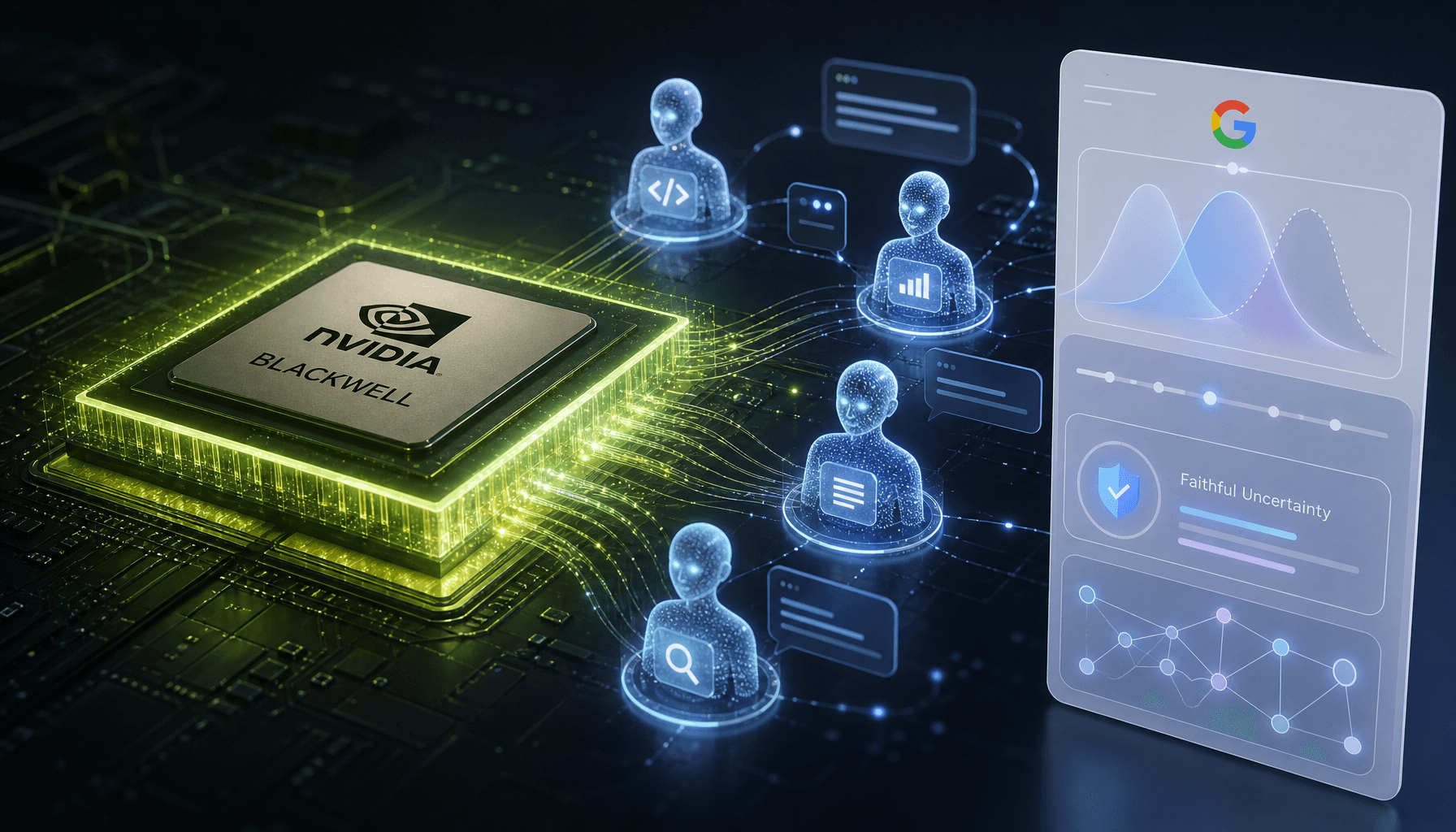
NVIDIA's Blackwell Ultra NVL72 platform leads the AgentPerf benchmark, running 20x more agents per megawatt. Simultaneously, Google researchers introduced 'faithful uncertainty' to align LLM confidence with output accuracy, reducing hallucinations.
Compute capacity is becoming a strategic asset as AI scales. Google’s deal with SpaceX reveals a push for elastic infrastructure, supported by a strong semiconductor market outlook, as industrial competition shifts toward geopolitics and digital sovereignty.
Microsoft introduced the Surface RTX Spark Dev Box and MXC sandbox at Build 2026, aiming to shift AI computing from cloud to local hardware with integrated security layers to reduce costs and enhance enterprise AI safety.
Nvidia is officially challenging the CPU market with its new RTX Spark architecture, aimed at integrating AI agent processing into the next generation of AI PCs. Microsoft, Dell, and HP are partnering in this effort, marking a shift from cloud AI to endpoint AI. While currently aimed at professionals, this move signals a complete restructuring of software and hardware boundaries.
Nvidia is challenging the $200B CPU market with its new 'RTX Spark' chips, partnering with Microsoft, Dell, and HP to power the next generation of AI-agent PCs.
NVIDIA has officially unveiled the RTX Spark chip series, marking its entry into the consumer PC market. Integrating CPU, GPU, and AI acceleration, the series aims to bring powerful local AI inference to laptops and mini-PCs, representing a major innovation in PC architecture.
Nvidia takes center stage at Computex 2026 in Taipei, with high anticipation surrounding the new Rubin architecture and CEO Jensen Huang's keynote on the future of AI hardware.
Nvidia, Microsoft, and Arm are teasing the upcoming Arm-based N1X laptop processor, expected to be unveiled at Computex, aiming to challenge x86 dominance and drive the 'AI PC' era.
Nvidia’s record earnings failed to satisfy investors, who fear slowing growth despite robust financial results. The company also revealed a $43 billion startup portfolio. CEO Jensen Huang announced a pivot toward a $200 billion market for AI agent CPUs, signaling Nvidia's intent to dominate the foundational architecture of future AI execution.
Nvidia CEO Jensen Huang forecasts a $200 billion market for AI agent CPUs. Alongside its record quarterly earnings, the company revealed a $43 billion investment portfolio in AI startups, strengthening its role as the industry’s primary AI infrastructure provider.
China has added Nvidia’s RTX 5090D V2 to its list of banned imports. The move, occurring during Nvidia CEO Jensen Huang's visit, highlights the growing complexity and regulatory friction facing multinational semiconductor companies.
Nvidia’s market dominance is increasingly attributed not just to its hardware prowess but to the deep, software-based competitive moat created by its CUDA platform.
Surging AI compute demand is stressing data center energy infrastructure. Tech giants are increasing investment and exploring innovative solutions, such as nature-inspired energy storage, to ensure sustainable operations.
Nvidia has committed $40 billion to AI equity investments in 2026. This move serves as a strategic play to ensure AI startups integrate Nvidia's hardware and software ecosystems, cementing its role as the dominant capital provider in the AI industry.
Nvidia CEO Jensen Huang argues that concerns about AI-driven job loss are overblown, asserting that the technology creates more high-value roles than it replaces.
The Pentagon has officially adopted an 'AI-first' strategy, partnering with major tech firms like Nvidia, Microsoft, and AWS to integrate advanced AI into classified military networks while adhering to ethical standards.
The US military has pivoted to an 'AI-first' strategy, signing new contracts with major tech firms like Nvidia and Microsoft to integrate AI into classified networks and tactical war planning.
The Pentagon has formalized classified AI partnerships with tech giants including OpenAI, Google, and Nvidia, while notably excluding Anthropic.
Google debuted eighth-gen TPUs tailored for the 'agentic era,' featuring dedicated chips for training and inference and secure offline deployment for Gemini to reduce Nvidia reliance.
Google has previewed its eighth-generation Tensor Processing Units (TPUs) to avoid the high costs of buying training compute from Nvidia, aiming for self-sufficiency in AI infrastructure.
SiFive has reached a $3.65 billion valuation using the RISC-V architecture, indicating a strong market demand for open-source chip solutions, while software-layer competition among AI models intensifies.
Nvidia-backed chip designer SiFive has hit a $3.65 billion valuation. By promoting the open-source RISC-V architecture, SiFive offers highly customizable designs for AI chips, challenging traditional industry models.
Nvidia-backed chip startup SiFive has reached a $3.65 billion valuation, highlighting growing interest in open-source RISC-V architecture for AI hardware.
Nvidia-backed SiFive reached a $3.65 billion valuation, as its open-standard RISC-V chip designs gain momentum against traditional architectures in the AI hardware race.
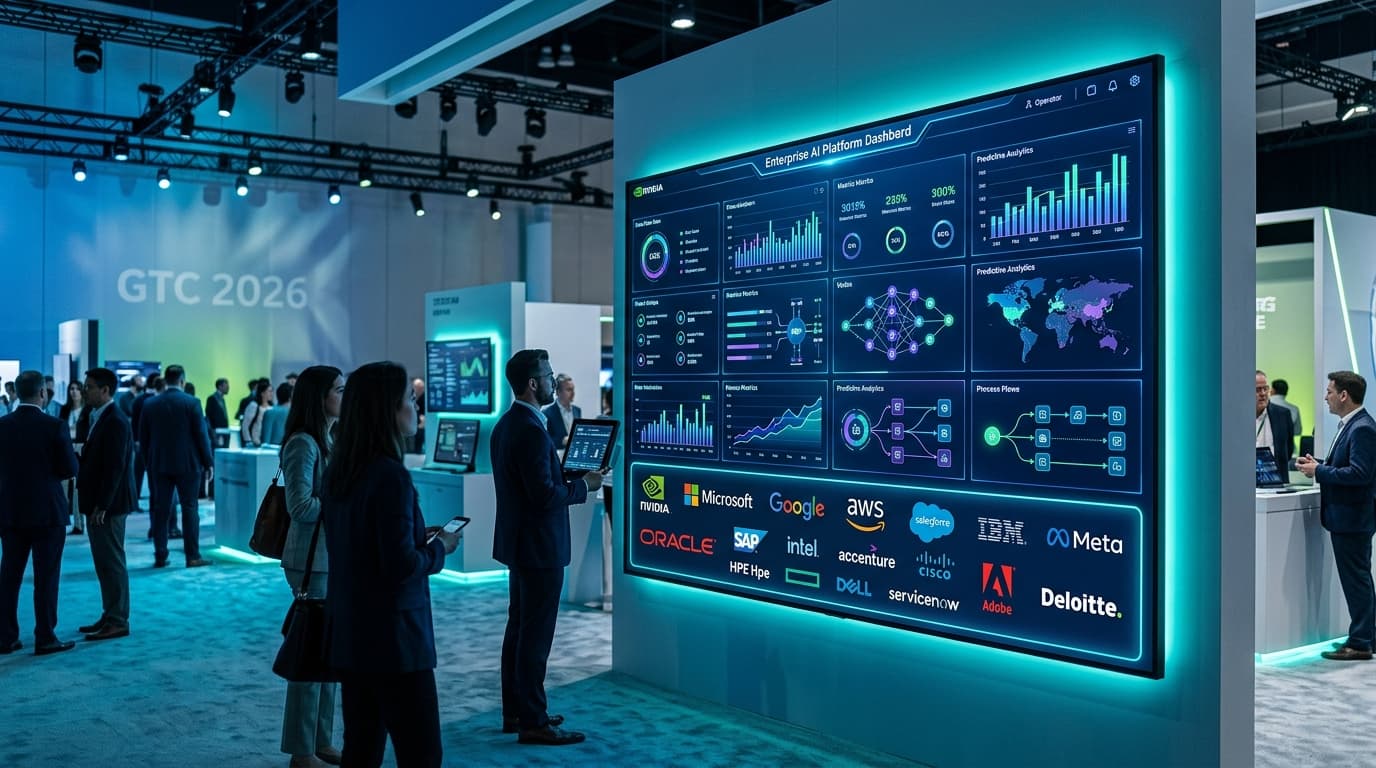
Nvidia unveiled its Agent Toolkit at GTC 2026, an open-source platform designed to accelerate the development of autonomous AI agents. Seventeen enterprises, including Adobe, Salesforce, and SAP, have already announced their adoption of the platform to drive enterprise-grade automation.
Nvidia introduced the Agent Toolkit, an open-source platform for enterprise AI agents, at GTC 2026. Major companies like Adobe, Salesforce, and SAP have already adopted the framework.
Nvidia launched its open-source "Agent Toolkit" at GTC 2026, aimed at accelerating the development of enterprise-grade autonomous AI agents. The toolkit has already secured adoption from 17 major firms including Adobe and SAP, as Nvidia aims to solidify its role as the infrastructure backbone of the agentic AI era.
The cybersecurity industry is adopting OCSF for standardized data, while Nvidia's new enterprise AI agent platform, backed by 17 major firms, accelerates automated, proactive defense.
At GTC 2026, Nvidia unveiled an open-source Agent Toolkit to facilitate the building and deployment of autonomous AI agents at scale. With 17 major adopters, including Adobe and Salesforce, the platform signals a shift in enterprise AI from conversational tools to task-oriented automation.
Nvidia unveiled its Agent Toolkit at GTC 2026, partnering with 17 major enterprises including Adobe and SAP to accelerate the deployment of autonomous AI agents.
NVIDIA unveiled the Agent Toolkit at GTC 2026, an open-source platform for autonomous AI agents. Seventeen companies, including Adobe and Salesforce, have adopted it, signaling a shift toward task-oriented AI.
OpenAI has raised $3 billion from retail investors as part of a massive $122 billion fundraising effort. The company is now valued at $852 billion, signaling significant market confidence as it approaches a public listing.
ThinkLabs AI closes $28 million Series A round to deploy GPU-accelerated AI models for power grid simulation and optimization, aiming to solve the energy bottlenecks created by AI expansion.
AI chip startup Rebellions has raised $400 million at a $2.3 billion valuation, focusing on inference-optimized chips to challenge Nvidia's dominance, with plans for an IPO later this year.
Nvidia CEO Jensen Huang stated on the Lex Fridman podcast that he believes AGI has been achieved, sparking a major debate within the tech industry regarding the future of AI capability and regulation.
Startup Gimlet Labs has raised $80 million in Series A funding to develop technology that enables AI inference to run across diverse hardware architectures, reducing vendor lock-in.
Gimlet Labs has raised $80 million in Series A funding to tackle AI inference bottlenecks by allowing models to run across diverse hardware architectures simultaneously.
Despite projecting $1 trillion in AI chip sales at its GTC conference, Nvidia's response from Wall Street has been muted, highlighting investor concerns over an AI bubble.
Nvidia’s GTC keynote projected a $1 trillion AI chip market by 2027, but the bold vision met Wall Street skepticism. Investors are increasingly wary of an AI bubble and are questioning whether massive hardware spending can yield commensurate commercial returns.
Nvidia's networking division reached $11 billion in quarterly revenue, solidifying its position as the company's second-largest pillar. Leveraging InfiniBand and Spectrum-X, Nvidia has transformed individual GPUs into integrated data center platforms, redefining the AI infrastructure market.
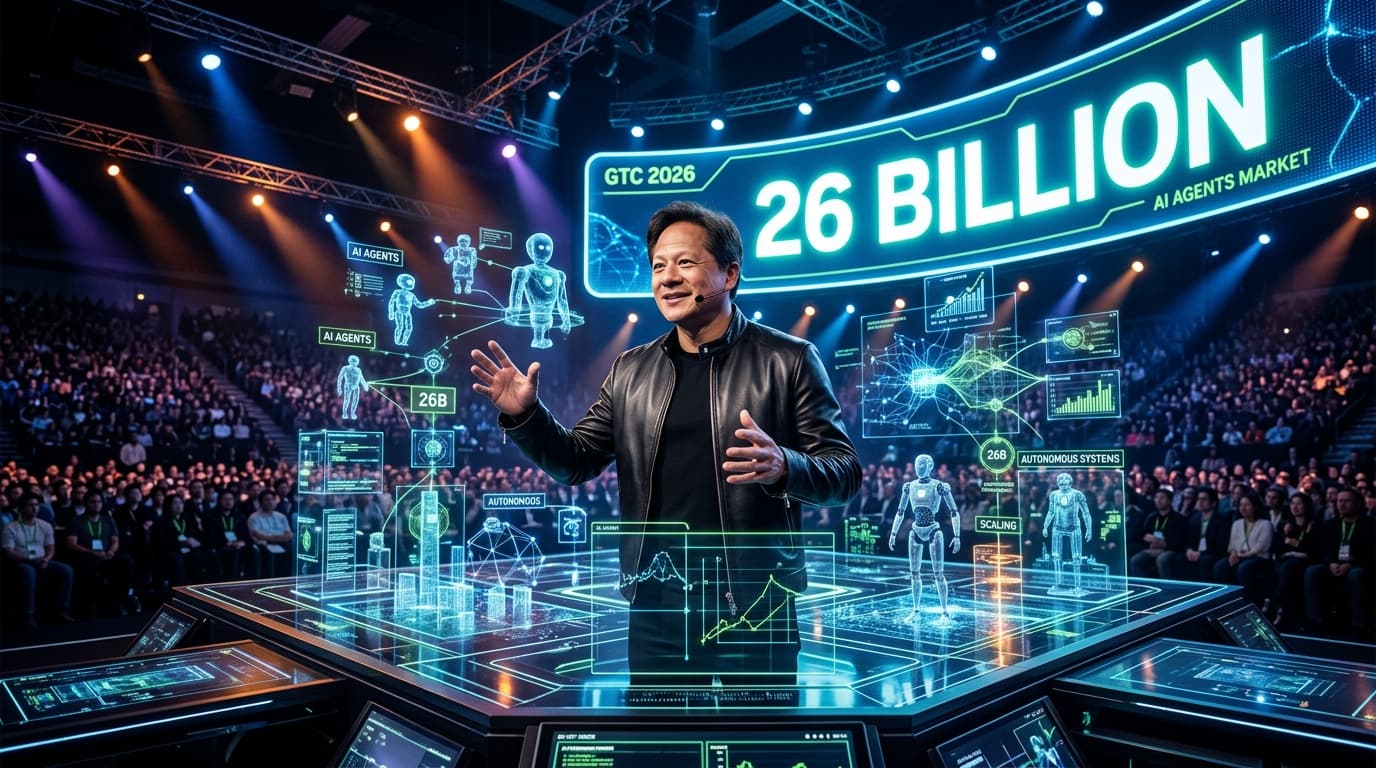
Nvidia unveiled the NemoClaw agent platform and a $26 billion open-weight model initiative at GTC 2026. While pushing the boundaries of autonomous AI, the company faces significant backlash over its DLSS 5 generative graphics technology.
Mistral AI has launched 'Forge,' an enterprise platform that enables companies to train proprietary AI models from scratch on their own data. By offering deep-level training and the efficient 'Leanstral' architecture, Mistral is directly challenging the cloud hyperscalers, positioning itself as the leader in the movement for 'sovereign AI' and corporate data control.
At GTC 2026, Nvidia CEO Jensen Huang unveiled OpenClaw, a new 'operating system' for agentic AI that allows software to perform tasks autonomously. While the new DLSS 5 technology faced a backlash from gamers over its use of generative graphics, Nvidia's focus on day-one security and enterprise-scale agents signals a major shift in the global computing landscape.
The open-source AI agent framework OpenClaw has been found to have a critical security flaw that can bypass enterprise EDR and IAM systems. In response, Nvidia launched the more secure NemoClaw platform, while Chinese startup Z.ai released GLM-5 Turbo, a model optimized for agentic tasks, signaling an industry-wide push to secure AI automation.
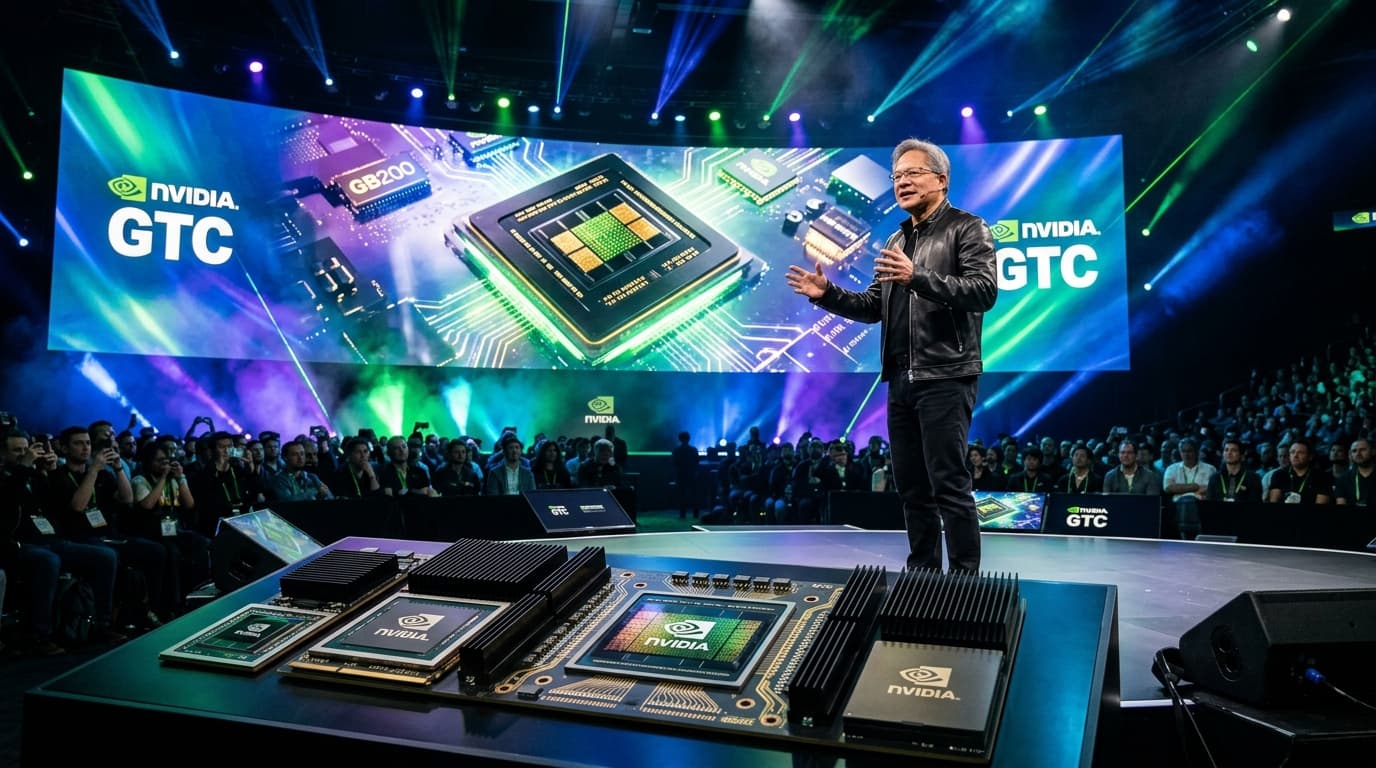
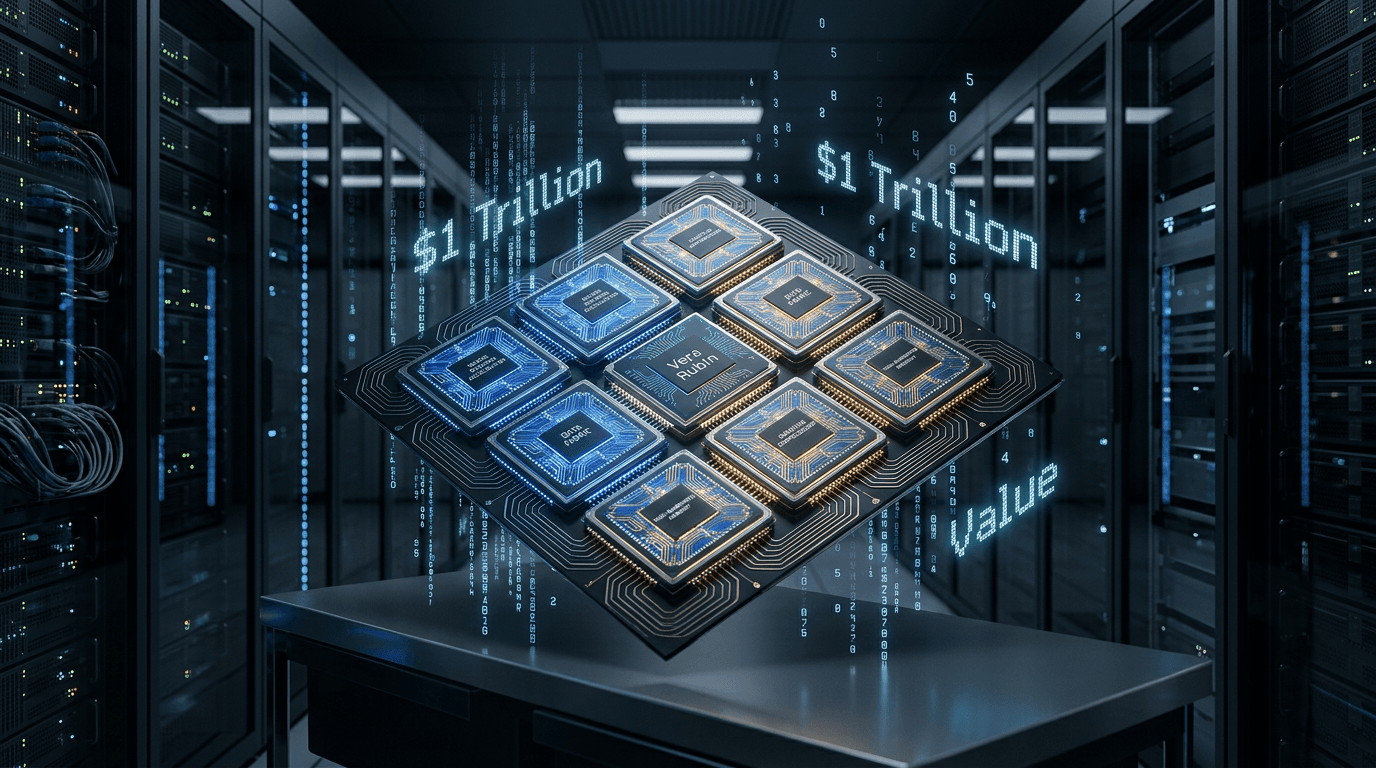
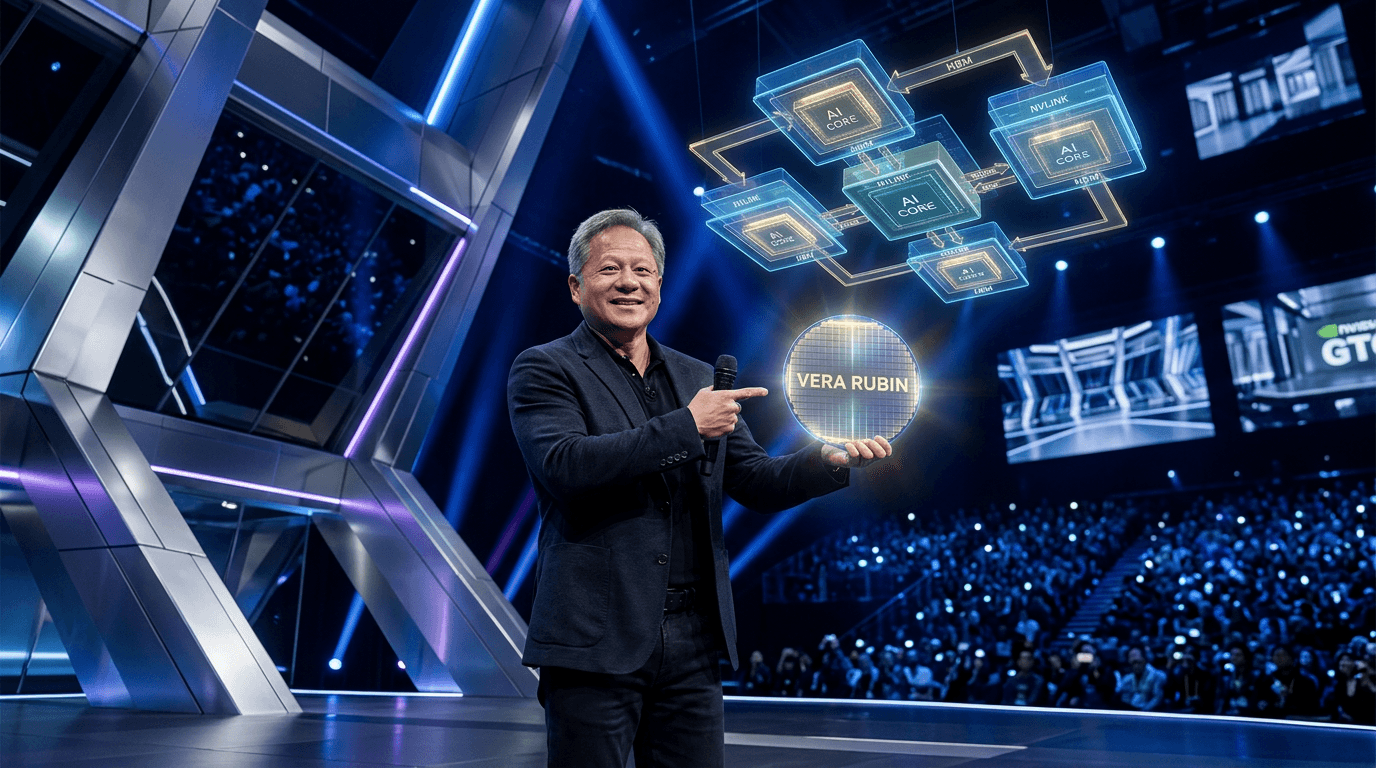
Nvidia unveiled its next-generation Vera Rubin AI platform at GTC 2026, featuring a complex seven-chip architecture supported by industry leaders like OpenAI and Meta. CEO Jensen Huang projected a $1 trillion market for these chips. Additionally, Nvidia introduced DLSS 5, leveraging generative AI to revolutionize real-time graphics and visual fidelity.
Nvidia unveiled the 'Vera Rubin' platform at GTC 2026, with CEO Jensen Huang projecting $1 trillion in sales. Supported by OpenAI and Meta, the platform offers 10x better inference efficiency. Nvidia also introduced DLSS 5, a generative AI-based graphics technology that marks a 'GPT moment' for the gaming and rendering industry.
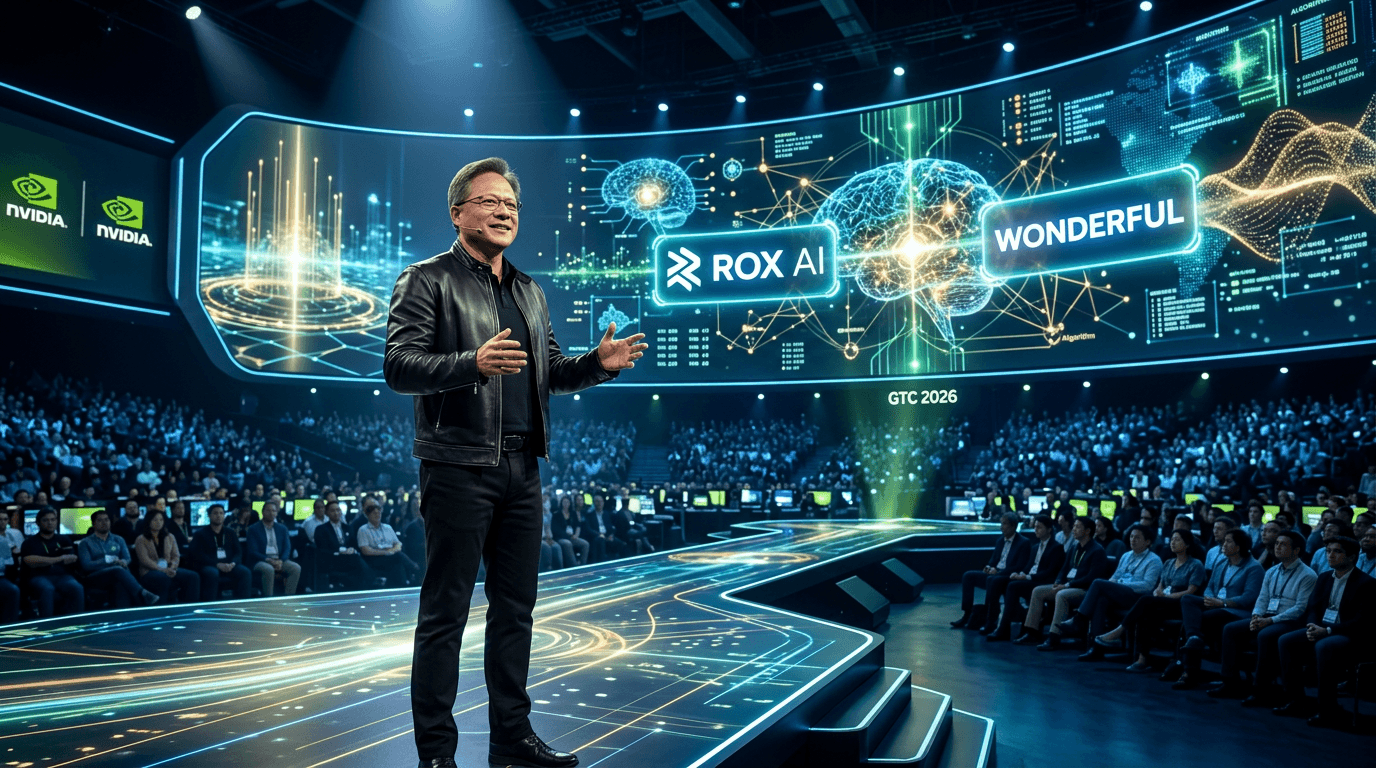
Nvidia GTC 2026 kicks off with Jensen Huang’s keynote as the private AI sector sees a massive valuation surge. Startups like Rox AI and Wonderful have reached unicorn status ($1.2B and $2B) within months of founding, highlighting investor focus on AI-native enterprise solutions.
Nvidia is committing $26 billion to develop open-weight AI models, marked by the release of Nemotron 3 Super, a 120B parameter hybrid model designed for high-throughput tasks. Reports also indicate Nvidia is developing NemoClaw, an open-source agent platform aimed at competing with tools like OpenClaw for enterprise automation.
Nvidia has committed $26 billion to build open-weight AI models and infrastructure, launching the 120-billion-parameter Nemotron 3 Super. This hybrid model combines SSM and Transformer architectures to deliver superior throughput for enterprise tasks. The move represents a strategic shift toward "Sovereign AI," positioning Nvidia as a software leader while driving demand for its high-end GPUs.
Meta has introduced four new custom MTIA AI chips designed to power its recommendation engines and Llama model fine-tuning. This strategic launch aims to reduce the company's multi-billion dollar reliance on Nvidia GPUs and improve data center efficiency. While Meta continues to buy Nvidia hardware for massive training tasks, it expects custom silicon to handle 40% of its inference load by 2027. This move highlights the accelerating trend of 'hyperscalers' becoming major players in semiconductor design.
The AI industry is rapidly pivoting from chatbots to autonomous AI agents. Key developments include Andrej Karpathy's 'autoresearch' script for automating scientific experiments, Microsoft's new cross-app Copilot Cowork, and Nvidia's upcoming OpenClaw platform. This shift toward 'agentic' systems represents a major step toward AGI, enabling AI to execute complex tasks and self-evolve without constant human supervision.
The Agentic AI wave is sweeping through 2026, with Nvidia and Microsoft launching major platforms for autonomous agents. Andrej Karpathy has open-sourced 'autoresearch,' a tool designed to automate the scientific method using AI agents. Market data from Morgan Stanley suggests that 10-20% of commerce could be agent-driven by 2030, totaling nearly $385 billion. Meanwhile, security concerns have led Microsoft to warn about 'double agent' risks, and OpenAI to acquire security startup Promptfoo to fortify its agentic ecosystem.
Caitlin Kalinowski, OpenAI’s head of robotics hardware, resigned on March 7, 2026, in protest of a Pentagon deal. Meanwhile, Qualcomm is expanding its robotics footprint with the new IQ10 processor and a Neura Robotics partnership, as AI infrastructure firm Nscale secures $2 billion in funding to support the surge in embodied AI development.

British AI infrastructure startup Nscale has raised $2 billion at a $14.6 billion valuation, with backing from Nvidia. High-profile figures Sheryl Sandberg and Nick Clegg are joining the board. This massive investment comes as the venture capital industry debates whether AI will eventually automate investment decisions, highlighting the strategic value of hardware layers.
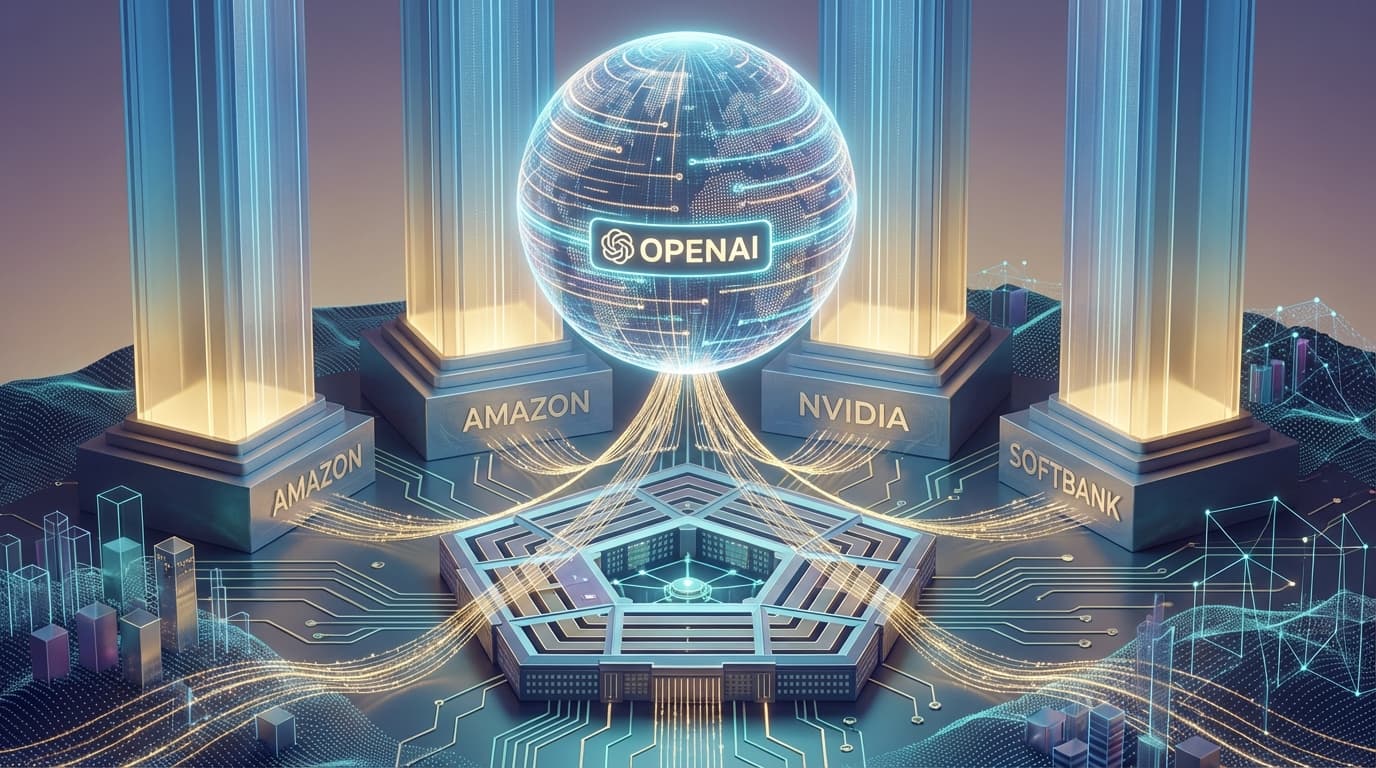
OpenAI has raised a record-breaking $110 billion from Amazon, Nvidia, and SoftBank, while announcing a strategic partnership with the Pentagon. With ChatGPT reaching 900 million weekly active users, the company is leveraging its new AWS collaboration to build persistent, 'stateful' AI agents for enterprise and government use.
OpenAI has secured a record-breaking $110 billion investment from Amazon, Nvidia, and Softbank. This unprecedented capital injection is aimed at funding the massive infrastructure costs for next-generation AGI development. While solidifying OpenAI's dominance, the deal raises antitrust concerns and signals a difficult environment for smaller AI startups in the 'SaaSpocalypse'.
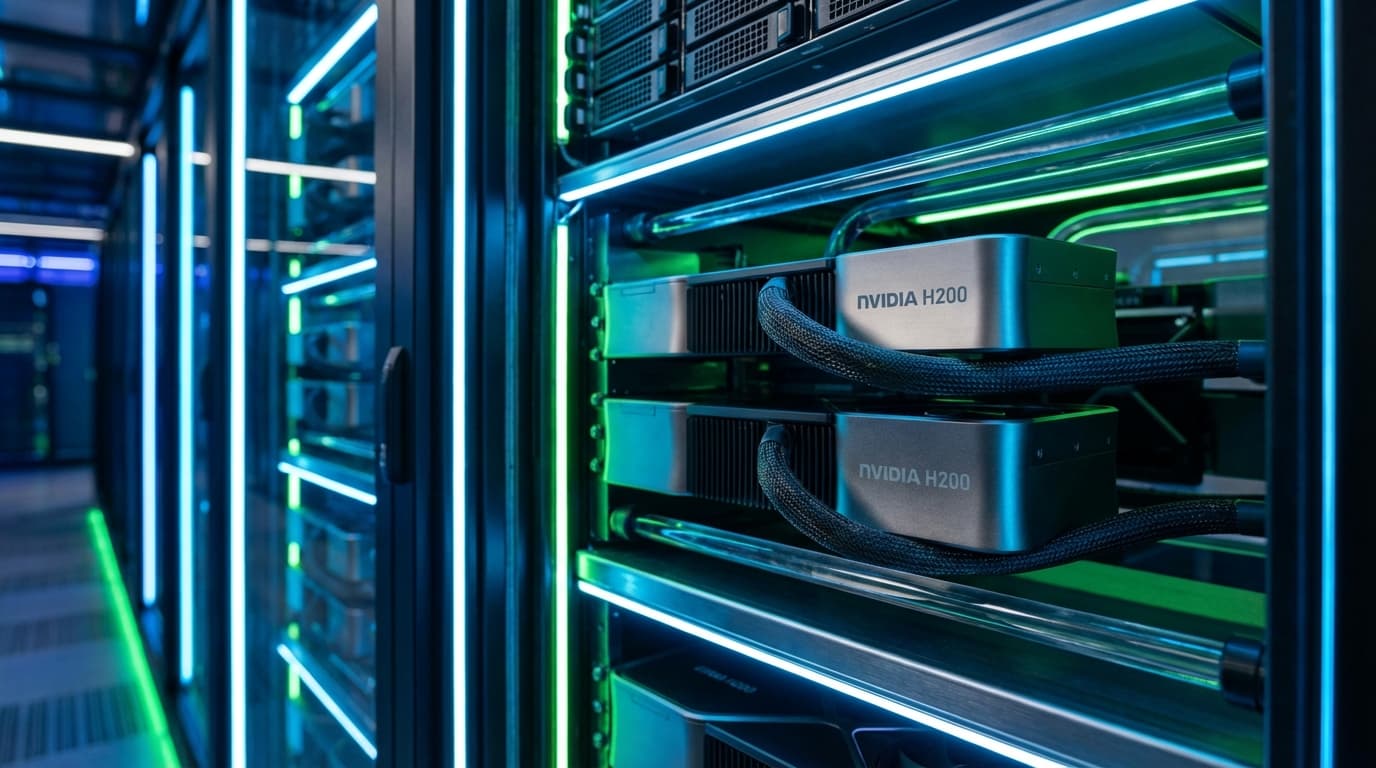
NVIDIA's H200 GPU has reached a mass deployment milestone across global cloud providers. CEO Jensen Huang frames this as the dawn of the AI industrial revolution, as the H200's HBM3e memory nearly doubles inference speeds for LLMs, solidifying NVIDIA's moat and boosting the Taiwan-based hardware supply chain.