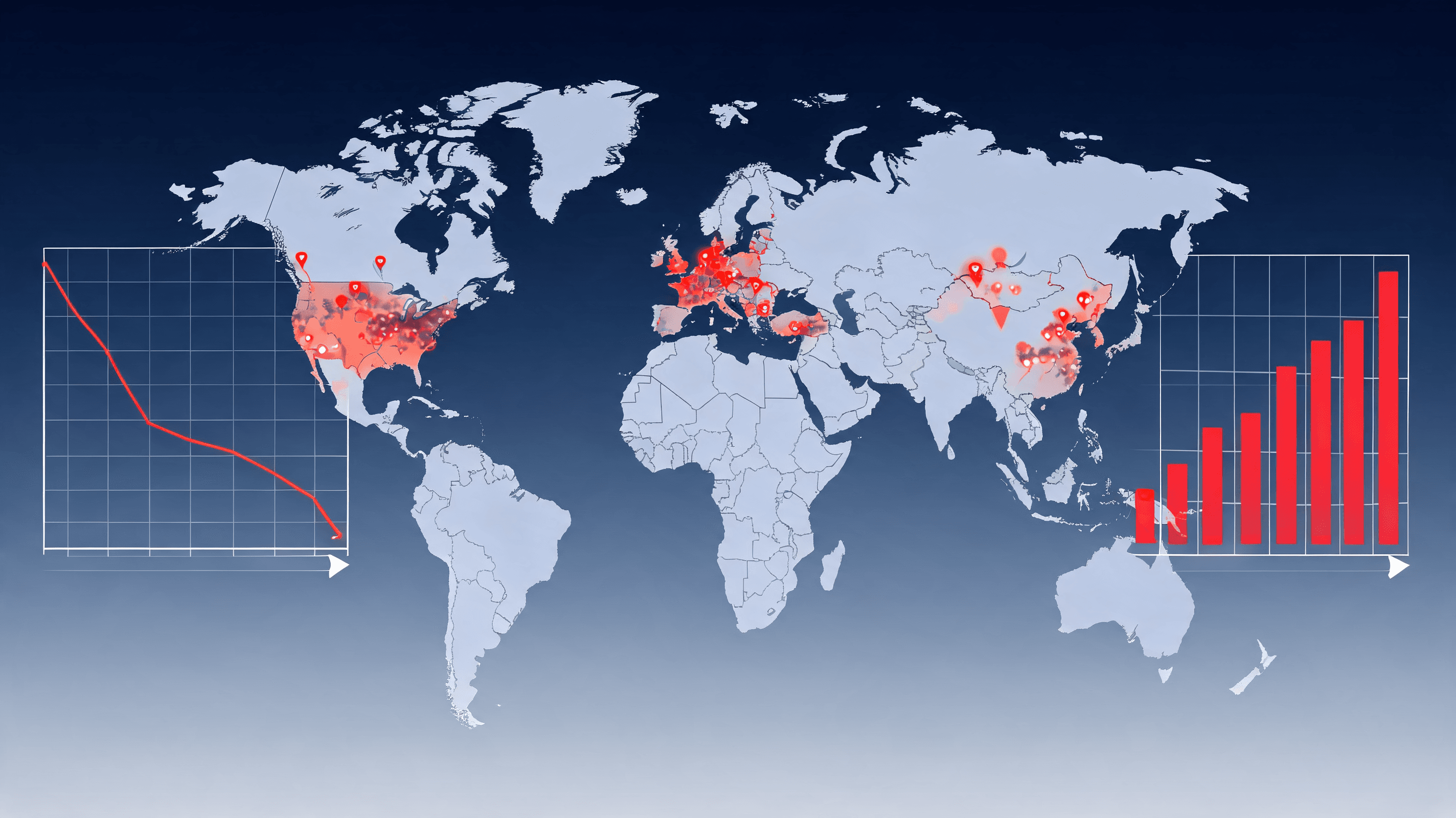
Macroeconomic Headwinds in Southeast Asia: Manufacturing Slump and Inflation Risks
Thailand's factory output fell 3.1% in June, while Singapore's central bank tightened policy due to inflation risks, highlighting regional macroeconomic headwinds.
US-Iran military exchanges enter their ninth day, pushing Brent crude above $90/barrel and sparking global inflation fears. European stocks dipped, while India's bond yields and currency fell amid geopolitical risk; markets are closely watching central bank policy and conflict updates.
Military escalation between the US and Iran has intensified, with direct strikes on infrastructure threatening the Strait of Hormuz and heightening global market anxiety.
Euro zone inflation fell to 2.8% in June, exceeding expectations and giving the ECB leeway to maintain policy patience while monitoring wage growth and economic stability.
S&P Global Ratings has lowered its FY27 growth forecast for India to 6.6%, citing energy market pressures and concerns over a sub-par monsoon season.
Donald Trump's 'I love the inflation' remark has sparked widespread controversy as U.S. prices hit their fastest growth rate in three years, highlighting the disconnect between political rhetoric and voter anxiety over rising living costs.
Global inflation has driven resource costs to unprecedented levels, impacting both tech development and household budgets. High memory costs for AI chips are driving industry-wide cost optimization, while families are increasingly shifting toward a multi-job workforce to cope with rising essentials.
May 2026 Risk Report: Geopolitical tensions are escalating, and corporate filings show increasing 'material weakness' warnings. While overall liquidity remains adequate, credit risks in CRE and small-cap firms are building, placing the market in a transition phase.