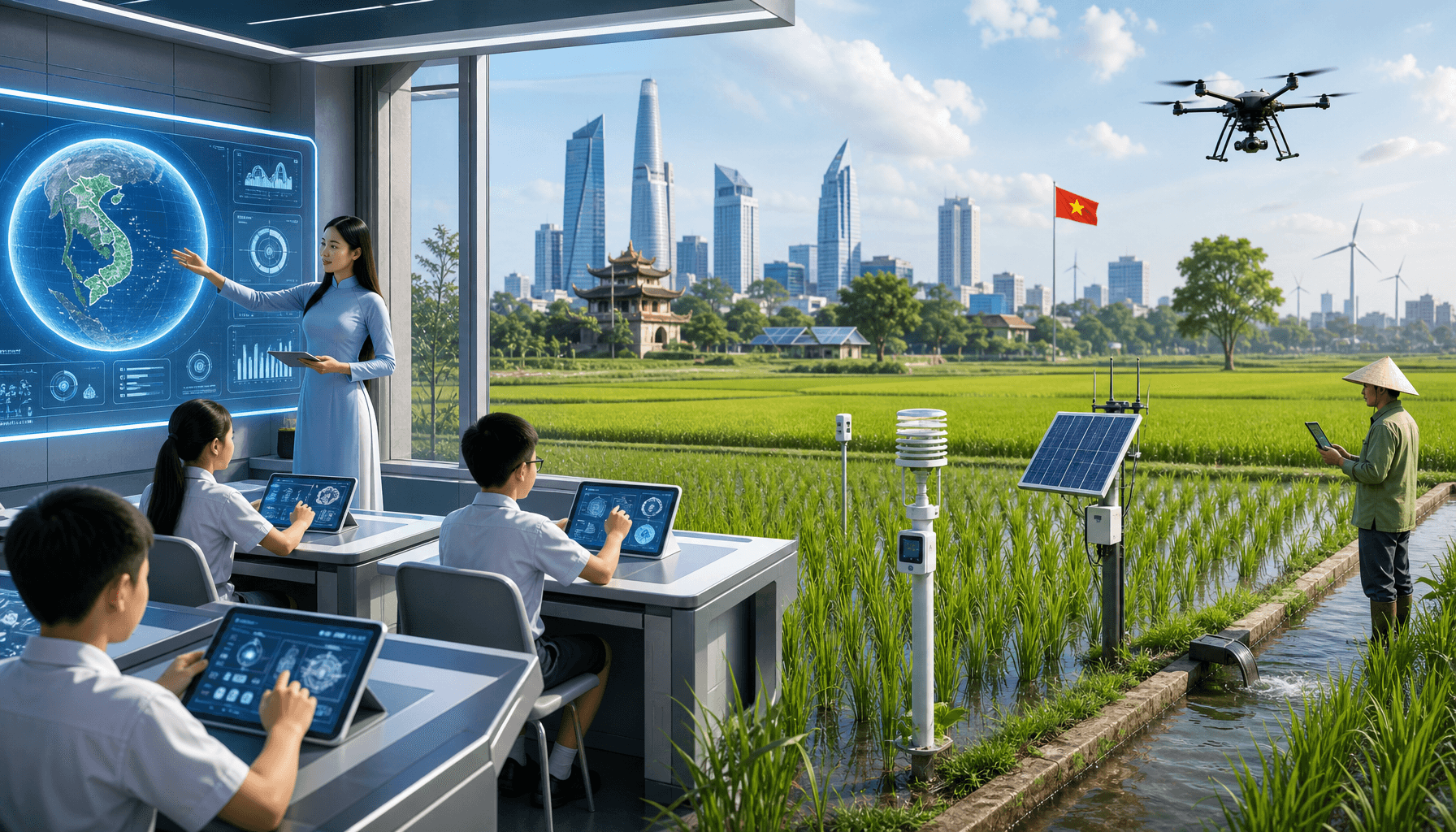
A National Shift in Digital Skills
Vietnam is at a critical juncture in its economic transition. The government’s recent policy mandate requiring all university graduates to possess AI and digital skills signals a determined effort to elevate the nation’s human capital to global standards for the digital economy. This policy is not merely an educational reform; it is a strategic maneuver designed to help Vietnam distinguish itself in the Southeast Asian technology landscape. By cultivating a digitally literate younger generation, Vietnam hopes to attract more high-tech industries and gradually shift away from traditional, low-end manufacturing models.
Tech Upgrades in Sustainable Agriculture
Beyond tech education, Vietnam is also making significant strides in agricultural technology. Rize recently raised $31 million in funding to promote sustainable rice farming in Vietnam and Southeast Asia. This investment demonstrates how technology can be applied to traditional agriculture to address resource waste and environmental degradation. Through smart farming and data analytics, agricultural productivity can be enhanced while mitigating the impacts of climate change. This integration of technology and traditional industry is widely seen as one of the core engines of Vietnam’s next stage of economic growth.
Growth Momentum and Industrial Identification
According to the latest industrial research, beyond semiconductors, logistics, renewable energy, and digital services have been identified as key sectors for Vietnam's next growth phase. As global supply chains diversify, Vietnam is actively leveraging its geographical advantages and educational dividends to attract foreign direct investment into these high-potential areas. Industrial analysts note that Vietnam’s growth momentum currently stems from its openness to innovative technologies and continuous investment in infrastructure.
Market Data and Search Trends
Interest in Vietnam’s technological development remains steady, with a search score of 72 in the region, reflecting heightened attention from international investors. Specifically, search volume regarding educational reform and agricultural technology has shown consistent growth. Data indicates that Vietnam has become one of the most robust markets for technological growth in Southeast Asia, attracting a wealth of multinational corporations seeking transformation and emerging opportunities.
Future Outlook and Challenges
Despite strong growth momentum, Vietnam faces challenges in talent shortages and the maturity of its infrastructure as it transitions toward a high-tech economy. The government-mandated digital skills education is a strong start, but ensuring that these skills align precisely with industrial demands will be a central challenge for the coming years. Furthermore, as foreign capital continues to flow in, balancing growth with environmental sustainability and social equity remains a long-term issue for the Vietnamese government. Overall, Vietnam’s transition is well underway, and its efforts in technological and industrial upgrading will continue to define the future economic landscape of Southeast Asia.