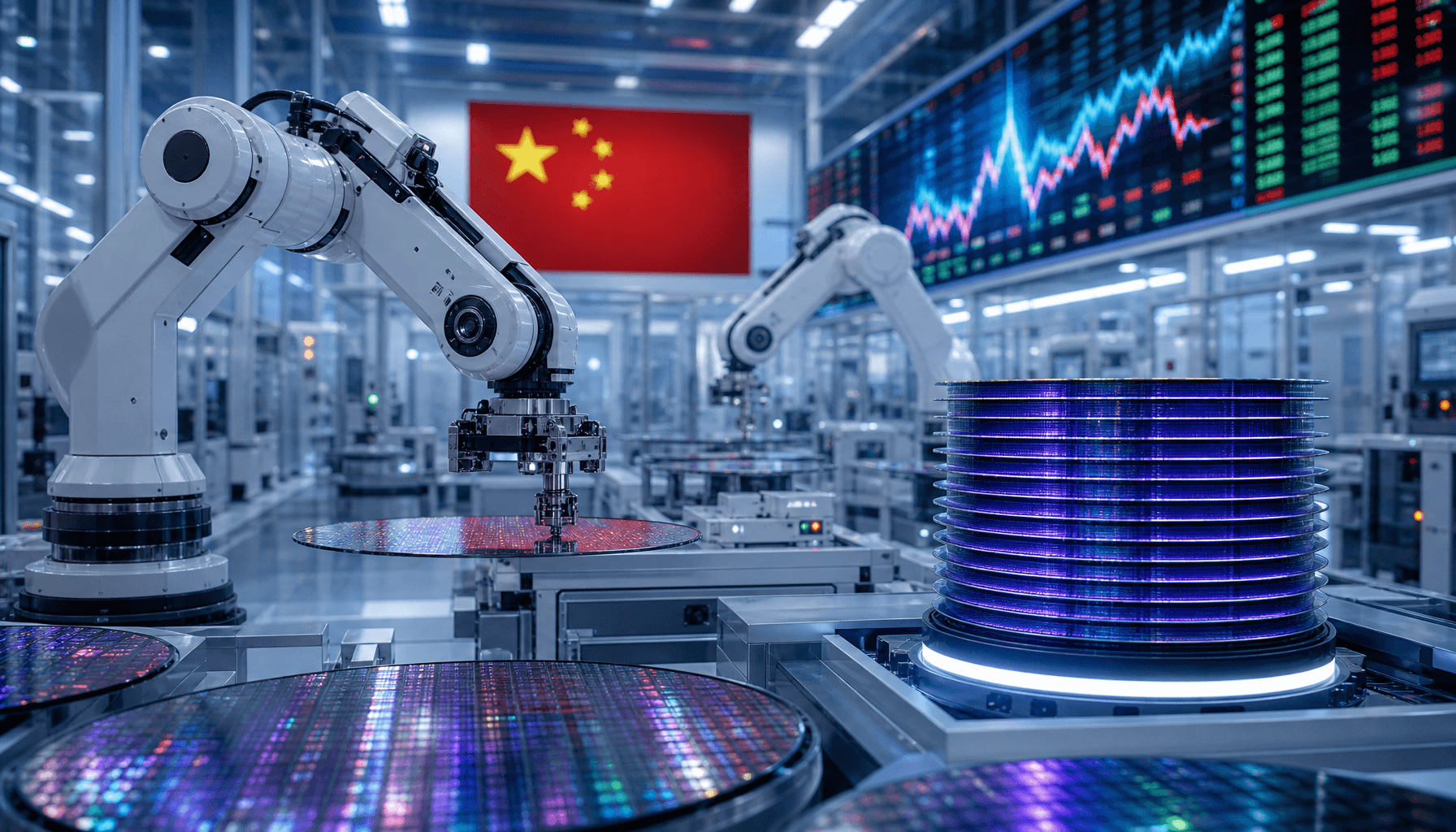
A New Era of Investment: TSMC’s US Expansion
Taiwan Semiconductor Manufacturing Company (TSMC) has officially announced an additional US$100 billion investment in its US-based semiconductor manufacturing operations. This commitment brings the company’s total investment in the United States to US$265 billion. This strategic move not only reinforces TSMC’s position as the global leader in semiconductor fabrication but also underscores its commitment to the localization of critical technology supply chains. According to reports from The Economic Times, this announcement follows record-breaking financial results, driven primarily by the relentless demand for AI-capable hardware.
The AI Boom as a Catalyst
At the heart of TSMC’s expansion is the global explosion of Artificial Intelligence. As generative AI models become increasingly complex, the market demand for advanced process node chips—such as 2nm and beyond—has surged. Google Trends data indicates that the interest score for "AI" in California is 39, reflecting a fervent desire for infrastructure to support AI development. This structural market demand has allowed TSMC to aggressively expand capacity while maintaining superior pricing power and profitability.
Global Semiconductor Competition: Semicon 2.0
Simultaneously, other nations are aggressively pursuing sovereign semiconductor capabilities. India, for instance, has recently approved the ₹1.27 trillion "Semicon 2.0" mission, aiming to produce its first indigenous AI inference chip by 2029-2030. Led by the Centre for Development of Advanced Computing (C-DAC), this initiative highlights India’s ambition to integrate into the global AI chip supply chain. These developments suggest that the semiconductor industry is increasingly becoming a theater for global technological sovereignty.
Legal and Regulatory Landscape
TSMC’s expansion is deeply intertwined with the US CHIPS and Science Act, which provides federal incentives and tax credits for semiconductor manufacturing. However, these incentives come with a complex layer of compliance requirements, including environmental reviews, workforce development mandates, and negotiation with state and federal authorities. Legal analysts suggest that as supply chain localization policies mature, companies face increasingly rigorous audit and regulatory environments when executing these large-scale cross-border projects.
Future Outlook: The Backbone of AI Infrastructure
In the coming years, TSMC’s US facilities will serve as a critical node in the global AI hardware ecosystem. Despite the massive capital infusion, the company faces structural challenges, including technical talent shortages, rising production costs, and geopolitical volatility. We will continue to monitor how TSMC navigates these challenges while maintaining its technological lead. As AI applications transition from cloud-based models to edge computing, the complexity of chip fabrication will continue to scale. If TSMC successfully executes this expansion, it will solidify its position at the pinnacle of the global semiconductor industry for the next decade.