The Duality of Earnings: Revenue Recovery vs. Cash Burn
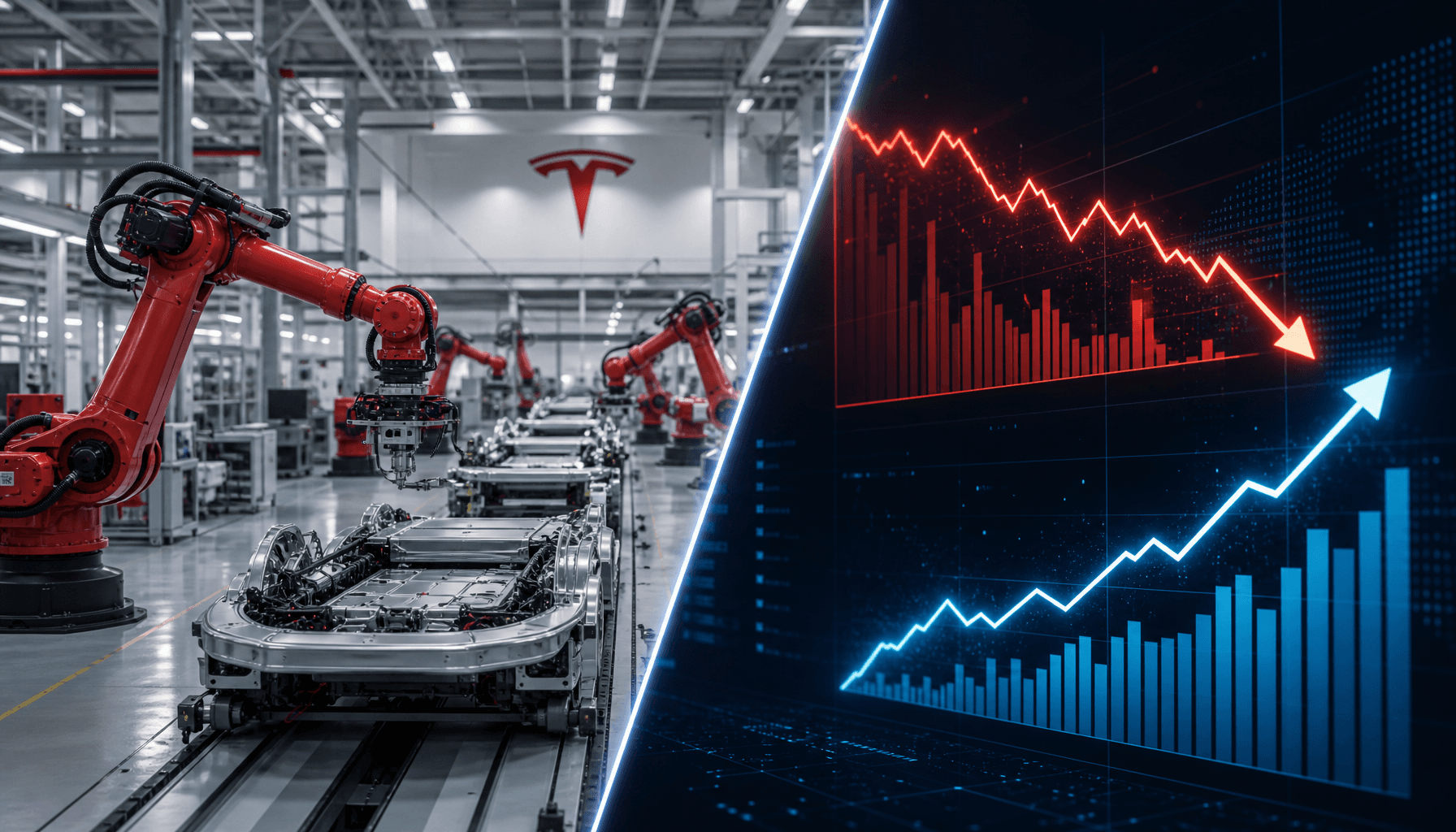
Tesla’s Q2 2026 earnings report reveals a stark duality in the company’s current trajectory. While revenue showed signs of recovery and vehicle deliveries exceeded market expectations, the company reported a substantial $1.1 billion burn in free cash flow. This financial paradox has triggered intense debate on Wall Street: Is Tesla successfully laying the foundation for an autonomous future, or is it succumbing to the weight of unsustainable capital expenditures?
According to a report by The Verge, while core automotive sales have rebounded after a period of stagnation, profitability remains constrained by structural challenges. Investors are increasingly shifting their focus from simple delivery numbers to the long-term viability of Tesla’s aggressive pivot toward Artificial Intelligence (AI) and the Robotaxi initiative.
The Surge in Capex: An All-In Bet on Autonomy
Tesla’s capital expenditure (Capex) surged during the quarter, driven primarily by the massive deployment of high-end AI computing infrastructure and the development of the Robotaxi fleet. Elon Musk appears to be steering the company’s strategic core toward autonomous driving, banking on the high margins of software-as-a-service to compensate for declining margins in hardware sales.
However, this transformation carries a high price tag. The significant Capex drain has directly impacted free cash flow, leading to heightened scrutiny regarding Tesla’s future financial flexibility. Google Trends data shows that interest in "Tesla earnings" and "Robotaxi" is particularly high in California, with a score of 88, and 55 in Taiwan, highlighting the global attention surrounding this pivot.
Energy Storage: The Underrated Growth Engine
Amid the focus on EV sales and AI spending, Tesla’s Energy Storage division has emerged as a significant bright spot. Public data suggests that shipments of energy storage products continue to grow steadily. Unlike the more cyclical EV market, the storage sector boasts higher margins and consistent demand. Analysts suggest that if Tesla continues to scale this segment, it could provide the necessary buffer to support its core automotive business during the transformation.
Future Outlook: The Pressure to Deliver
Looking ahead, the market’s patience will likely hinge on the speed and reliability of Tesla’s autonomous driving breakthroughs. The company faces the challenge of balancing high-cost AI R&D with the necessity of maintaining competitiveness in its core automotive business. Musk has consistently emphasized that AI and robotics remain the pillars of Tesla’s valuation for the coming decade.
Investors should closely monitor several key performance indicators:
- The trajectory for improving free cash flow, specifically looking for a decline in Capex once major AI infrastructure projects are completed.
- Progress in regulatory approvals and commercial deployment data for the Robotaxi fleet.
- The growth rate of the energy storage business as a percentage of total revenue.
In summary, Tesla is in a critical transition phase. While current financial reports underscore the pressures of burning capital, this path is consistent with the company’s evolution into an AI-first hardware and software integration firm. The market's final verdict will be reflected in the coming quarters through investor sentiment and capital allocation decisions.