The Significance of SpaceX's Public Debut
SpaceX's inaugural quarterly report as a public company marks a watershed moment in the history of private aerospace. While the company reported explosive revenue growth, driven primarily by the massive scaling of its Starlink satellite constellation, the market response has been characterized by skepticism. This tension between innovative growth and fiscal scrutiny defines the current narrative surrounding the firm.
Starlink: The Revenue Engine
Starlink has rapidly transitioned from a speculative project to the core revenue driver for SpaceX. By leveraging global satellite connectivity, the service has secured a significant footprint in the communications market. However, the capital-intensive nature of maintaining and upgrading this infrastructure remains a point of contention. Investors are closely monitoring the ROI on Starlink’s next-generation hardware deployments.
Market Skepticism and Price Volatility
Despite beating analyst revenue estimates, SpaceX shares fell 5% in after-hours trading. This dip reflects investor anxiety regarding upcoming lock-up expirations and the sheer scale of capital expenditure required to maintain the company’s technical lead. According to Google Trends data, interest in SpaceX and Starlink has spiked, with search volume in the US reaching a peak of 92, underscoring the intense public and institutional interest in the company’s trajectory.
Starship and the Technical Frontier
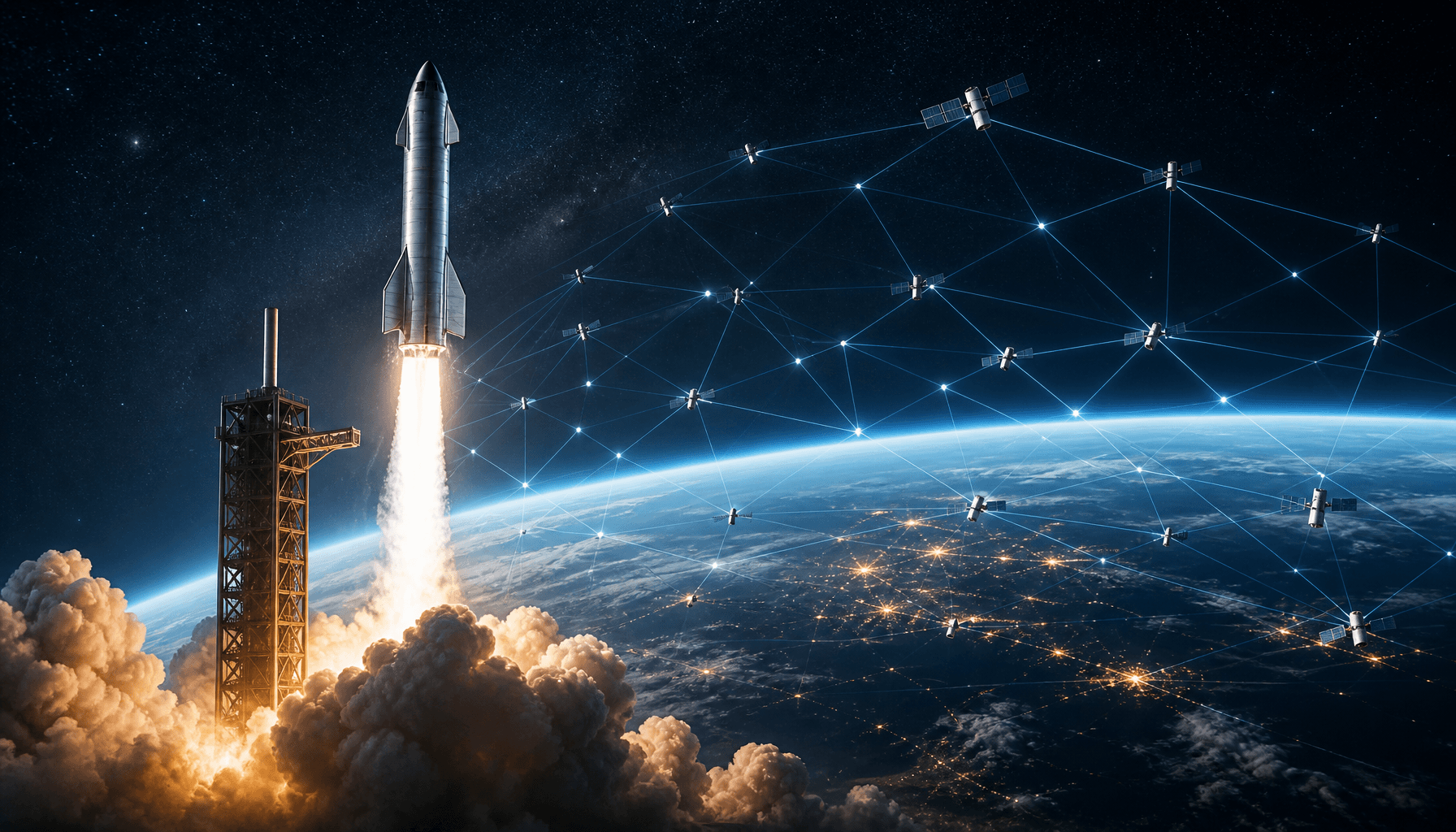
Looking ahead, SpaceX has confirmed that the next Starship flight (IFT-14) will be a critical technical milestone. The mission is slated to deliver operational V3 Starlink satellites to orbit, with the potential for an ambitious booster-catch maneuver. Success in this area would represent a paradigm shift in launch economics, potentially lowering the cost-per-kilogram to orbit by an order of magnitude.
Expert Analysis and Competitive Landscape
Academic analysis, including recent aerospace research on ArXiv, highlights that the marginal cost reduction associated with fully reusable launch vehicles is the primary driver of commercial space profitability. While SpaceX retains a significant lead, the competitive landscape is intensifying as global players and private competitors like Amazon’s Kuiper program ramp up their efforts. Long-term value will depend on the firm’s ability to sustain its technical lead while optimizing operational margins.
Future Outlook and Key Metrics
Stakeholders should prioritize monitoring the outcomes of the IFT-14 mission. The successful execution of a booster catch would be a major validator for the company’s long-term business model. Additionally, as lock-up periods expire and stock liquidity increases, the market will likely reach a clearer consensus on the company’s valuation relative to its aggressive capital deployment strategy.