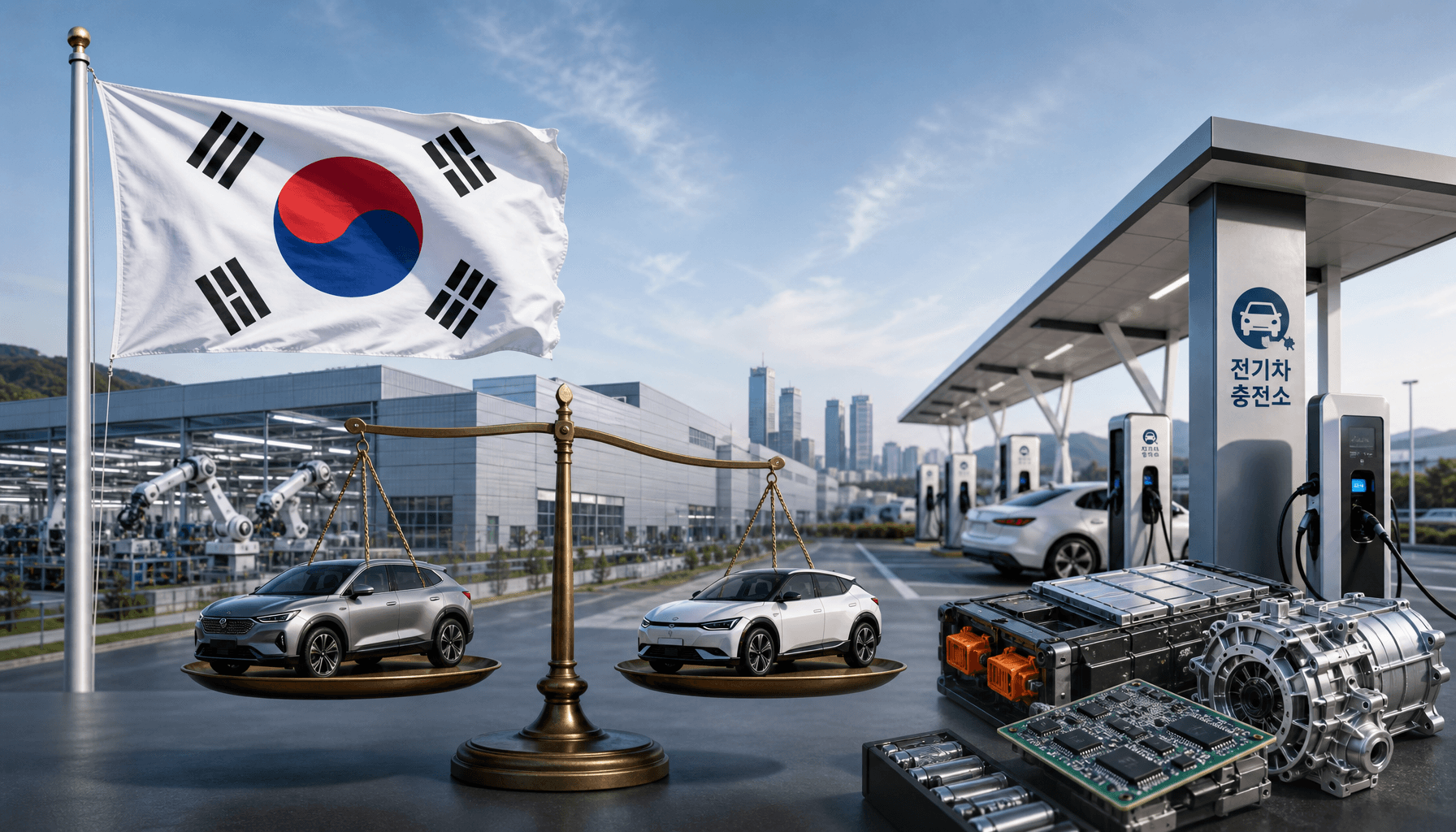
A Shift Toward Industrial Protectionism
South Korea has announced a structural restructuring of its electric vehicle (EV) subsidy program, linking eligibility directly to the support of local industry. This strategic shift is designed to bolster domestic EV supply chains while reducing reliance on imported models. Data shows that last year, imported EVs captured 42.8% of the South Korean market, with Tesla alone selling 60,000 vehicles, prompting the government to take more proactive measures to protect domestic automakers.
Market Impact of Subsidy Restrictions
New regulations require automakers to meet specific standards regarding local supply chain participation to qualify for full subsidies. This policy directly impacts international manufacturers, including Tesla. For consumers, the cost of purchasing imported EVs will likely rise, potentially shifting the market share toward local brands like Hyundai and Kia. This policy change is expected to significantly alter the competitive landscape of South Korea’s EV market.
International Trade Law Disputes
Linking subsidies to local industry support has long been a contentious issue in international trade law. The World Trade Organization (WTO) principles of non-discrimination and national treatment generally prohibit policies that discriminate against imported goods. Legal experts warn that South Korea’s move could spark friction with key trading partners and risk potential international trade litigation. This is not merely a domestic policy; it is a significant test of global free trade principles.
Future Outlook and Industry Dynamics
South Korea’s move reflects a broader trend of rising protectionism in the global EV market. Over the coming months, we will watch how major international automakers respond to these requirements and whether the South Korean government adjusts the policy under trade pressure. For domestic players, this represents a crucial window for growth; however, for the global supply chain, it may trigger a ripple effect of new trade barriers.
Conclusion
South Korea’s subsidy restructuring symbolizes that the competition in the EV era is no longer confined to technology and product capabilities but has evolved into a high-stakes game of national industrial strategy. As competition intensifies globally, governments are increasingly utilizing subsidy tools to secure the dominance of their domestic sectors. This subsidy war is only just beginning.