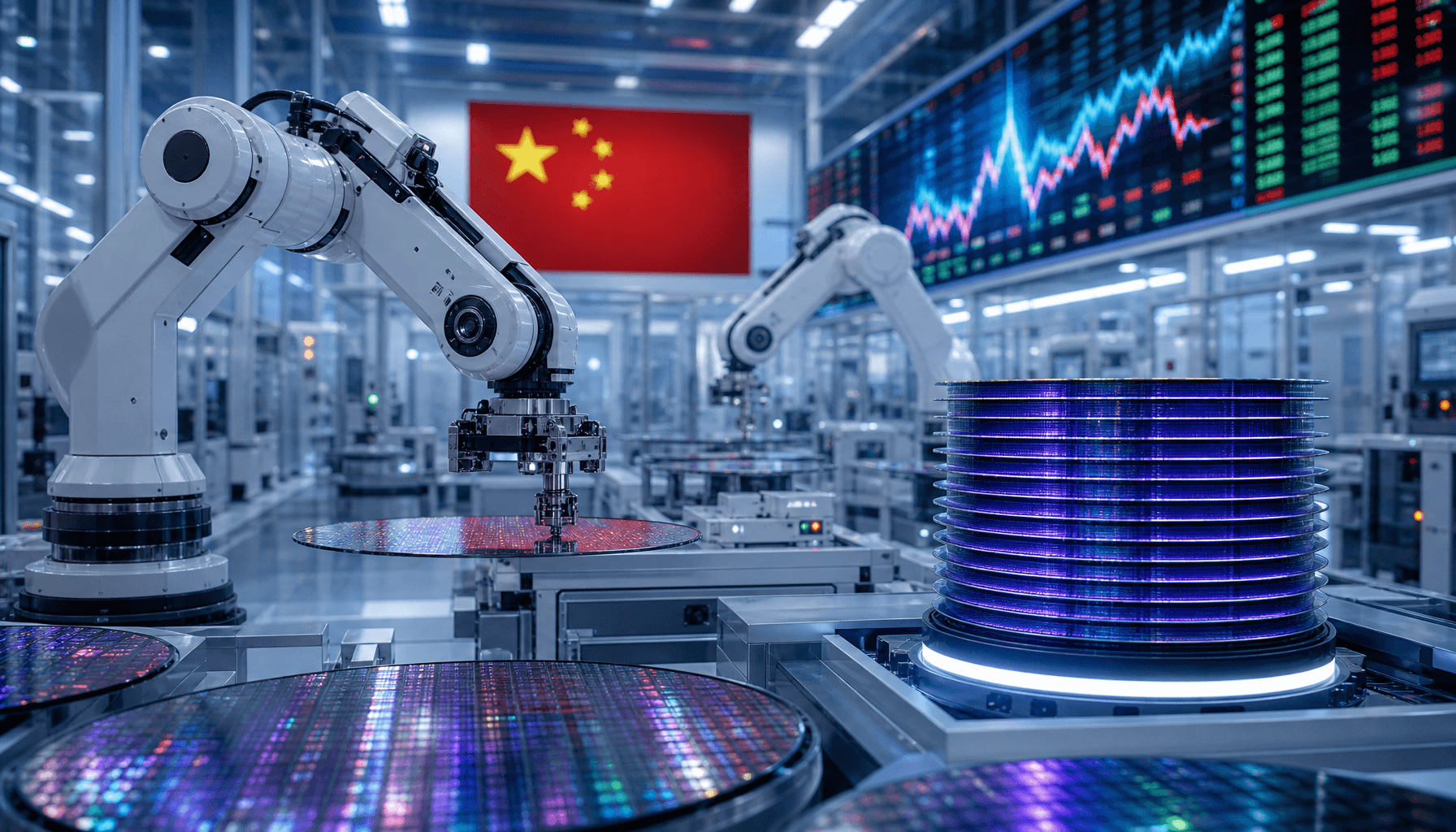
Market Shock: Why Did Samsung Electronics Plunge Despite Profit Guidance?
The global technology market recently witnessed a rare and significant tremor. Despite Samsung Electronics forecasting a staggering 19-fold jump in its second-quarter profit, the company's stock price plummeted by 10% in open market trading. This paradoxical event reveals deep-seated investor anxiety over whether the AI-driven memory chip boom has finally hit its peak. According to reports from the Economic Times, this sell-off was not limited to Samsung alone; it triggered a chain reaction across the Asian chip supply chain, underscoring the high sensitivity of the market to semiconductor cyclical risks.
Supply and Demand Dynamics in the AI Memory Market
Samsung Electronics' profit forecast was primarily driven by robust global demand for High Bandwidth Memory (HBM), a critical component for training large language models (LLMs) and supporting generative AI infrastructure. However, investors have begun to question the sustainability of hardware demand fueled by current AI capital expenditure trends. Analysts suggest that even with short-term profit surges, the looming threat of overcapacity—coupled with potential adjustments in AI infrastructure spending by major cloud service providers—has led to concerns that the rally in memory prices may be unsustainable.
Expert Analysis and Market Data
Semiconductor industry analysis consistently highlights the cyclical nature of the memory market as a fundamental challenge. While HBM remains in tight supply, competitors like SK Hynix and Micron are aggressively ramping up production, shifting the market equilibrium. Market research firms indicate that the current stock correction reflects a "sell the news" strategy, where market expectations were already priced in after significant gains, and any hint of decelerating growth is being heavily scrutinized by the market.
Global Trends and Industry Impact
According to recent search data, interest in this topic reached a score of 85 in California, while in Taiwan, investors closely monitoring the semiconductor industry have treated this as a leading indicator of global technology trends, with a search intensity of 62. This high level of engagement demonstrates that Samsung's stock volatility has become a barometer for global tech sector health.
Regulatory and Future Outlook
Looking ahead, whether Samsung Electronics can leverage its technological lead—particularly in advanced processes like HBM3E—to consolidate market share will be the key focus. Investors are advised to pay close attention to the upcoming earnings call, where management is expected to provide updated guidance on shipment volumes and capital expenditure plans for the second half of the year. If AI demand remains structurally robust, the current market overreaction may be corrected in subsequent quarters.