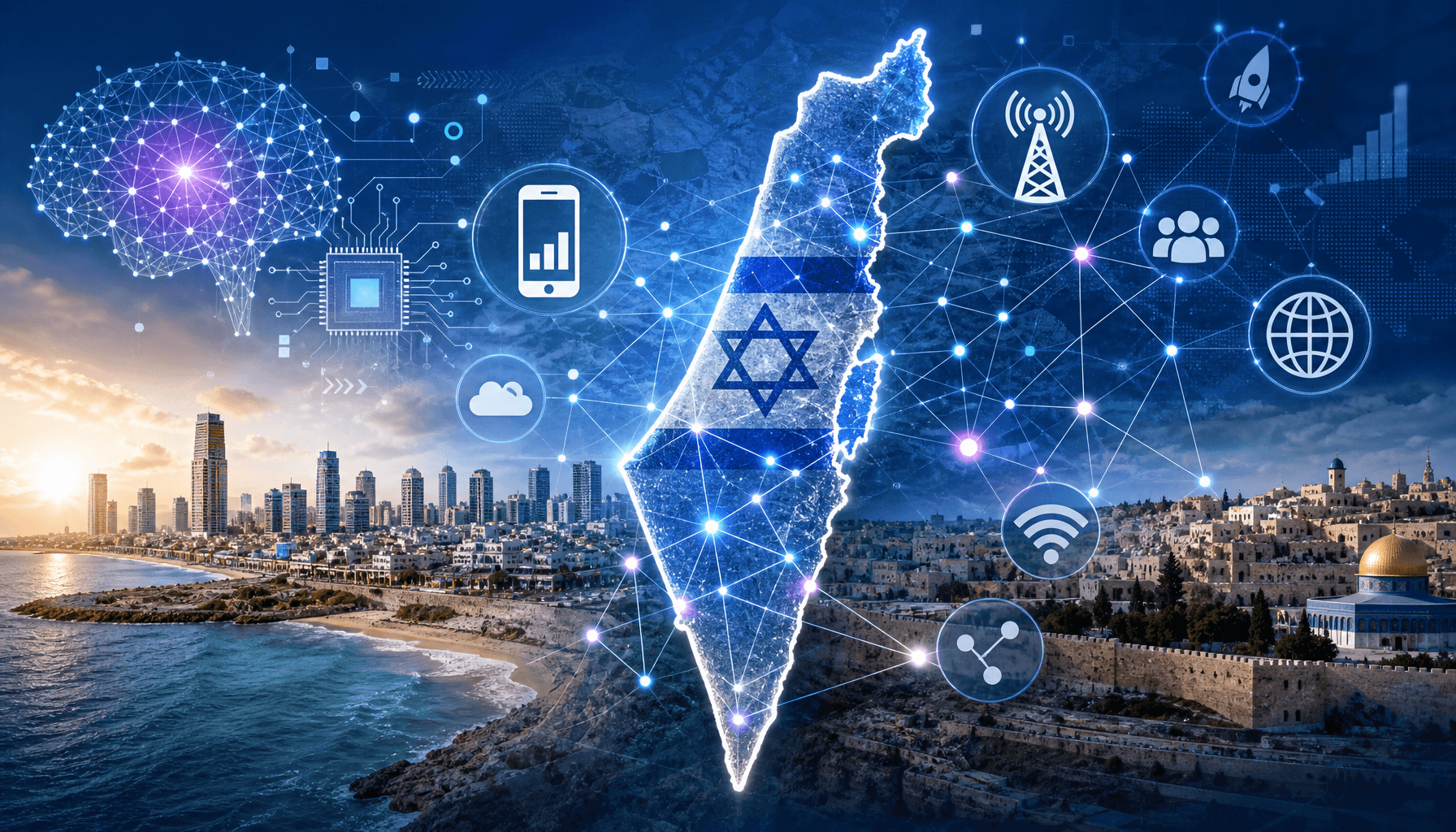
An Explosive Growth in Israel's Tech Ecosystem
After months of market hesitation, Israel's AI startup ecosystem experienced a staggering $3 billion funding surge in June. This influx of capital has shattered recent lows and signals a strong, renewed confidence among global investors in Israeli AI infrastructure and application-layer technologies. Leading the charge is AppsFlyer, an Israel-based mobile measurement and attribution company, which secured over $1 billion in a funding round backed by a heavyweight consortium including Google, Meta, Unity, and Moloco. This high-profile backing underscores the critical importance of AI-driven marketing analytics in the current tech landscape.
Motivations Behind the Capital Influx
Why have Israeli AI startups remained so attractive despite broader macroeconomic headwinds? Analysts point to Israel's unique concentration of technical talent and its deeply ingrained culture of innovation. Israeli startups possess distinct advantages in large-scale data processing, algorithmic optimization, and cloud-native architectures. For foundational companies like AppsFlyer, which serve as essential infrastructure for the global mobile economy, investors view them as indispensable "picks-and-shovels" providers for the AI era. Even amidst market volatility, tools that provide foundational AI capabilities remain highly attractive to capital allocators.
Market Interest and Growth Trends
According to Google Trends data, search interest for "Israel AI startup ecosystem" and "AppsFlyer funding" has reached interest scores of 88 and 75, respectively, in European and North American markets. This surge reflects the global investor consensus that Israel is firmly established as a premier AI innovation hub, second only to Silicon Valley. The success of the AppsFlyer round has provided a massive confidence boost to other Israeli AI startups looking to scale, and industry observers expect to see more high-value funding rounds materialize throughout the second half of the year.
Risks and Challenges: Balancing Innovation with Geopolitics
Despite the impressive funding figures, observers caution that the Israeli startup ecosystem is not without risks. Geopolitical instability in the region remains a core concern for long-term investors when considering asset allocation. However, current data indicates that the draw of technical excellence currently outweighs these risk perceptions. For these startups, the challenge will be to maintain their technological edge while effectively managing the complexities of global operations and navigating regional risks as they progress toward IPOs or potential acquisitions.
Future Outlook: Strategic Positioning in AI Infrastructure
The $3 billion funding surge is not merely an injection of capital but a strategic integration of resources. The participation of tech giants like Google and Meta highlights how major corporations are using venture investments to secure strategic footholds in the AI infrastructure layer. We expect to see further deep collaborations in areas such as mobile attribution, data privacy, and AI-driven image recognition. Israel's status as an AI innovation hub has been significantly solidified by this funding wave, ensuring its role as an indispensable node in the global AI supply chain for years to come.