A New Milestone in Economic Diplomacy
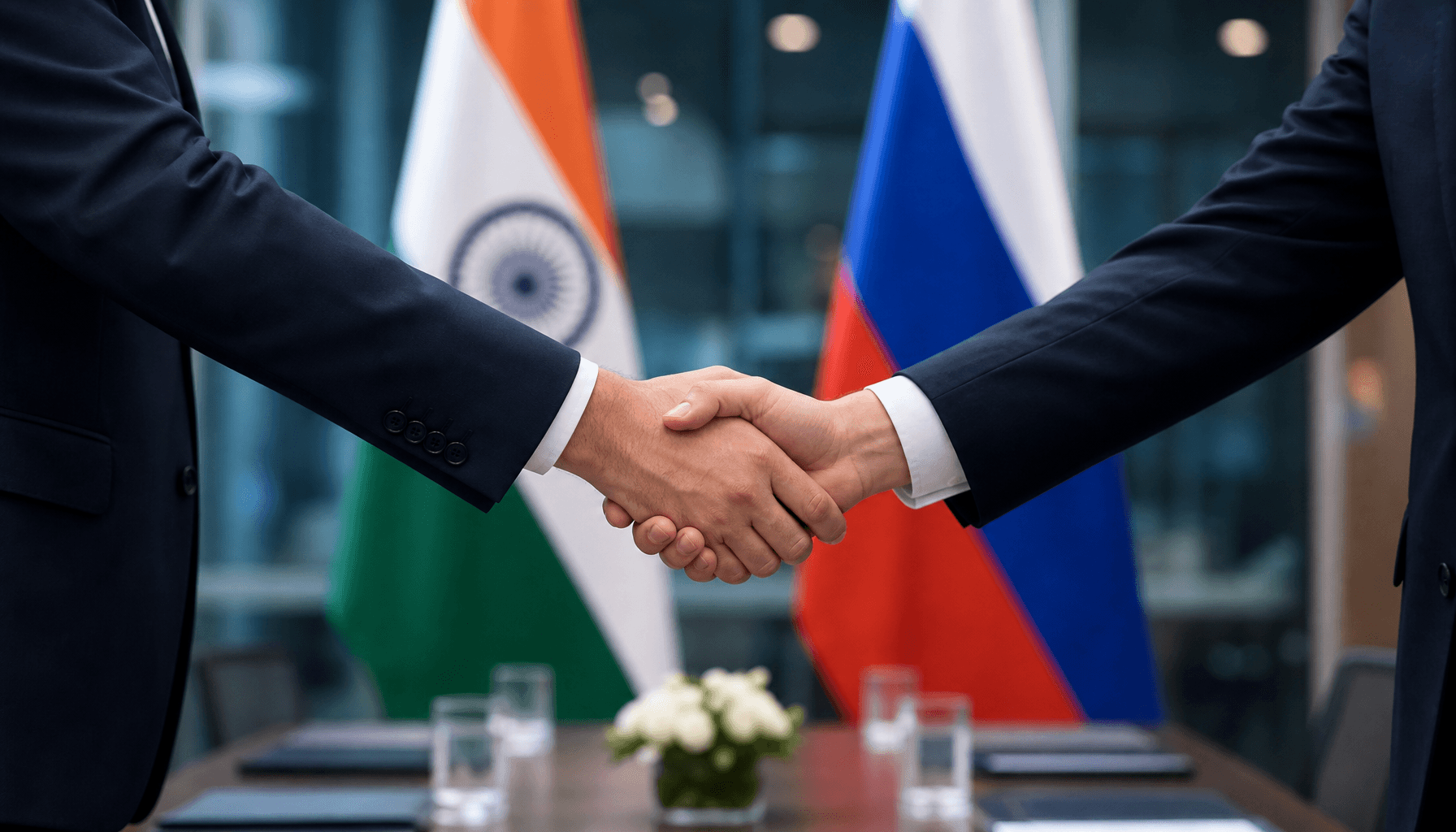
At a high-level summit held in Moscow, India and Russia jointly announced an ambitious economic target: to reach $50 billion in mutual investment by 2030. This agreement marks a significant deepening of economic diplomacy between the two nations and demonstrates their resolve to build long-term cooperation in key sectors, despite the challenging global sanctions environment.
Core Sectors and the 'Making in Russia for India' Model
The cooperation focuses on advanced manufacturing, the development of critical mineral resources, and green technology. Notably, both sides introduced an industrial model dubbed "Making in Russia for India," designed to integrate Russia's resource advantages with India's manufacturing potential. Through this framework, India aims to secure a more stable supply of critical industrial raw materials, while Russia seeks to maintain export momentum for its manufacturing sector.
Economic Strategy Amid Geopolitical Shifts
Analysts note that this agreement was reached amidst shifting global economic dynamics and complex sanctions. For India, the partnership supports its strategy of diversifying energy and defense supply chains. For Russia, it serves as a mechanism to expand its presence in Asian markets under the pressure of Western sanctions. This deeply integrated economic relationship is expected to have far-reaching implications for global supply chains.
Market Impact and Future Outlook
The market has reacted with caution to this long-term investment pact. While the target figure is significant, actual implementation and capital flows remain subject to strict scrutiny under international sanctions regimes. Nevertheless, the agreement establishes a clear direction for deepened economic integration over the next decade. Observers are particularly interested in whether cooperation in critical minerals will influence global commodity price trends.
Future Perspectives and Key Observations
Over the coming years, both nations will engage in detailed negotiations regarding infrastructure development and technology transfer. A key point to watch is whether the expansion of trade volume will lead to the further adoption of local currency settlement mechanisms to reduce dependence on international clearing systems. This represents not only an economic agreement but also a strategic move on the geopolitical chessboard.