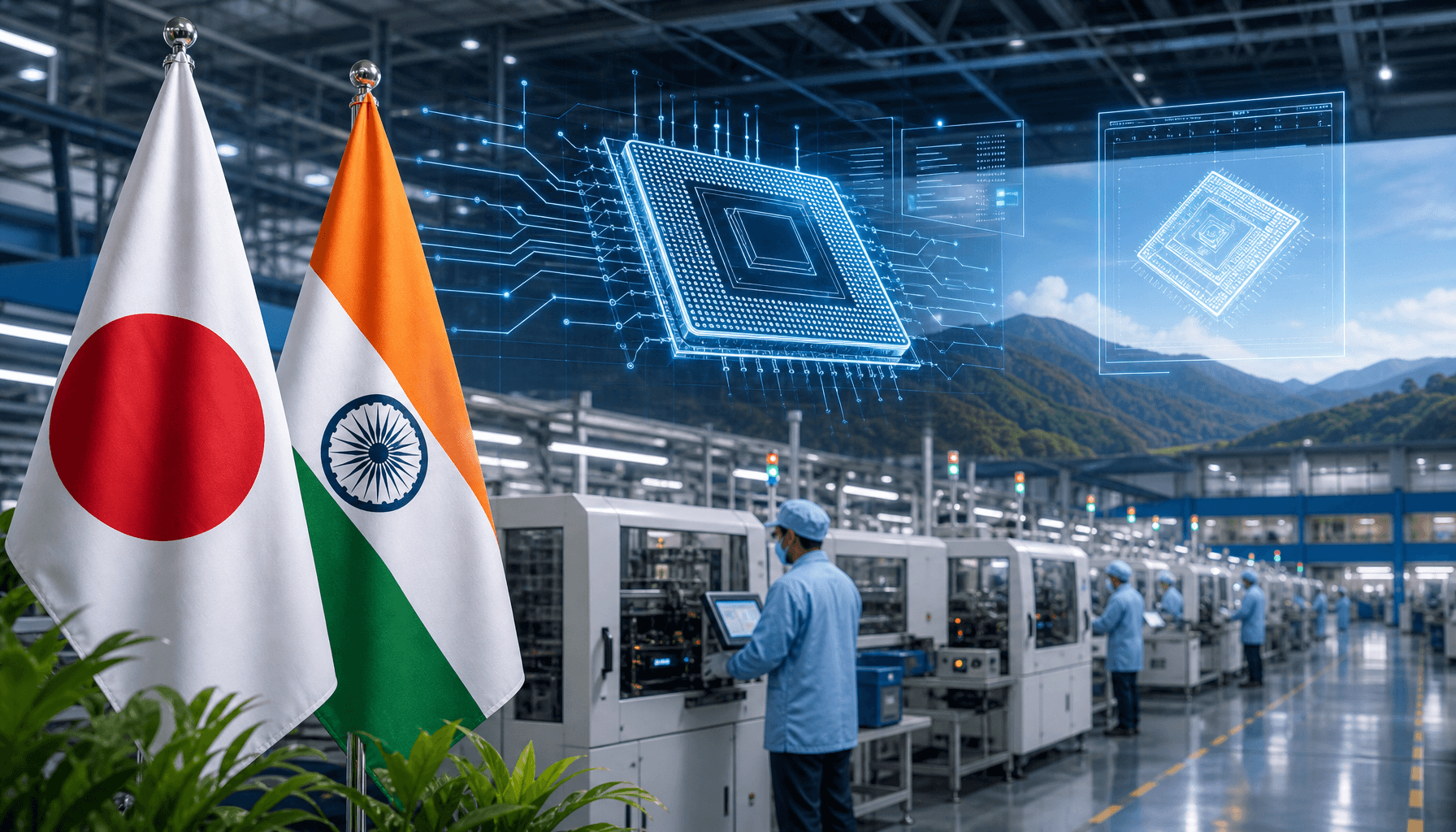
The New Geographic Frontier of India-Japan Strategic Cooperation
The annual India-Japan summit, scheduled for July 1-3, has captured significant diplomatic attention due to its unconventional location: Guwahati in Northeast India. This decision symbolizes the Indian government's commitment to the development of its northeastern states and marks a new phase in the collaboration between Japan and India regarding supply chain reorganization and semiconductor manufacturing.
As global enterprises aggressively pursue 'China-plus-one' supply chain strategies, Northeast India is emerging as a potential hotspot for multinational investment, given its strategic location and connectivity infrastructure. A delegation of Japanese business leaders is expected to accompany Japanese Prime Minister Sanae Takaichi, with the agenda focused heavily on electronic manufacturing and semiconductor industry cooperation.
Chip Diplomacy: Technology Transfer and Domestic Manufacturing
The semiconductor industry sits at the heart of the summit's agenda. The Indian government is aggressively pushing its 'Make in India' initiative, aiming to transform the nation into a global hub for electronic manufacturing. Japan’s formidable strengths in semiconductor materials, manufacturing equipment, and precision engineering offer a highly complementary match for India’s workforce and market potential.
According to Economic Times reports, established Japanese players like Suzuki have been deeply embedded in the Indian market for years. The upcoming summit is expected to encourage further Japanese tech companies to establish R&D centers and manufacturing facilities in India. Experts suggest that through technology transfer and joint R&D, both nations can build a more resilient supply chain within the semiconductor ecosystem, reducing reliance on any single market.
Economic Ambitions and Structural Challenges
The Indian government has set a target of achieving $1 trillion in exports by fiscal year 2027. However, the attainment of this goal depends on continuous improvements in infrastructure and a steady inflow of foreign direct investment (FDI). While India has made progress in attracting manufacturing investment, market analysts caution that infrastructure bottlenecks and the complexity of the regulatory environment remain significant hurdles.
There is ongoing debate regarding India’s ability to hit its export target on schedule. Based on available economic reporting, this goal remains unverified by independent academic evidence, relying primarily on projections cited by Commerce Minister Piyush Goyal. Nevertheless, the summit itself sends a powerful signal: global capital is reassessing India’s long-term value as a manufacturing base.
Industry Impact and Market Trends
Recent market data indicates a significant increase in search interest regarding semiconductor investment in both India and Japan over the past month. Investors are showing keen interest in the participation of Japanese firms in India's manufacturing sector. In particular, the diversification of chip supply chains is viewed by the market as a long-term growth driver for the technology sectors of both nations.
Furthermore, the construction of digital infrastructure and talent development will be key topics of discussion. The two parties are expected to sign several memoranda of understanding (MoUs) covering digital transformation, green energy, and infrastructure investment. These initiatives aim to lay the groundwork for long-term economic cooperation, ensuring both nations maintain an advantage in the evolving global trade landscape.
Future Outlook: Economic Resilience in the Indo-Pacific
Looking ahead, the India-Japan summit is not merely a forum for bilateral trade; it is a critical component in building economic resilience across the Indo-Pacific. As global supply chains continue to reorganize, Northeast India could potentially become a key logistics and manufacturing hub connecting South Asia with Southeast Asia. Observers recommend closely monitoring the specific joint ventures and investment commitments following the summit, as these will serve as key indicators of the success of the two nations' diplomatic and economic strategies. We will continue to track the summit's developments to provide in-depth analysis of the far-reaching impacts of India-Japan cooperation.