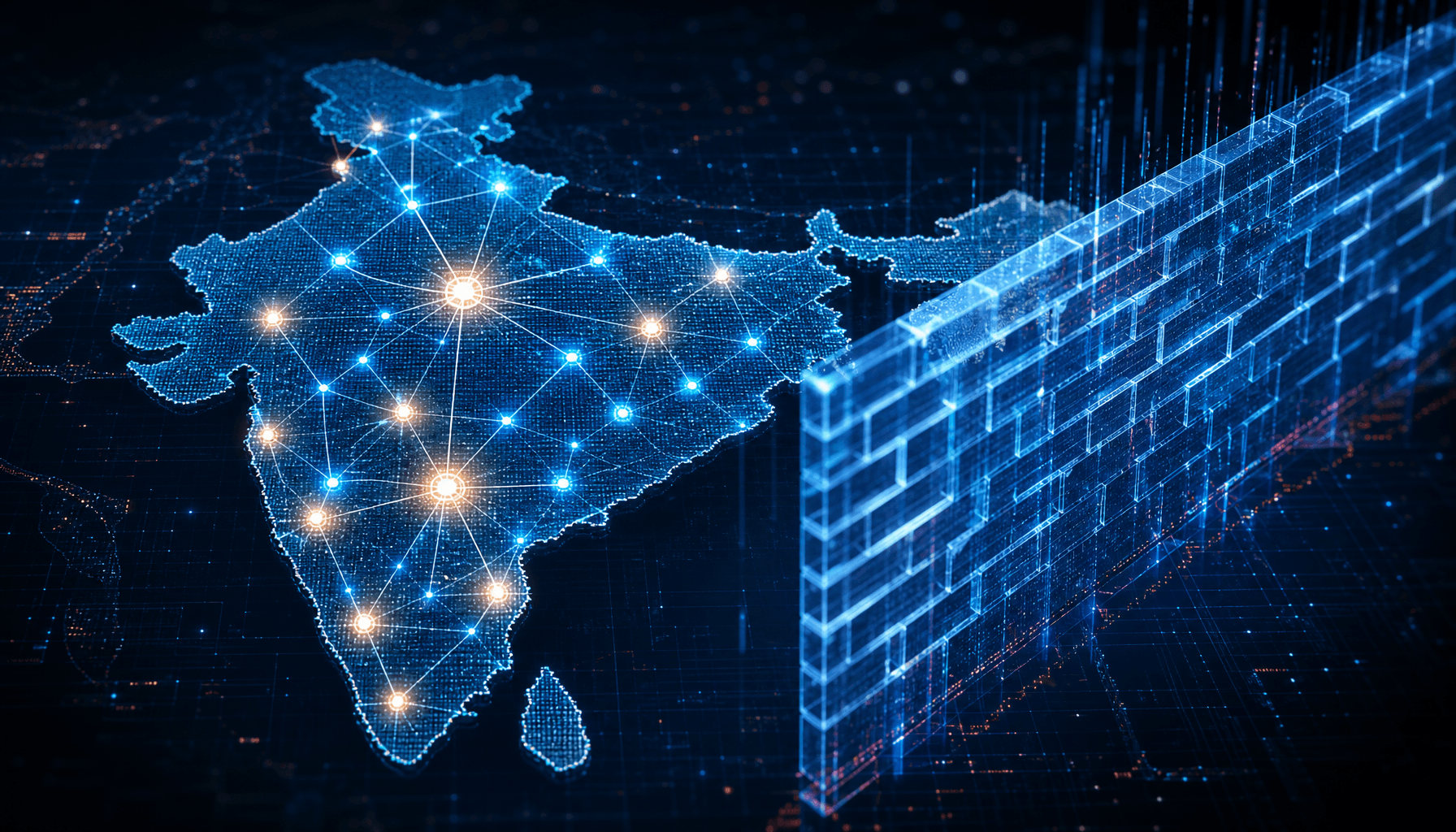
A Wake-Up Call for AI Sovereignty
With the U.S. government recently implementing stricter export controls on advanced AI models, India's vulnerability in artificial intelligence development has been pushed to the forefront. According to a report by The Economic Times, the U.S. government's directive to suspend access to key frontier AI models, such as those from Anthropic, has exposed the risks inherent in India's reliance on a 'borrowed AI' model controlled by foreign entities. This restriction not only impacts local technological deployment but has also triggered deep anxieties regarding national digital sovereignty.
Constraints Under Legal and Regulatory Frameworks
U.S. export control laws, enforced by the Bureau of Industry and Security (BIS), strictly regulate the provision of advanced computing services and model weights to foreign entities. For India, this means that any shift in Washington's policy direction could potentially nullify progress in AI model development by local firms and research institutions overnight. Legal experts analyze that such unilateral access cuts, based on geopolitical considerations, are standard defensive strategies by the U.S. regarding the proliferation of dual-use technologies, but they pose a significant developmental risk to countries relying on foreign models.
Industry Impact and Market Perspectives
Experts warn that relying on 'borrowed AI' is an unsustainable long-term strategy. India's ambitious AI goals, if unsupported by foundational models developed domestically, are susceptible to external factors at any time. Market analysts suggest that this event will force the Indian government to accelerate its 'AI Sovereignty' initiative, encouraging domestic firms to invest in compute infrastructure and the development of proprietary models to break the reliance on foreign tech giants.
Future Outlook: Moving Toward Digital Autonomy
Moving forward, how India will diversify risk through localized deployment and international partnerships will be a key observation point. This incident also serves as a wake-up call for other nations globally that aim to drive digital transformation through foreign AI models. For tech policymakers, building a resilient AI ecosystem is no longer just a technical issue; it has become a survival strategy amidst complex geopolitics.